Submersible WQ blockage-free sewage pumps lead 2026 Chinese OEM catalogues, with operating envelopes of 2–1500 m³/h flow, 3–45 m head, ≤0.6 MPa system pressure, and IP68 motor insulation at 970–2900 r/min [S1]. The same product family is routinely specified for municipal works, factory and mine drainage, and temporary floodwater service, with media temperature limits of −15 °C to +60 °C and a pH window of 5–9 [S1].
Across July and early August 2026, Made-in-China listings from the Taizhou cluster show new product cards dated 2026-07-22 through 2026-08-07 from Zhejiang Tianzong Technology and Zhejiang Taiding Electromechanical, alongside renewed WQD, WQ, and V1300DF cutter SKUs from Wenzhou and Wenling suppliers [S2][S10]. Sourcing volume therefore sits firmly in the Wenzhou-Oubei, Wenling-Daxi, and Taizhou industrial belts, with vertical integration running from motor winding (e.g. Wenzhou Decheng Motor) through final pump assembly [S3][S4].
What counts as a sewage pump: definition and operating envelope
Sewage pumps are a sub-family of centrifugal pump products built for media containing solids, fibres, and slurries rather than clean water, and the WQ submersible design pairs the motor and hydraulic end in one IP68-housed unit that runs fully submerged [S1]. The reference operating window published by WQ-series OEMs is 2–1500 m³/h capacity, head 3–45 m, system pressure ≤0.6 MPa, medium density ≤1.3×10³ kg/m³, and rated speed 970–2900 r/min, with motor insulation class E and CW rotation viewed from the motor [S1].
Inside that window, three impeller architectures carry the catalogue: single or dual non-clog large-flow-path impellers for high-volume slurries, vortex alloy impellers in the WQV series for stringy waste, and cutter-type V1300DF impellers for fibrous solids in narrow wet wells [S2][S5][S10]. Dry-pit WL series vertical units extend the same hydraulic family above the wet well, using single, dual, or three-vane impellers for non-block, wrap-resistant operation [S5].
Selection criteria: match impeller, head, and chemistry to the duty
Match the impeller family to the largest solid or fibre size first, then size head and flow to the duty cycle: WQ non-clog for general sewage at 5–800 m³/h, WQV vortex for fibrous sludge, and V-series cutters where rags and wipes dominate the waste stream [S2][S9][S10]. Self-priming non-clog models (e.g. Okorder WQ-style self-priming SKU) extend the range to 2.2–55 kW, 10–80 m head, and ≤80 °C media, with discharge diameters from Φ25 to Φ300 [S9].
Validate the media envelope before any quote: pH 5–9 is the published standard band, and temperatures beyond +60 °C require derating or a special mechanical seal [S1][S9]. Stainless-steel wetted parts and float-switch controls are commonly offered on 2026 WQD SKUs for corrosive or unattended duty, and the 7.5 kW heavy-duty submersible class is the typical step-up point for industrial lift stations [S2][S8].
Supplier landscape: Zhejiang, Wenzhou, Wenling, and Taizhou clusters
The supply base is concentrated in three named clusters: Wenzhou-Oubei (Southern-Lights Pump Group, founded 1978, 300+ product varieties, 30+ patents, exporting to 20+ countries, with a Wenzhou Decheng Motor subsidiary for vertical motor integration), Wenling-Daxi (Zhejiang Binter Electric Machinery), and Taizhou (Zhejiang Tianzong, Zhejiang Taiding) [S3][S4]. YanTo and ChemicalBook-listed OEM lines round out the small-to-mid-frame segment with stainless and cutter SKUs [S6][S7].
Supplier capability tracks with motor integration, casting capacity, and after-sales reach rather than brand alone: 65% of staff at Southern-Lights hold associate degrees or above, with 5 senior engineers and 30 senior technicians supporting 300+ employees [S3]. Buyers running tender evaluations should weight the manufacturer's pump-motor integration (in-house vs outsourced), the casting method of the impeller (precision cast for the WQ non-clog family), and the published IP68 + Class E insulation data, which together drive field reliability [S1][S3].
Submersible vs dry-pit vs self-priming: a criteria-based comparison
Three architectures dominate 2026 Chinese sewage-pump catalogues, and the decision reduces to four variables: installation footprint, solids handling, head range, and service access. Submersible WQ/WQD units sit inside the wet well, pass solids through a single or dual non-clog impeller, and cover 2–1500 m³/h at 3–45 m head with the simplest civil works [S1]. Dry-pit WL vertical units keep the motor above flood level while keeping a non-block large-flow-path impeller in the sump, which simplifies maintenance but enlarges the building footprint [S5].
Self-priming non-clog units add a 2.2–55 kW motor option, 10–80 m head, and ≤80 °C media tolerance in a footprint that does not require flooded suction, making them a fit for mobile dewatering or construction-site duty [S9]. For a structured comparison: Submersible WQ = lowest install cost, 3–45 m head, IP68 sealed; WL vertical dry-pit = easier service, similar non-block hydraulics, larger civil footprint; Self-priming non-clog = no flooded suction needed, head to 80 m, higher unit cost per kW. Pair this matrix with a sewage pump reference page when you brief procurement.
Use cases, limits, and failure modes
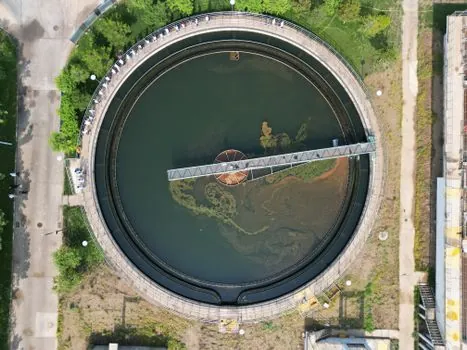
WQ submersible units are specified for living-wastewater discharge, municipal sewage networks, factory and mine sumps, temporary floodwater service, and public-facility drainage, with non-corrosive or diluted media within pH 5–9 [S1]. Where waste streams carry long fibres, a vortex WQV impeller or V1300DF cutter is the correct pick over a standard non-clog channel, and the impeller's anti-winding geometry is the published reason cited for that duty [S2][S10].
The recurring failure modes in the field are seal leakage on units run outside the −15 °C to +60 °C window, motor burn from run-dry or phase loss, and impeller blockage when a non-clog pump is misapplied to a high-fibre waste stream. Compare these limits against the industrial pump reference data and the diaphragm pump curves before you swap duty classes, because diaphragm units tolerate abrasive slurry but cannot match a WQ submersible's 1500 m³/h envelope.
Standards, sourcing signals, and what to track next
Published duty envelopes quote IP68 motor ingress protection, Class E insulation, ISO-style hydraulic impeller geometry, and pH 5–9 media compatibility; specific 2026 revision dates for IEC or ISO sewage-pump standards were not present in the supplier material reviewed, so any revision claim should be verified against the latest IEC 60079 and ISO 9906 texts before specification [S1]. Southern-Lights publishes 30+ patents and 20+ country reach as a proxy for export-grade QA, which is a more reliable procurement signal than catalogue size alone [S3].
Track these three signals in the next buying cycle: new WQD/WQV SKU releases from the Taizhou cluster on Made-in-China, OEM motor-integration announcements from Wenzhou Decheng Motor, and 7.5 kW heavy-duty submersible price moves from Wenling-Daxi suppliers. Pair that watchlist with our inline pipeline pump supplier map and the machine vision system price guide if your tender covers adjacent fluid-handling or vision-based QC scope.