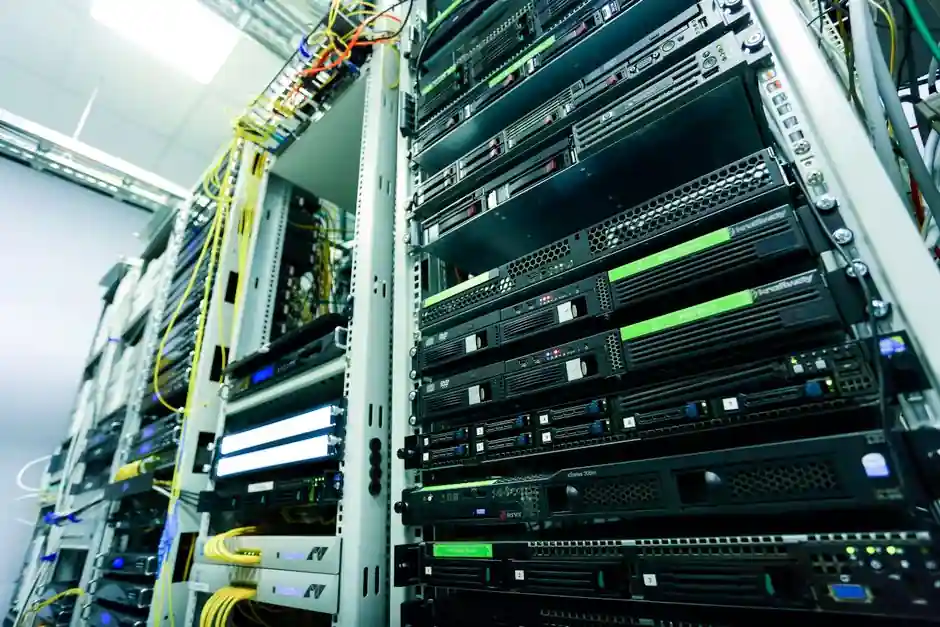
The largest US AI hyperscalers are on track to spend $800 billion on capital expenditure in 2026, while CreditSights estimates that approximately 75% of aggregate hyperscaler capex will fund AI infrastructure [S2][S3].
The figures describe different scopes: $800 billion covers the largest US AI hyperscalers, $794 billion is the hyperscaler-capex baseline cited by Goldman Sachs Research, and more than $1 trillion represents Goldman Sachs Research's broader estimate of global AI investment after including non-hyperscalers and overseas spending [S1][S3].
What the 2026 Capex Numbers Cover
CreditSights projects capex for the top five hyperscalers at $602 billion in 2026, up 36% from approximately $443 billion in 2025 and $256 billion in 2024 [S2]. Its 75% AI allocation implies roughly $450 billion of AI-specific spending within that five-company total, with the balance covering traditional cloud infrastructure and other business lines [S2].
A broader Goldman Sachs estimate starts with $794 billion of hyperscaler capex and adds public and private companies, AI-exposed businesses outside the United States, and spending above 2022 baselines, while excluding financial leases where possible to avoid double counting [S1]. The resulting global AI investment estimate is about $1 trillion in 2026, with just under $600 billion located in the United States [S1].
The narrower company-level framework presented by Futurum lists 2026 plans of $200 billion for Amazon, $175–185 billion for Alphabet, $115–135 billion for Meta, $120 billion or more for Microsoft, and $50 billion for Oracle [S4]. Together, those five plans total $660–690 billion, almost twice the approximately $380 billion cited for 2025 [S4].
Why 75% Is the Working AI-Infrastructure Share
CreditSights sets 2026 AI infrastructure at approximately 75% of aggregate hyperscaler capex, or about $450 billion against its $602 billion top-five forecast [S2]. This is an allocation estimate, not a claim that 75% of every hyperscaler's capital budget has an identical equipment mix. The non-AI remainder includes traditional cloud capacity and other business-line spending [S2].
Futurum describes the same direction at company level: the $660–690 billion combined plan is directed primarily toward AI compute, data centers, and networking, with Amazon's $200 billion plan extending beyond data centers into logistics and other operations [S4]. A separate AI data center capex analysis provides a useful breakdown of how infrastructure spending is distributed beyond the hyperscaler aggregate.
For planning purposes, the defensible 2026 range is therefore $602 billion for CreditSights' top-five group, $660–690 billion for Futurum's five-company infrastructure plans, and $794–800 billion for broader hyperscaler totals [S1][S2][S3][S4]. These are forecast methodologies, not interchangeable company-reported totals.
Hyperscaler Totals Versus Global AI Investment
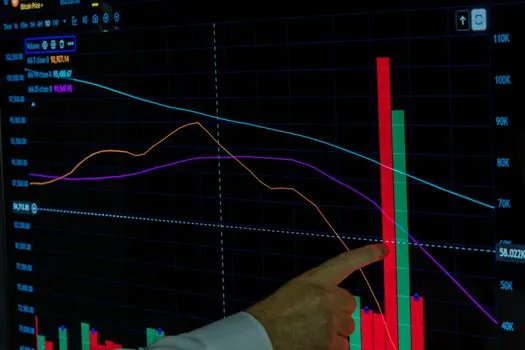
Goldman Sachs Research estimates that global AI investment will exceed $1 trillion in 2026, while its underlying hyperscaler-capex estimate of $794 billion falls about $200 billion short of the broader global figure [S1]. The gap comes from non-hyperscaler public companies, major private AI ecosystem companies, AI-exposed companies outside the United States, and assumptions that spending above 2022 levels is AI-related [S1].
Its two independent cross-checks, one based on gross-profit realizations and forecast revisions and another combining official government, global trade, and import data, also produce an AI investment total of approximately $1 trillion globally and just under $600 billion in the United States [S1]. That convergence supports the order of magnitude, but it does not make the $1 trillion figure equivalent to hyperscaler capex.
Goldman Sachs also estimates cumulative AI investment of $1.8 trillion by the end of 2026, measured from 2022 onward [S1]. Its macro scale rises from 1.8% of US GDP and 0.9% of global GDP in 2026 to 2.5% and 1.3%, respectively, in 2027, then to 2.8% and 1.4% in 2028 [S1].
Revenue Required to Absorb the Buildout
Goldman Sachs estimates that hyperscalers need approximately $300 billion in annual AI revenue over the next several years to break even on average 2026–2027 capex [S3]. That is a substantial commercial requirement because average annual capex across the two years is already running at hundreds of billions of dollars [S3].
Supporting indicators in the September 2026 analysis include hyperscaler cloud revenue annualizing roughly $70 billion above its pre-AI trend in the second quarter of 2026 and announced revenue backlogs exceeding $1.5 trillion [S3]. The research further estimates that AI users would need to spend roughly $1 trillion annually on applications for hyperscalers to earn solid returns while application providers retain strong margins on compute costs [S3].
For context, that required application spending is compared with approximately $1.5 trillion of global software spending in 2026 and $1.8 trillion in potential annual US labor-productivity gains [S3]. The comparison does not assume that all productivity gains flow to infrastructure or software vendors, and the required totals would increase for physical AI or artificial general intelligence [S3].
Financing, Capacity, and Execution Constraints
CreditSights expects the 2026 buildout to be funded through investment-grade bonds, private credit, project finance, and GPU-leasing structures, while hyperscalers continue shifting toward shorter-lived assets and leased data centers to reduce cash requirements [S2]. That financing mix matters because headline capex does not map one-for-one into owned buildings, power systems, networking equipment, and accelerators.
Capacity constraints remain the operational constraint cited in the research: CreditSights expects AI cloud infrastructure to remain capacity constrained through 2026, while the five companies in the Futurum set describe their markets as supply constrained rather than demand constrained [S2][S4]. The financial requirement is equally demanding, with a $300 billion annual AI-revenue breakeven target and more than $1.5 trillion of announced backlog [S3].
For engineering and procurement teams, the practical implication is a multi-layer constraint: AI allocation near 75%, a $450 billion AI-specific top-five estimate, and more than $1 trillion of broader global AI investment require coordination among compute, data-center shells, electrical distribution, cooling, networking, and financing [S1][S2].
How to Read the Forecasts Without Mixing Scopes
The $800 billion figure is the cleanest answer for large US AI hyperscaler capex, while approximately 75% is the best-supported working estimate for the AI-infrastructure share of aggregate hyperscaler spending [S2][S3]. The $794 billion Goldman Sachs figure provides a hyperscaler baseline that is then augmented to reach approximately $1 trillion of global AI investment [S1].
Estimates also differ by company coverage and accounting treatment. CreditSights includes the top five hyperscalers and reports $602 billion, while Futurum gives $660–690 billion for Microsoft, Alphabet, Amazon, Meta, and Oracle after incorporating later guidance [S2][S4]. Goldman Sachs adjusts for financial leases, identifies overseas investment, and estimates incremental AI-related spending above 2022 levels [S1].
The next trackable signals are company capex guidance, the split between owned and leased data centers, backlog conversion into recognized revenue, and reported capacity availability. A credible path toward the $300 billion annual AI-revenue requirement would connect the infrastructure buildout to utilization rather than spending alone [S2][S3].