
ATI Accurate Technology Inc. identified five IGBT modules in demand and running low on stock, including CP15TD1-24A, and warned that last-minute sourcing can mean long waits, inflated prices, and delayed repairs [S1].
The practical planning question is not a universal lead-time number, but whether the selected 1200 V, 1700 V, or higher-voltage module has an active lifecycle, an equivalent replacement, and documented channel inventory. The market spans 600 V–6500 V devices, with operating frequencies from 2 kHz to 50 kHz in Infineon's industrial portfolio [S3].
Legacy modules create the longest procurement risk
Obsolete or low-stock modules are the main source of extended lead times for drives, inverters, and elevator controllers. The documented high-risk examples include the Mitsubishi CP15TD1-24A at 1200 V and approximately 15 A, the Mitsubishi PM400HSA120 at 1200 V and 400 A, the Semikron SKIIP613GB123CT six-pack, the Mitsubishi CM400C1Y-24S at approximately 1200 V and 350–400 A depending on variant, and the Infineon BSM35GP120 at 1200 V and approximately 35 A [S1].
These figures are seller inventory snapshots, not factory lead-time commitments, but they show why buyers can face long waits, inflated prices, and delayed repairs when a replacement is ordered after a failure [S1].
For operating equipment, a module with low channel stock is more serious than an ordinary new-production item because the user may need to preserve an existing gate-drive, busbar, mounting, and control arrangement. In retrofit work, electrical compatibility alone is insufficient: the original topology and package details must be checked against the proposed replacement before procurement is released.
Voltage and topology determine the sourcing class
IGBT modules are specified across broad voltage and current bands because drives and inverters have different bus voltages, load duties, and thermal conditions. Infineon publishes a 600 V–6500 V portfolio for automotive, traction, industrial, consumer, and energy-transmission applications, with modules designed for switching frequencies from 2 kHz to 50 kHz [S3].
At 1200 V, a buyer can encounter compact converter-inverter-brake assemblies such as the CP15TD1-24A, integrated six-pack modules such as the SKIIP613GB123CT, high-current power blocks such as the PM400HSA120, and conventional high-power modules such as the CM400C1Y-24S [S1]. Matching only the voltage class would fail because the package, current rating, switching arrangement, and thermal design differ across those four module families.
High-power systems add a second selection layer. Mitsubishi Electric's LV100 concept covers 1200 V and 1700 V classes, with a 1700 V version rated at 1200 A in a 144 × 100 mm footprint.
Compare options by lifecycle, electrical fit, and thermal margin
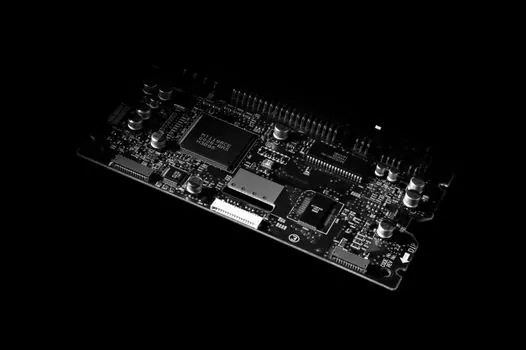
The fastest route is usually a stocked or active module with a mechanically and electrically qualified equivalent. Legacy inventory may be available immediately, but its unit price and quantity can be poor. A newly released module may offer better supply prospects, yet it can require changes to the gate driver, busbar, cooling interface, and switching strategy. A redesign to a newer topology may extend project engineering time even if the semiconductor itself is easier to obtain. [S1]
For industrial motor drives, the selection criteria are voltage rating, continuous and peak current, DC-link voltage, switching frequency, thermal resistance, permissible junction temperature, gate-drive requirements, and package dimensions. A 2026 motor-drive selection guide identifies voltage rating, switching losses, and thermal management as central selection factors [S7]. These variables determine whether a module can be treated as a drop-in replacement, a firmware-and-mechanical substitution, or a redesign.
Compact and high-density module development targets smaller inverter packages, improved heat dissipation, and higher power density. For industrial drives, the design direction supports more compact systems, while EV inverters emphasize size, thermal performance, and driving range [S8]. That development path can reduce cabinet volume but does not eliminate the need to qualify cooling, creepage, insulation, and gate-drive behavior for a specific drive platform.
Drives and inverters are not interchangeable applications
Industrial drives, traction inverters, solar inverters, UPS systems, and energy-storage inverters impose different operating profiles. A drive may spend long periods at low load, while traction and renewable-energy systems can have different load ramps, regenerative-energy events, shock currents, and duty cycles. A module selected only by nominal amperage can still be unsuitable if its short-circuit withstand capability, thermal cycling behavior, or control characteristics do not match the converter. [S3]
Automotive traction inverter development also makes PWM dead time a specific engineering variable rather than a routine timing convention. A January 2026 methodology paper addresses analysis and optimization of PWM dead time in IGBT-based automotive traction inverters [S2]. Although traction is not identical to a general-purpose industrial drive, the design lesson remains applicable: switching timing, gate behavior, and device tolerances must be checked against the selected module rather than inherited automatically from an older inverter.
For legacy equipment, condition monitoring can reduce emergency procurement exposure. A 2026 paper presents an adaptive wavelet-based compressed-sensing method for real-time IGBT module switching-time monitoring [S5]. This is not a lead-time solution by itself, but better switching-time visibility can support predictive maintenance when a suitable module has a long or uncertain supply path.
Thermal cycling constrains both life and module choice

Reliability claims must be tied to the module construction and operating profile. Mitsubishi Electric's LV100 paper states that an inverter with a 25-year lifetime must tolerate several thousand thermal cycles. The cited module design uses a thermal-cycle failure-free SLC package concept, standardized outlines, parallelable packages, low stray inductance, and balanced current sharing [S4].
Current sharing is not cosmetic. In the 1700 V LV100 module, unequal terminal and chip impedances can produce dynamic imbalance during switching; the resulting higher current and temperature concentrate in one chip and limit overall system life. The technical target is equal impedance paths from power terminals to paralleled chips, supported by terminal and chip placement perpendicular to the principal current flow [S4].
Compact packages can improve power density but leave less margin for mounting pressure, interface flatness, and thermal-interface uniformity. High-density module trends increase the importance of coordinated design across the semiconductor, busbar, gate driver, cooler, and enclosure. A procurement comparison that records only price and stock would miss these engineering dependencies.
Procurement should separate factory lead time from channel stock
Distributors and module specialists can provide immediate stock for an active or obsolete part without representing that availability as a factory replenishment commitment. The documented inventory levels for five legacy devices are therefore procurement signals, while factory lead time must be confirmed for the exact manufacturer part number and ordered quantity [S1]. The same distinction matters when a buyer compares a stocked legacy module with an active module offered on a quoted delivery basis.
For new drives and inverters, Infineon provides application notes for mounting EconoDUAL 3 modules, XHP 2 modules, and Easy-PressFIT modules. Its evaluation hardware includes the 2ED250E12-F board for 1200 V PrimePACK 2 and PrimePACK 3 modules, plus adapter boards for 1200 V EconoDUAL 3 modules [S3]. These design resources reduce qualification effort when the final module remains mechanically, electrically, and thermally compatible.
Manufacturers also continue to refresh module technology. Magnachip introduced a sixth-generation IGBT series aimed at solar and energy-storage inverters in January 2026 [S9]. Such launches may improve efficiency and supply options for new projects, but they do not establish a 2026 lead time for an obsolete drive module already installed in a plant.
Build the purchase order around a verified fallback

For new builds, the strongest procurement plan names an electrically qualified primary module, a mechanically compatible alternate where one exists, and an engineering path for a non-drop-in replacement. For operating drives, stock should be tied to criticality, failure exposure, and the time needed to rebuild or rewind the affected asset. The documented 2026 approach to long-lead motor spares supports the same basic principle: inventory decisions must reflect lead-time risk rather than a generic stocking target. [S1]
Two measurable signals deserve tracking through 2026 procurement reviews: channel stock for the exact installed part number and the manufacturer-confirmed lead time for its active replacement. Track them separately, because a stocked legacy module can hide a weak factory pipeline while an active replacement can have a quoted delay before factory allocation. The correct answer to “What is the IGBT module lead time in 2026?” is therefore part-specific and application-specific, with legacy devices carrying the greatest breakdown-repair exposure.