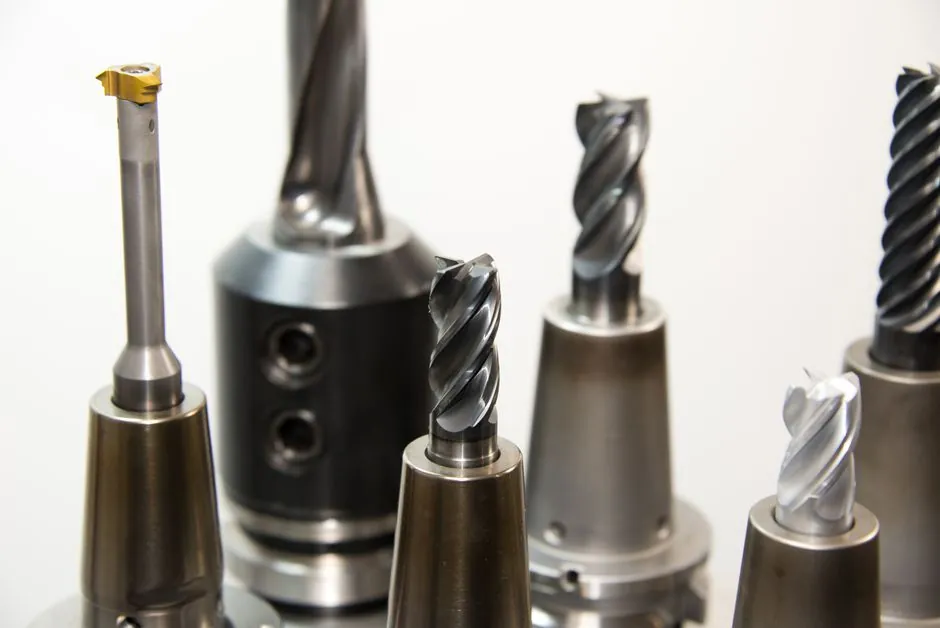
An "impact drill" is, in the standard UK/European and major-OEM usage, the same machine sold in North America as a "hammer drill": a rotary drill whose chuck adds a forward, in-line hammering pulse for masonry work, not a fastening tool [S5][S7].
The persistent confusion comes from the word "impact" being shared with the "impact driver," a completely different mechanism optimized for driving screws and lag bolts at high rotational torque [S1][S6].
Mechanism: Where the Force Actually Goes
A hammer/impact drill adds a longitudinal percussive pulse along the bit axis, with twin cams driving the chuck back and forth at up to roughly 34,000 blows per minute alongside rotation up to about 3,000 rpm, so the bit chips masonry as it turns [S3]. The "impact" is axial, not rotational, which is why the same tool can be switched back to plain rotary drilling for wood and metal [S4].
An impact driver instead applies its force as rotational concussive bursts to the bit socket, converting motor torque into short torsional pulses that prevent cam-out on long screws [S1][S2]. The energy vector is rotation, not percussion, and that single distinction drives nearly every downstream spec difference.
Torque, Speed, and Power Budget
Hammer/impact drills typically peak around 120 N·m of torque, with the hammering function gated to a two- or three-speed gearbox so the percussive action can be disabled [S3][S4]. Impact drivers publish much higher rotational torque figures, commonly up to about 800 N·m, because the impact mechanism multiplies the motor's nominal output on demand [S3].
That torque asymmetry is paired with a bit-holder difference: hammer/impact drills use a geared three-jaw chuck that accepts standard round and hex-shank masonry bits, while impact drivers rely on a 1/4-inch hex collet that snaps in 1/4-inch hex driver bits, not round-shank drill bits [S1][S7]. Selecting the wrong chuck system is the most common shop-floor error on this topic.
Where Each Tool Is Correct, and Where It Is Not

For brick, mortar, concrete block, and occasional shallow concrete anchor holes up to about 12 mm, a hammer/impact drill is the right pick: it is portable, accepts cheap carbide-tipped bits, and can be toggled to plain-drill mode for wood and steel [S3][S4][S5]. Where the workpiece is poured concrete with rebar, a rotary hammer with an SDS (Slotted Drive System) chuck is the correct tool, because the piston delivers a far stronger blow and the SDS shank transfers it without slipping [S5].
Impact drivers are correct for repetitive fastening, deck screws, lag bolts, and self-tapping metal screws, where the rotational impact multiplies torque to roughly 800 N·m and keeps the operator's wrist from absorbing the stall [S1][S3][S7]. They are the wrong tool for masonry, for precision holes in wood or metal, and for any application needing a standard round-shank bit or a keyless three-jaw chuck [S1][S6][S7].
Side-by-Side Decision Matrix
The four criteria that actually drive tool selection are: force vector (axial percussion vs rotational concussion), typical torque (about 120 N·m vs up to 800 N·m), bit interface (three-jaw keyless chuck vs 1/4-inch hex collet), and primary material (masonry + general drilling vs fasteners) [S1][S2][S3][S4][S6][S7]. The impact drill entry covers the percussive-rotary geometry, while the rotary hammer entry details the SDS-piston variant used once hole diameters or duty cycles exceed a hammer drill's comfort zone.
For chiseling and light demolition such as tile removal, neither a hammer drill nor an impact driver is rated; a rotary hammer with chisel mode is the documented tool for that load case [S5]. Choosing on the wrong axis (e.g. using an impact driver on concrete) is the leading cause of burnt-out motors in rental fleets, and the demolition hammer reference notes the same break-point at sustained concrete work.
Common Spec Misreadings on the Datasheet

"Blows per minute" is the most misused number on hammer-drill marketing copy: a true hammer/impact drill sits in the 25,000-34,000 bpm range, but the figure is meaningless without the per-blow energy in joules, which is what determines whether a 10 mm hole in 30 MPa concrete is realistic [S3]. Impact drivers also publish "ipm" (impacts per minute) figures; these are rotational events, not axial blows, and cannot be compared one-to-one with hammer-drill bpm ratings [S7].
Voltage and wattage are likewise non-comparable: a 20 V cordless hammer drill delivering around 60-80 N·m continuous is not equivalent to a 950 W corded hammer drill like the IDEAL ID 950RF at 2,800 rpm, because the corded unit sustains that rating indefinitely while the cordless unit's is a thermal-limited peak [S5]. A 2025 IDEAL professional-tier comparison lists corded impact-drill wattage from 500 W to 950 W and rotary-hammer wattage from 620 W to 800 W, the overlap a reminder that wattage alone is not the decision variable [S5].
Sourcing Notes and Standards Watch
No single ISO or IEC standard governs "impact drill" vs "hammer drill" nomenclature; the term is convention-driven, with "impact drill" dominant in UK/European retail catalogs and "hammer drill" dominant in North American catalogs, while the underlying mechanism is identical [S1][S5][S7]. For trade buyers, the safer procurement spec is the mechanism (rotary + axial percussion), the bit interface (keyless chuck vs SDS), the maximum masonry bit diameter, and the per-blow energy in joules, rather than the marketing label on the carton [S3][S5].
Rotary hammer drillings on reinforced concrete should still be checked against the SDS-bit manufacturer's duty-cycle guidance, since the same SDS-Plus shank is reused across entry-level and professional rotary hammers with very different impact energies [S5].
Two trackable signals for the next spec refresh: (1) a converging naming convention in major-OEM 2026 catalogs, where "impact drill" is increasingly tagged as "rotary hammer drill" to disambiguate from the impact driver; (2) growing availability of brushless cordless hammer drills with published per-blow joule figures, replacing the older bpm-only data sheet format that dominates 2024-2025 retail listings [S3][S5][S7]. For a related view on heavy concrete work and the equipment that follows, the Inverter vs Transformer Arc Welder: Efficiency Spec Comparison piece sits in the same industrial-procurement lane and uses the same spec-first decision logic.