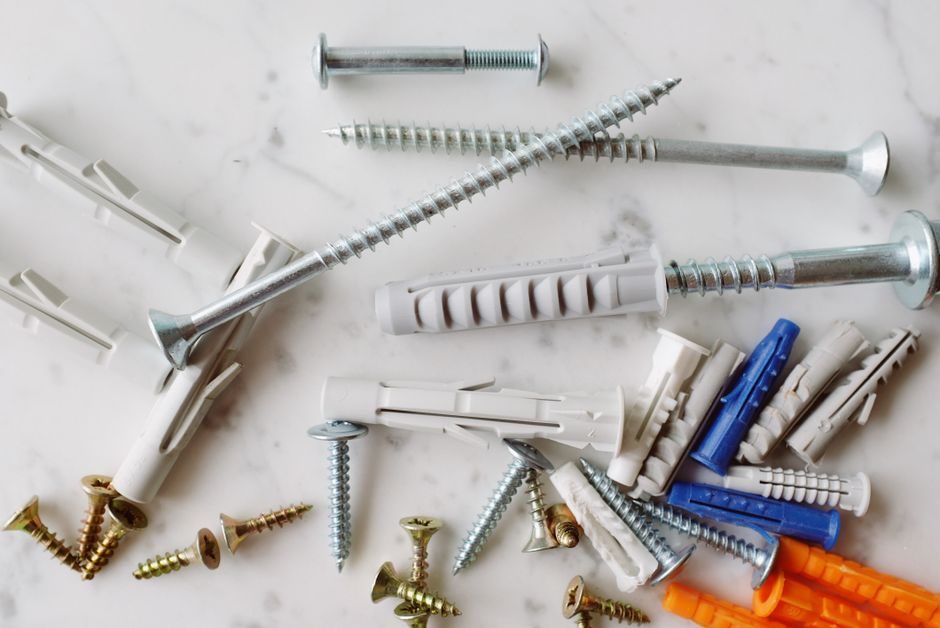
Adhesives are sorted by three independent axes — chemistry, carrier, and bond mechanism — and the right pick always starts with the substrate, the joint stress, and the cure environment, not the brand on the tube [S3].
Reactive chemistries such as polyurethane and epoxy form the cured network through a chemical reaction; non-reactive chemistries like hot-melt and pressure-sensitive adhesive (PSA) hold through physical set (cooling or applied pressure) without a crosslinking reaction [S3]. Carrier choice — water, solvent, 100% solids, or hot-melt — controls viscosity, VOC load, and how the bond is dried or activated, while the bond mechanism (PSA, contact, wet-state) decides clamping and fixturing on the line.
Reactive vs Non-Reactive Chemistry: When the Bond Cures vs When It Just Sets
Reactive adhesives cure by chemical reaction and are specified where the joint must survive heat, chemicals, or sustained load: polyurethane (PU) forms when a diisocyanate reacts with a polyol, epoxy forms when an epoxy polymer reacts with a hardener such as a polyamide, and silyl-modified polymers (SMP) cure by reacting with moisture from the ambient air or a second component [S3]. A moisture-cure SMP line is the practical answer on a substrate where oven-cure is impossible but a tough elastomeric bond is required.
Non-reactive adhesives lock by physical means, which is why hot-melt — a thermoplastic applied molten and solidified on cooling — is the workhorse of high-speed packaging, and pressure-sensitive adhesive (PSA) bonds on contact with no heat, no solvent, and no water [S3]. For a quick cross-reference of where each chemistry sits on a process line, the industrial adhesive classification overview maps the same reactive / non-reactive split to carrier and bond mechanism. Cyclic-curing epoxies and toughened PU grades routinely hold 120 °C continuous service; commodity EVA hot-melts begin creeping near 60–70 °C, which is the silent killer on hot-fill or under-bonnet assemblies.
Carrier Type: Water-Based, Solvent-Based, 100% Solids, Hot-Melt
Water-based adhesives carry the polymer as an emulsion and lose the water by evaporation, absorption into a porous substrate, or by breaking the emulsion; they are the default for foam, furniture, and paper laminating where VOC pressure is high [S3]. Solvent-based systems use an organic carrier to drop viscosity and aid wetting, and split into two behavioural families: some activate as the solvent flashes off, others cure regardless of solvent presence — a distinction that drives whether the line needs a long tunnel or just open time.
100% solids systems ship no carrier and cure on the substrate with nothing to flash off, which is why they are favoured in electronics potting, aerospace composite bonding, and any sealed-space assembly where entrapment of water or solvent would be a defect. Hot-melt is a 100% solids adhesive where heat itself acts as the carrier — applied molten for low viscosity, solidified on cooling for instant green strength [S3]. The trade-off is not subtle: switching from solvent-based contact adhesive to a water-based contact adhesive typically trades faster green strength for lower VOC and a longer open-time window, while a 100% solids PUR reactive hot-melt trades higher applicator cost for heat resistance a plain EVA hot-melt cannot touch.
Bonding Mechanism: Pressure-Sensitive, Contact, Wet-State, and Structural Cure

Pressure-sensitive adhesive (PSA) bonds on light contact pressure at room temperature and stays permanently tacky, which is why tapes, labels, and decorative films are almost always PSA-backed [S3]. Contact adhesives are coated on both faces, allowed to dry to a tacky state, then mated under instantaneous pressure — the classic neoprene contact glue used in laminate benchtop fabrication is a textbook example. Wet-state or wet-bond adhesives are mated while the carrier is still fluid, then set as the carrier leaves, which is how most water-based PVA woodworking glues are processed.
Structural cure mechanisms — two-part epoxy, two-part PU, moisture-cure SMP, and UV-cure acrylate — are the four chemistries to write into a spec when the joint is load-bearing. The mechanism dictates fixturing: PSA needs only a roller, contact adhesive needs a pinch roll, wet-state needs clamp pressure until dry, and structural cure needs accurate mix ratio or controlled UV dose. For environmental resistance on coated or ceramic substrates, the industrial coating system map is a useful counter-reference because adhesion-promoter selection and surface energy (dynes/cm) drive both adhesive and coating wet-out the same way.
Side-by-Side Comparison: PU vs Epoxy vs SMP vs PSA vs Hot-Melt
On five common selection criteria, the five dominant industrial adhesive families line up as follows [S3]:
• Cure path — PU: diisocyanate + polyol reaction; Epoxy: epoxy polymer + polyamide hardener; SMP: moisture reaction; PSA: contact only; Hot-melt: cooling only.
• Typical fixture / handling strength — PU: minutes to hours; Epoxy: minutes (5-min) to hours; SMP: skin-over in 10–30 min, full cure 24 h; PSA: immediate light tack; Hot-melt: seconds on cool-down.
• Substrate range — PU and SMP are flexible enough for dissimilar substrates (metal-to-plastic, composite-to-glass); Epoxy dominates rigid high-strength bonds on metal and composite; PSA covers tapes, films, foams; Hot-melt covers paper, board, corrugate, and selected plastics.
• Heat and chemical resistance — Epoxy > SMP ≈ PU > PSA > commodity EVA hot-melt; structural epoxies hold 120–180 °C continuous, while EVA hot-melts begin to creep near 60–70 °C.
• Line / process fit — PSA and hot-melt suit high-speed continuous lines; solvent- and water-based contact adhesives suit manual or short-cycle lamination; two-part reactive systems suit batch assembly with metered dispense.
The Chemique guide states it directly: “Adhesives are classified by chemical composition, carrier type, and bonding mechanism, all of which influence their suitability for different applications” [S3]. For a deeper look at the carrier dimension (water / solvent / 100% solids / hot-melt) and how it intersects with industrial coating formulation choices, the carrier section is where most spec mistakes originate.
Selection Criteria: Substrate, Joint Stress, Cure Path, Regulatory Load
Substrate surface energy is the first gate: low-energy polyolefines (PP, PE) usually need a corona-treated surface, a primer, or a hot-melt specifically formulated for them, while high-energy metals and glass wet out almost any chemistry. Joint stress decides whether a flexible PSA or a rigid structural epoxy is the correct call — peel vs shear vs cleavage loads select very different adhesives. [S3]
Cure path dictates line layout: UV-cure gives sub-second fixture but needs a clear substrate and a flood or spot lamp; two-part reactive systems need metered mixing and pot-life management; hot-melt needs a tank, hose, and applicator kept at 120–180 °C. Regulatory load — VOC limits, food-contact approvals, medical-grade biocompatibility, ATEX/IECEx for explosive atmospheres, or NACE MR0175 for sour-service hydrocarbon service — frequently eliminates two or three chemistries before any lab work starts.
Who It Is For vs Who It Is Not For
This classification map is for process engineers, OEM design teams, and procurement specifiers who must justify an adhesive choice in writing and survive an audit. It is for buyers writing a functional spec for an EMS contract manufacturer, a furniture line, a packaging converter, a composites fabricator, or a structural bonding line in transport or electronics. It is not for consumer-grade craft or school glue questions, not for sealant-only applications (silicone bathroom, window glazing), and not for mechanical fastening replacement where bolting, riveting, or welding remains the safer answer. [S3]
If the joint is safety-critical — structural in aerospace, primary load in a vehicle chassis, or pressure-bearing in a process pipe — the adhesive is one input to a system, not a stand-alone fix; surface prep, joint geometry, and the spec standard (e.g. ISO, EN, OEM internal) carry equal weight. The classification system is also not a substitute for a real lap-shear, peel, or fatigue test on the actual substrates and the actual cure schedule.
Standards, Compliance, and Sourcing Signals
Adhesive selection is governed by application-specific standards rather than one umbrella document: structural aerospace bonds reference the OEM process spec, food packaging follows FDA 21 CFR / EU 10/2011, and oilfield elastomers and adhesives sit inside NACE MR0175 sour-service limits where applicable. The manufacturer base spans global chemical majors, regional specialists, and China-based production hubs — Guangdong-region suppliers such as Nantai Polymer Materials (founded as a dedicated high-temperature-resistant specialty adhesive and tape facility under Hong Kong Lu’s Group) [S1] and broader Guangdong industrial-system integrators such as Shenling Environment Systems (SZSE: 301018, listed 2021-07-07) [S2] sit in the same Pearl River Delta supply ecosystem that feeds both adhesive chemistry and the process equipment lines that apply it.
Trackable signals to watch over the next reporting cycle: tighter VOC caps pushing water-based and 100% solids reactive systems over solvent-based contact adhesives, growing PUR reactive hot-melt share in packaging and bookbinding, and rising SMP and structural-acrylic use in EV battery pack and busbar bonding where dissimilar-metal joints and thermal cycling are the failure drivers. For plant-floor engineers cross-checking sensor and instrument decisions that run alongside bonding processes, an adjacent spec walk-through is in the inductive sensor selection criteria piece, and cost-engineering context sits in the vibration analyzer price 2026 breakdown.