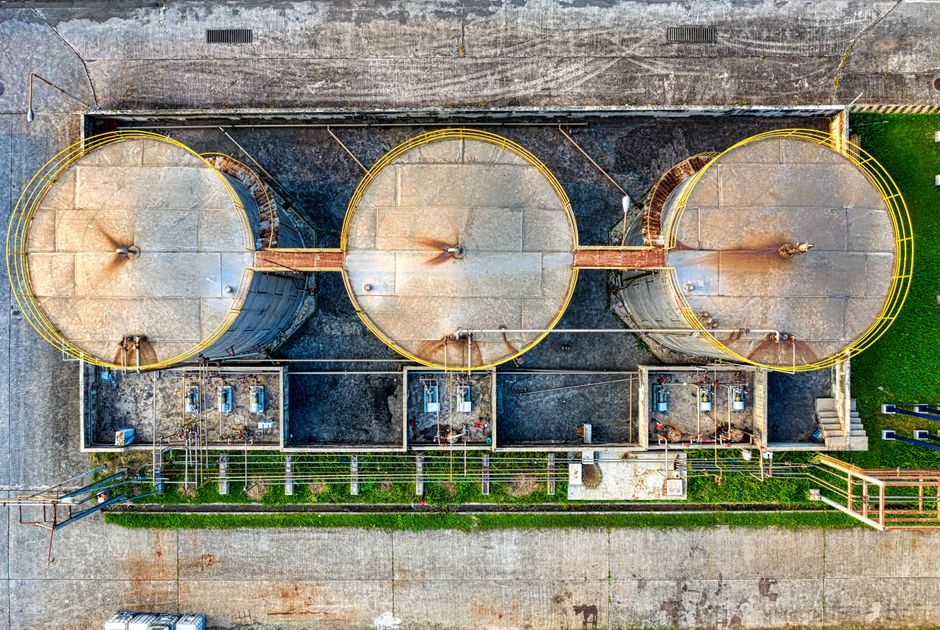
Total Cost of Ownership (TCO) is the sum of acquisition, operation, maintenance, support, and disposal cost over a defined service window, and a TCO analysis "exposes the hidden costs easily overlooked during budget planning" — that framing from the USPS Supplying Principles applies directly to coating specification [S3]. In coating work, those hidden costs cluster in blast media, scaffolding, containment, and the productivity loss when a tank or pipe section is taken out of service for reapplication.
Five Cost Drivers That Move the Lifecycle Spend Stack
The five repeatable cost drivers on a coating project are substrate preparation, primer chemistry, topcoat chemistry, application environment, and service interval — and each one is independently capable of doubling or halving the lifecycle bill. ABB's process-engineering TCO framing warns that operators who "assess the cost of ownership as a whole" avoid the catastrophic-failure path, the same logic that drives coating system selection on a storage tank or offshore platform [S1]. Substrate preparation (typically SSPC-SP10 near-white metal blast to ISO 8501-1 Sa 2½) is consistently the single largest line item because blast media, containment, and disposal scale with surface area rather than with the cost of the paint itself.
Primer chemistry sets the corrosion-resistance ceiling: inorganic zinc-rich ethyl silicate primers at 75-150 µm DFT deliver galvanic protection in offshore atmospheric zones, while epoxy-mastic primers at 125-200 µm DFT are common on buried pipe. Topcoat selection — acrylic, polysiloxane, polyurethane fluoropolymer — drives UV durability and the repaint interval, which can stretch from 8 years on a standard epoxy to 25+ years on a fluoropolymer system over a zinc primer. Application environment multiplies cost when containment, heating, or humidity control is needed for cold or marine work, and service interval is the lever most often misjudged at specification stage because the inspector sees DFT, not the in-service corrosion rate.
Cost Stack by Coating Chemistry: Epoxy vs Zinc-Epoxy vs Fluoropolymer vs Polysiloxane
Side-by-side on a 10,000 m² atmospheric steel substrate over a 25-year window, four generic systems illustrate how the cost stack shifts — purchase price, prep cost, and repaint cadence all move independently: [S5]
Standard epoxy (epoxy primer + epoxy topcoat, 250-300 µm total DFT): low purchase price, short repaint interval of 8-12 years in C3/C4 corrosivity, two to three full repaints inside the 25-year window. Total TCO sits at the high end of the range because repaint frequency dominates.
Zinc-rich epoxy primer (75-100 µm) + epoxy intermediate (100-150 µm) + polyurethane topcoat (50-75 µm), total DFT 250-300 µm: mid purchase price, repaint interval 12-18 years in C4, one to two repaints over 25 years. The most common commercial balance for offshore atmospheric and onshore chemical service.
Zinc-rich ethyl silicate primer (75 µm) + polysiloxane topcoat (100-150 µm), total DFT ~200 µm: higher purchase price, repaint interval 18-25 years in C3/C4, often zero to one repaint over 25 years. Lower total TCO when access cost is high (offshore, tall structures) because the topcoat skips the standard polyurethane UV-degradation cycle.
Zinc-rich primer + fluoropolymer (FEVE or PVDF) topcoat, total DFT ~200 µm: highest purchase price per litre, repaint interval 25+ years in C3, often outlasts the design window. Total TCO is lowest where repaint access is most expensive — tank farms, stacks, and offshore modules where scaffolding alone can exceed coating material cost on a per-m² basis. The Oracle Deployment Planning Guide frames this trade-off as the classic TCO question: "the cost of doing nothing" versus investing in a system that pushes the next shutdown out beyond the planning horizon [S2].
Who TCO Analysis Is For — and Where It Fails

TCO analysis is for the specifier choosing between two qualified coating systems on a 15+ year asset, the maintenance planner scheduling repaint intervals across a multi-asset fleet, and the procurement engineer defending a higher first-cost system to a CFO. The same CoSN framework used for technology TCO applies: TCO "captures the full lifecycle cost — not just the purchase price," and breaks spend into hardware, infrastructure, support, training, and end-of-life [S5]. In coating work, those buckets map to material, surface prep + access, inspection + maintenance, applicator qualification, and abrasive disposal + removal.
TCO analysis fails when the assumed service life is wrong, when the corrosivity zone is mis-classified (ISO 12944 C2 versus C5-M shifts the repaint interval by a factor of three or more), or when the cost of unplanned shutdown is excluded from the comparison. It is also weak on greenfield versus brownfield comparison because brownfield projects carry unknown substrate condition that can swing the prep line item by 30-50% before the first litre of paint is sprayed.
Surface Preparation: The Hidden 30-50% of the Budget
Surface preparation — blast media, containment, abrasive recovery, and disposal — typically runs 30-50% of the applied cost on a new-build tank or pipe spool, and that ratio climbs on maintenance repaints where lead paint or hexavalent chrome adds containment cost. USPS guidance explicitly warns that TCO analysis must reach beyond acquisition: in coating terms, that means the cost of getting the steel to a clean, profiled, dry condition before spray, because every other line item in the stack assumes that substrate condition is met [S3].
Waterproof coating work on concrete follows the same rule: moisture-tolerant epoxy primers and polyurethane membranes priced at the drum cannot compensate for a damp slab, and the prep cost (mechanical grinding, shot-blasting, priming of pores) decides whether the system reaches its 10-15 year service life or fails at year three. A coating thickness gauge reading on a poorly prepared substrate is a number, not a warranty.
Total Cost of Ownership in Maintenance and Shutdown Planning
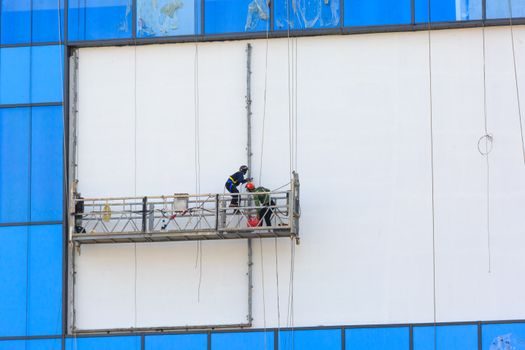
The "true cost of ownership" framing that ABB applies to electric motors — where the purchase price is dwarfed by downtime, energy, and unplanned repair — translates directly to coating work, where the cost driver is the next scheduled or unscheduled shutdown. A process plant that takes a 10,000 m² tank out of service for recoating loses production revenue at a rate that is typically several multiples of the coating contract value, so a system that pushes the next shutdown from year 12 to year 20 has already paid for itself in deferred lost-production cost alone [S1]. The Sogou encyclopaedia entry on TCO puts the same idea in process-engineering language: total ownership cost is "the overall cost in a defined time range including acquisition cost and annual total cost," averaged across a 3-5 year window where comparable spending is required.
This is the same logic behind the SPP2_014 framework from USPS — TCO surfaces the hidden costs that "budget planning or purchase decisions" routinely miss, and the coating version of those hidden costs is the access scaffold, the containment, the productivity loss during cure, and the inspection regime [S3]. Skipping any one of them produces a cheaper bid that is more expensive over the asset life.
Standards, Sourcing, and the Inspection Layer
Coating specification runs against a defined standards stack: ISO 12944 (corrosivity zones C1-C5, durability ranges), ISO 8501-1 (surface preparation grades Sa 1-3, St 2-3), SSPC/NACE surface preparation standards, and NACE SP0178 for thickness compliance. NACE MR0175 governs materials for sour-service hydrocarbon exposure, and fire-protection ratings fall under UL 1709 or ISO 834 cellulosic curves depending on the project jurisdiction. Inspection should use a calibrated coating thickness gauge on every batch, with adhesion testing per ASTM D4541 and holiday detection per ASTM D5162 on tank bottoms and buried pipe. [S3]
The Oracle deployment guide captures the sourcing discipline in one line: analysis of return on investment "involves measuring the financial benefits gained from the expenditure of capital" against alternate ways of achieving the same goal, and the cheapest coating system that meets the corrosivity-zone durability requirement is rarely the lowest-TCO option once shutdown cost is included [S2]. The same source reminds specifiers to weigh the impact of the solution on supporting infrastructure — in coating work, that translates to the impact of the coating schedule on the plant's overall maintenance outage plan, not just the painting contract.
For plants that are still specifying by purchase price alone, the next practical step is to run a 25-year discounted cash-flow model on two or three qualified systems using a defensible ISO 12944 corrosivity zone, a measured access-cost assumption, and a published repaint interval — that single exercise will almost always flip the recommendation toward the system with the higher first cost and longer service window, which is the central finding of every TCO study on long-life protective coatings.
Related analysis: Tachometer Price 2026: Cost Drivers, Sensor Comparison, and Lifecycle Spend.