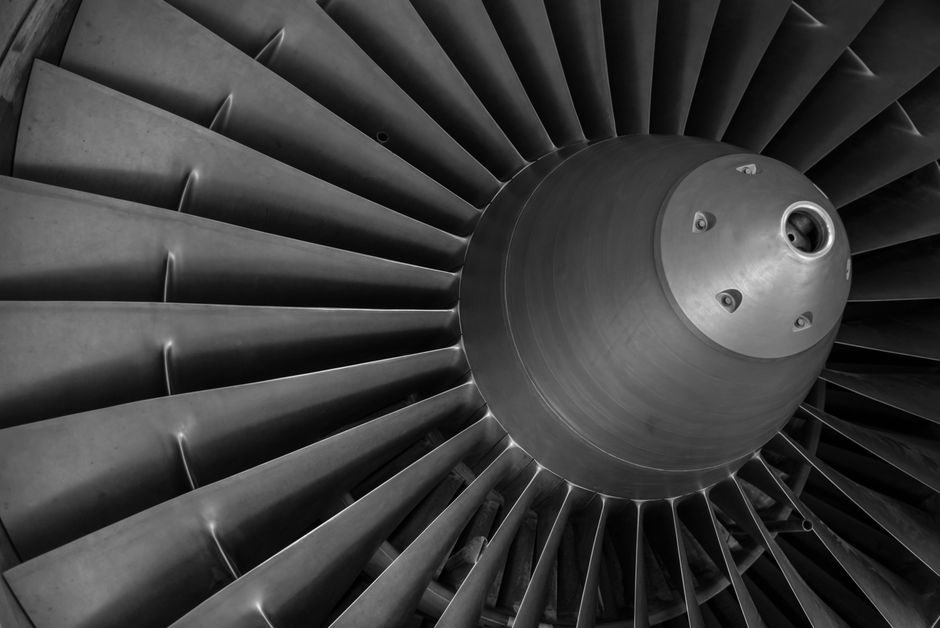
Industrial blowers on the 2026 sourcing market sit in two main price corridors: Roots/lobe positive-displacement units posted at US$3,999-US$5,000 ex-works for small-to-medium aeration and pneumatic-conveying duties, and corrosion-resistant centrifugal blowers in polypropylene starting around US$1,800 for direct-drive forward-curve units in the 1-3 hp class [S2][S1].
The bands above reflect list pricing on volume export channels, not delivered-and-installed cost. For a process engineer writing a budget memo, the realistic delivered cost is typically 1.35-1.7x the ex-works figure once crating, freight, duties, alignment, and baseplate work are added, with hazardous-location certification adding a fixed 10-20% surcharge on the base machine.
Price Bands by Blower Type on 2026 Sourcing Channels
Three-bearing Roots blowers built for wastewater aeration, cement pneumatic conveying, and dust-collection service are clustered at US$3,999-US$4,199 ex-works on the major China B2B sourcing channels, with corrosion-resistant variants (FRP / rubber-lined housings) stepping up to US$4,599-US$4,999 [S2]. Silent-cabinet Roots blowers for chemical gas transport and process air sit in the upper US$4,500 band [S2].
Corrosion-resistant centrifugal blowers in polypropylene and PVC for laboratory, fume-extraction, and water-treatment service open at a much lower entry point: direct-drive forward-curve units like the 35-class direct-drive PP blower land near US$1,800 list, with larger backward-curved and axial models climbing to US$4,000-US$8,000 depending on impeller diameter and motor power [S1].
What Drives the Price: Material, Certification, Volume, Lead Time
Material grade is the single largest cost lever. Standard cast-iron or aluminium-housing blowers anchor the bottom of any range; switching to polypropylene or UPVC shells for chemical-fume duty adds 15-30% to the base machine, while stainless-steel 304/316 impellers and shafts layer on another 10-25% [S1]. Carbon-loaded conductive polypropylene — required for ATEX/IECEx explosive-atmosphere service — commands a further premium and is typically quoted only against a hazardous-area classification request [S1].
Certification and conformity assessment stack on flat rather than percentage terms: ATEX 2014/34/EU and IECEx certification for Zone 1/Zone 2 service typically adds 10-20% to the unit price and 4-8 weeks of additional documentation lead time [S1]. ANSI/NFPA 70 explosion-proof conformance is the North American parallel and is the cited basis for carbon-impregnated PP blower builds in the US market [S1]. Volume tier moves the next band: a single-unit order on the export channels above carries the listed price, while a 5-10 unit container-load purchase routinely secures 8-15% discount off the same SKU [S2].
Selection Criteria: Which Blower Type Fits the Duty
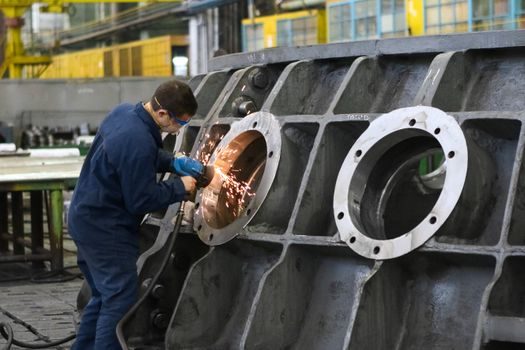
Roots/lobe blowers are the right call for fixed-flow, moderate-pressure duties (0.3-1.0 bar gauge) such as wastewater aeration, cement pneumatic conveying at the dilute-phase end, and environmental dust-collection transport — flow is largely independent of discharge pressure, which simplifies control loop tuning [S2].
Centrifugal blowers in PP and PVC are the default for corrosive fume extraction from laboratory hoods, chemical reactors, plating tanks, and natatorium chloramine control, where the gas stream attacks standard steel but pressures are typically under 0.5 bar [S1]. Axial-flow and jet-ducted fans are reserved for high-volume, low-pressure ventilation moves such as car-park supply or tunnel purge. For detailed guidance on matching equipment to fluid-handling duty profiles, the industrial mixer selection guide applies the same viscosity-versus-impeller logic, while the compressed air smart manufacturing brief is a useful parallel reference for blower control architectures on plant air networks.
Specification Comparison: Roots vs Centrifugal PP vs Centrifugal SS
Lining the three main blower choices up against the criteria that drive specification: Roots/lobe units deliver constant flow at variable pressure, run at 80-95 dB(A) without acoustic enclosure, and handle solids-laden streams poorly [S2]. Polypropylene centrifugal blowers are limited to roughly 60-80°C gas temperature and cannot be used on halogenated or strongly oxidising streams above the resin's chemical-resistance envelope, but are 20-35% cheaper than stainless equivalents at the same duty point [S1].
Stainless 316 centrifugal blowers are the spec choice for pharmaceutical, food, and high-temperature exhaust, accepting up to 200-300°C with appropriate shaft sealing and offering the broadest chemical compatibility, at a 40-80% price premium over the PP build at equivalent airflow and static pressure [S1]. Sound rating (dB(A) at 1 m), ATEX/IECEx zone, motor IE3/IE4 efficiency class, and impeller balance grade (G6.3 vs G2.5 per ISO 1940-1) are the four secondary discriminators on a datasheet comparison. For buyers who need to layer a total-cost-of-ownership case alongside equipment cost, the electronic load price 2026 reference applies the same TCO math (energy + service + downtime) to a different equipment class.
Total Cost of Ownership: Energy, Spares, and Service Intervals
Purchase price is typically only 35-55% of 10-year lifecycle cost on a continuously-duty industrial blower. The dominant TCO driver is electrical energy: a 15 kW blower running 8,000 hours/year at US$0.08/kWh consumes roughly US$9,600/year in electricity, versus an IE4 motor upgrade that recovers 4-6% of that figure annually. [S2]
Bearing service intervals (typically 20,000-40,000 hours for greaseable bearings, double that for sealed-for-life) and impeller rebalancing after every third bearing change are the other meaningful cost items; stocking one set of consumable spares per shift-critical blower is the standard insurance line item. Acoustic enclosures, inlet filters with differential-pressure gauges, and vibration mounts are the three accessory items that are cheapest to specify at order time and most expensive to retrofit after installation.
Who Industrial Blowers Are For — And Who Should Spec Else
Polypropylene and PVC centrifugal blowers are the correct spec for laboratory fume hoods, chemical reactor venting, plating-line scrubber exhaust, water-treatment plant aeration air handling, and indoor natatorium ventilation where chlorine/chloramine off-gas attacks mild steel [S1]. Roots/lobe blowers are the correct spec for wastewater aeration tanks, dilute-phase pneumatic conveying of cement, fly-ash and plastic pellets, and environmental dust-collection transport [S2].
Specifiers should walk away from the PP / PVC class if the gas stream exceeds the resin's chemical resistance envelope (strong oxidisers, hot concentrated acids, aromatic solvents), runs above 80°C, or carries abrasive particulates that erode the plastic impeller — in those cases stainless 316, Hastelloy, or rubber-lined steel are the only credible material choices. Buying decisions should also be cross-checked against the industrial camera reference where process monitoring of the blower inlet/outlet is part of the same capex line.
Procurement Signals and Standards to Watch
Lead time on standard-configuration PP centrifugal blowers from the major corrosion-resistant OEMs quoted above is 2 days for in-stock systems and 3-4 weeks for configured-to-order units [S1]. Roots/lobe units on the export channel list at 15-30 working days for standard builds, with custom pressure or material specs adding 4-6 weeks [S2]. AMCA Sound and Air Performance ratings, ISO 1940-1 balance grades, and ATEX 2014/34/EU or IECEx conformity assessment certificates are the three documents a buyer's QA team should require before releasing payment on a cross-border blower PO [S1].
Spec-level background on the components involved: linear guide, and crossed roller guide.