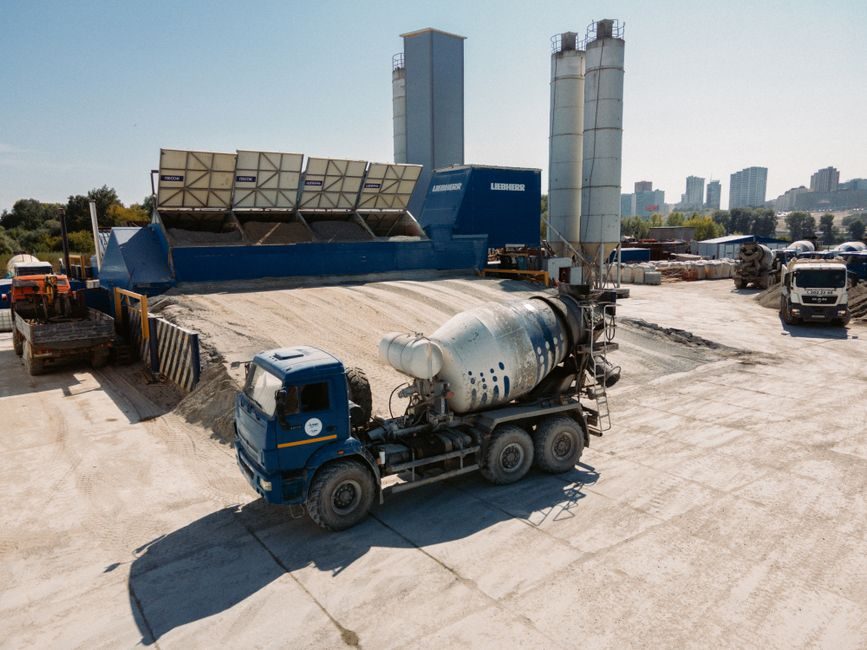
Hand-fed mobile concrete mixers in the 260–800 L drum class are listed on Made-in-China at US$798.00–899.00 per SET (MOQ 1 SET) as of 19 May 2026, with the same product family extending to roughly 1,500 L and 2,000 L towable units priced accordingly [S2].
Plastic/resin mixing machines — high-speed PVC, PP, PE, rubber and chemical heating/cooling combinations — are quoted factory-direct with warranty, and the search category on Made-in-China returns multiple audited-supplier SKUs for that duty in 2026 [S1]. The price spread between the smallest hand concrete unit and a multi-kW industrial power mixer skid routinely exceeds two orders of magnitude, so the buying decision has to be parameterised, not eyeballed.
What "industrial mixer" actually covers in 2026 catalogues
An industrial mixer purchase is rarely a single SKU: it is a vessel, an agitator, a drive train, a seal, and a control panel that must be specified as one system. The Made-in-China 2026 plastic-mixer category explicitly bundles stirring, drying, and colouring duty for PVC/PP/PE/resin/rubber/chemical service, signalling that buyers are expected to commit to a process line — not a standalone tank [S1].
For site-concrete duty, the same source shows the lower bound of the market: a 260 L–800 L manual hand concrete mixer with a 1 SET minimum order sits at US$798.00–899.00 FOB-equivalent on 19 May 2026 listings [S2]. Above that floor, the equipment ladder runs through concrete mixer truck chassis-mounted drums, then fixed planetary and paddle sand mixer skids for precast and foundry work, and finally high-shear vacuum and double-planetary reactors that dominate the four- and five-digit kW bracket.
Cost drivers ranked by what actually moves the invoice
Four levers dominate the line item: vessel working volume, drive power and torque, wetted-material grade, and certification/control scope. Each lever scales super-linearly past certain thresholds, and quoting engineers who treat them as independent variables produce numbers that bear no relation to the landed cost.
Working volume: doubling drum or vessel capacity from 500 L to 1,000 L does not double price — gear, frame, and motor scaling push the second 500 L onto a heavier cost curve, especially on hand-fed units where the drum is the structural spine. Motor power: a 5 kW versus a 22 kW drive on otherwise identical power mixer geometry can add roughly 2.5–4× to the motor-and-inverter share of the bill, and gearbox selection (helical-bevel vs. planetary vs. cyclo) shifts that further. Wetted material: 304 stainless as standard, 316L for chloride exposure, duplex (2205/2507) for chloride + sour service, and rubber-lined carbon steel for abrasive slurry — each step roughly doubles the wetted-component cost versus the previous tier. Certification: ATEX/IECEx Zone 1 or Zone 2 motors and panels, and NACE MR0175 metallurgical compliance for oil-and-gas service, add discrete, auditable cost blocks that the supplier must list separately.
Volume tier and lead time: a single sand mixer unit at 1 SET MOQ on Made-in-China in 2026 carries the catalogue list price, while a 5–10 unit order on the same machine is the realistic threshold where most Chinese suppliers open tier-two discounts plus consolidated sea-freight pricing; lead time, in turn, moves from 15–25 working days for stock colour/hand mixers to 60–90 days for engineered power skids [S1][S2].
Concrete-mixer band: hand, towable, and truck-mounted compared
Hand concrete mixers: 260–800 L portable drum, typically 1.5–3 kW single-phase or petrol drive, 1 SET MOQ, US$798.00–899.00 entry pricing as listed on 19 May 2026 [S2]. Towable concrete mixers: 1,000–3,500 L drum, 5–15 kW, 4-wheel chassis with towbar; the next logical step up for small contractors and rental fleets.
Selection rule of thumb: hand and towable units suit site-batched pours under roughly 30 m³/day; above that, the unit cost per cubic metre shifts decisively to truck-mounted drum delivery. For non-concrete industrial blending — resins, paints, foundry sand, food powders — the same volume/decision logic applies, but the driver is residence time and tip-speed, not pouring rate. If your duty is abrasive sand or dry mortar, the sand mixer family with paddles or ribbon is the right category; for viscous pastes and high-shear dispersions, escalate to a power mixer with bottom-entry high-shear stator.
Plastic, resin, and chemical-mixer band: what you pay per kW
The Made-in-China 2026 plastic-mixer listings cover heating, cooling, colouring, and drying combinations for PVC/PP/PE/resin/rubber duty, with audited factory-supplier warranties, indicating that the typical factory-direct unit is a horizontal trough or high-speed chamber rather than a top-entry laboratory stirrer [S1]. A useful cost-driver rule: for the same wetted material (typically 304 SS), every additional 5 kW of installed motor power adds materially more to the inverter-and-cabling share than the previous 5 kW, because the panel SCCR rating, cable copper, breaker frame, and disconnect all step up in size together.
For chemical and pharma service, the industrial adhesive and resin-mixing segment shares much of the same platform: 316L wetted parts, jacketed vessel for heating/cooling, vacuum option, and bottom-entry high-shear rotor. The industrial adhesive processing line is a good reference for the high-shear/planetary overlap, since adhesive manufacturing typically requires both high shear (to break down polymer agglomerates) and slow planetary sweep (to fold the vessel wall).
Total cost of ownership: purchase price is roughly 40–60% of the 5-year bill

A standard OEM rule of thumb used in mixer-selection workshops is that over a five-year service life, capital cost accounts for roughly 40–60% of the total cost, with the balance split across energy, scheduled maintenance (seal and bearing replacement), spares, and unplanned downtime. The split varies sharply with motor efficiency: an IE3-versus-IE4 motor on a continuously-running power mixer can swing energy cost by 3–5% per year, and that compounds over the asset's service life. [S1]
Maintenance: mechanical seal replacement on a bottom-entry high-shear unit is a planned 12–24 month interval on aqueous service and 6–12 months on abrasive or solvent service; budget seal kits and bearings as recurring line items, not contingency. Installation: foundations, structural steel, and electrical drop for a 500–1,000 L engineered mixer skid routinely run 15–30% of the equipment price on a green-field site and must be priced in.
Who this guide is for, and who it is not for
For: process engineers, plant buyers, and EPC sub-contractors who already know the duty (viscosity range, solids loading, temperature, batch size) and need a defensible budget envelope before going to RFQ. Not for: end-users still deciding between batch and continuous processing, or buyers who only have a generic "stirrer" requirement without residence-time and tip-speed targets — those need a duty-first selection exercise before any price discussion. [S2]
Failure modes and constraints that decide build, not brand

Three constraints tend to override brand preference in mixer buying. ATEX/IECEx Zone 1 for solvent service forces an explosion-proof motor and purged-panel architecture that sets a hard cost floor regardless of manufacturer. NACE MR0175 compliance for sour-service hydrocarbon duty locks the metallurgical supply chain into qualified forging and welding documentation, which only a subset of suppliers can deliver. Abrasive slurry service at >30% solids by weight typically rules out standard close-tolerance agitators and pushes the build toward rubber-lined vessels and open-impeller designs with replaceable wear liners. [S1]
For related context on how certification and material tiers move a similar bill of materials, the tool steel price 2026 cost drivers and buying tactics breakdown follows the same logic of grade bands and tier-based discounts, and the programmable DC power supply price 2026 cost bands piece is a useful cross-reference for the VFD/panel share of a power-mixer line item. Where the mixer sits inside a larger capex envelope alongside trucks and cranes, the truck-mounted crane installation guide covers comparable chassis-driven cost-split logic.
Trackable signals for the next quarter: published 2026 list-price refreshes on the Made-in-China plastic-mixer and hand-concrete-mixer category pages, and any tariff or steel-input announcements that move the 304/316L and carbon-steel plate benchmarks — those are the two indices that propagate fastest into mid-tier mixer quotes.