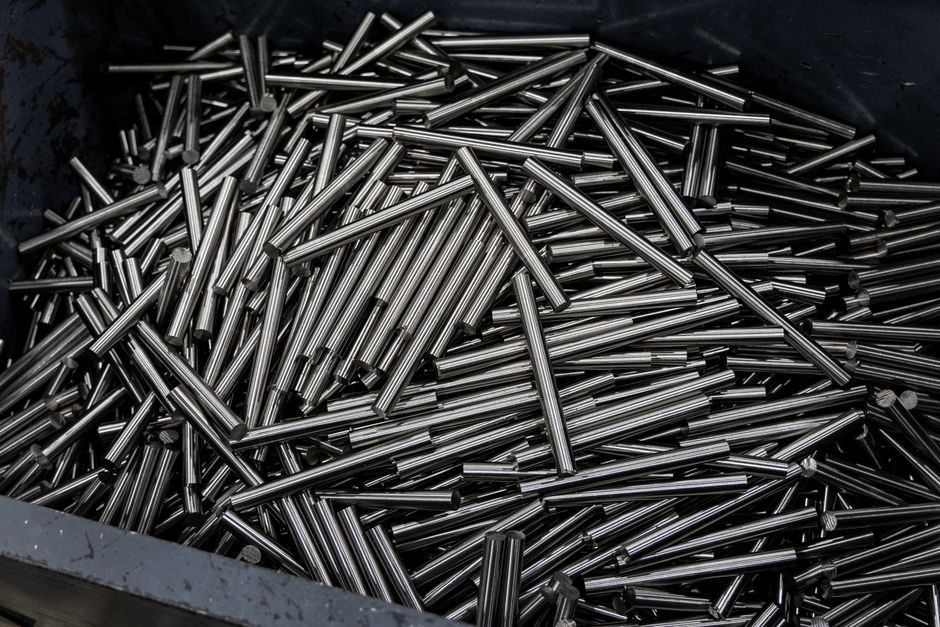
Tool steel price in mid-2026 is shaped first by AISI grade family (A2 air-hardening, D2 high-carbon high-chromium, H13 hot-work, O1 oil-hardening, S7 shock-resistant) and then by product form — round bar, flat bar, plate, square bar, and drill rod — each carrying a different per-pound multiplier over raw billet cost [S1].
Industrial distributors such as Southern Tool Steel list A2, D2, H13, S7, and O1 alongside decarb-free and flat-ground variants, while Chinese mill exporters list DIN 1.2316 (a D2-class plastic-mould grade) and hot-forged bright flat bar as the bulk-buy entry points [S1][S2]. Hudson Tool Steel and Xiri also split the market by product form rather than grade alone, confirming that form and finish — not just chemistry — move the invoice [S3][S4].
The five cost drivers that move a tool steel quote
Form is the second driver: ground flat stock and decarb-free rounds command a precision-machining premium of 20–40% over hot-rolled bar of the same chemistry, because decarburised surface must be milled off before any cutting tool can hold tolerance on a finished die [S1]. Order weight is the third: most US distributors move to a lower per-pound rate above 500–1,000 lb, while Chinese forged-block exporters price in metric-tonne tiers from 1 t to 20 t+ [S2]. Heat condition (annealed vs pre-hardened to HRC 30–34 vs hardened-and-tempered) is the fourth driver, because pre-hardened stock skips the buyer's heat-treat step. Certification — mill test certificate to EN 10204 3.1, PMI verification, ultrasonic testing — is the fifth and fastest-moving line item on a sourcing quote, typically billed as a flat surcharge per heat rather than per pound [S4].
Grade-by-grade price bands: where A2, D2, H13, O1, S7 actually land
A2 air-hardening tool steel round bar is the workhorse for blanking and forming dies; US service centers list it as a mid-tier cold-work grade above O1 and below D2, with flat-ground and decarb-free forms carrying the largest markup [S1]. D2 high-carbon high-chromium bar (1.5% C, 12% Cr) sits above A2 because of its higher Cr and C content and its frequent use in cold-work tooling that needs wear resistance over toughness, and D2-equivalent DIN 1.2379 and plastic-mould DIN 1.2316 are the two grades most quoted as forged block on Chinese mill export listings [S2]. H13 hot-work tool steel (0.40% C, 5% Cr, 1.5% Mo, 1% V) is the standard die-steel for die-casting and aluminium extrusion tooling, and H13 die blocks in 300×300×500 mm and larger are the bulk of the forged-tool-steel RFQ stream on Made-in-China.com [S2]. O1 oil-hardening and S7 shock-resistant are the value choices: O1 for short-run blanking and gages, S7 for punches and chisels where impact loading dominates; both price below A2/D2/H13 at most US service centers and are routinely stocked in drill-rod and flat-ground form [S1]. For a deeper look at how the AISI families map to DIN/Werkstoff equivalents and to specific product forms, see this tool-steel selection guide.
Form factor: round bar, flat bar, plate, drill rod, decarb-free
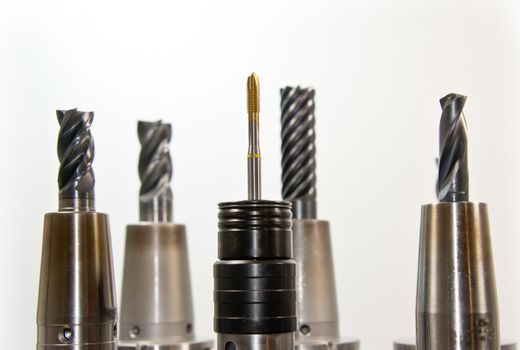
Tool steel plate is the cheapest form per pound because the mill can roll wide slabs with less conversion loss; tool steel round bar carries a moderate premium for peeling and turning to clean up the as-rolled surface; flat-ground and drill-rod forms are the most expensive because each bar is centreless-ground or ground to a precise thickness and width tolerance [S1]. Southern Tool Steel's catalog separates these explicitly — tool steel plate, bar (round/square/flat), and drill rod are listed as distinct product lines, with "decarb free" and "flat ground" called out as upgrades on top of the base bar item [S1]. Hudson Tool Steel sells tool steel and high-speed steel in similar form-split cuts for buyers who need small quantities without mill minimums [S3]. For shops running carbon steel or alloy steel tooling where wear life is not critical, the price gap to tool steel is wide enough that down-spec'ing the grade is a real cost lever — but only if impact and wear service conditions are also relaxed.
Buying channels: US service center vs Chinese mill exporter vs direct mill
Three channels compete for the tool steel RFQ. US service centers (Southern Tool Steel, Hudson Tool Steel) stock standard A2/D2/H13/O1/S7 grades in small cuts, ship in 1–2 weeks, and price per pound with a cutting-charge add-on for non-standard sizes — best for prototype tooling, maintenance spares, and orders under 1,000 lb [S1][S3]. Chinese mill exporters (Made-in-China.com listings, Xiri) quote forged DIN 1.2316, DIN 1.2379, and H13 blocks in metric-tonne tiers, typically 5–8 weeks for production plus sea freight, and require 1–20 t minimums — best for production runs and mould-frame builders [S2][S4]. Direct mill sourcing (Bohler, Voestalpine, Daido, ASSAB + a handful of Chinese integrated mills) is reserved for OEM buyers ordering full heats with EN 10204 3.2 certification and PMI traceability, and is rarely economic below 5 t per heat. For buyers who also need linear guide rails or crossed roller guide slides for the same machine tool build, bundling the steel and motion-component RFQ through one sourcing agent is the easiest way to consolidate inspection and freight.
Total cost of ownership: the five cost lines behind the per-pound price
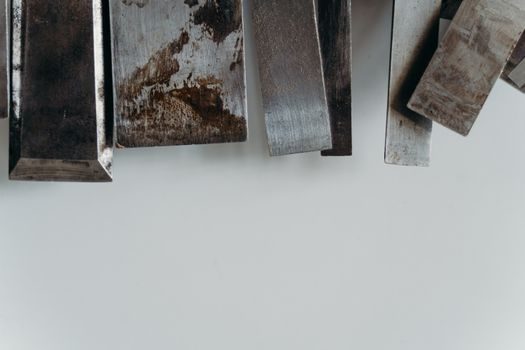
The per-pound invoice is only the first of five cost lines. Machining cost is the second line: annealed bar machines fastest, pre-hardened HRC 30–34 stock saves a heat-treat cycle but eats tooling, and D2 in the hardened condition is often wire-EDM'd rather than milled. Heat treatment is the third — outsourcing vacuum heat-treat for H13 or D2 adds a per-pound service charge that can rival the original bar cost on small lots. Inspection and certification (MTC 3.1, PMI, UT, hardness mapping) is the fourth, billed per heat rather than per pound. Scrap and rework is the fifth and most variable: a 5% decarb layer on hot-rolled bar that is spec'd into a tight tolerance die can waste 8–15% of the bought weight, which is exactly why decarb-free and peeled-bar upcharges exist [S1][S4]. For shops also evaluating tool die steel or silicon steel for adjacent tooling or motor-lamination work, applying the same five-line TCO framework keeps the comparison honest.
Verifiable signals to watch over the next buying cycle
Track three signals before placing the next PO: the spread between O1 and D2 per-pound pricing at your incumbent US service center (it widens when Cr and Mo surcharges climb on the London Metal Exchange), the lead-time delta between US distributor stock and Chinese forged-block mill quotes (currently 1–2 weeks vs 5–8 weeks), and whether your heat-treatment vendor is bundling EN 10204 3.1 certification into the cycle price or billing it as a separate line — that single line item has moved more in 2024–2026 than the bar price itself [S1][S2][S4].