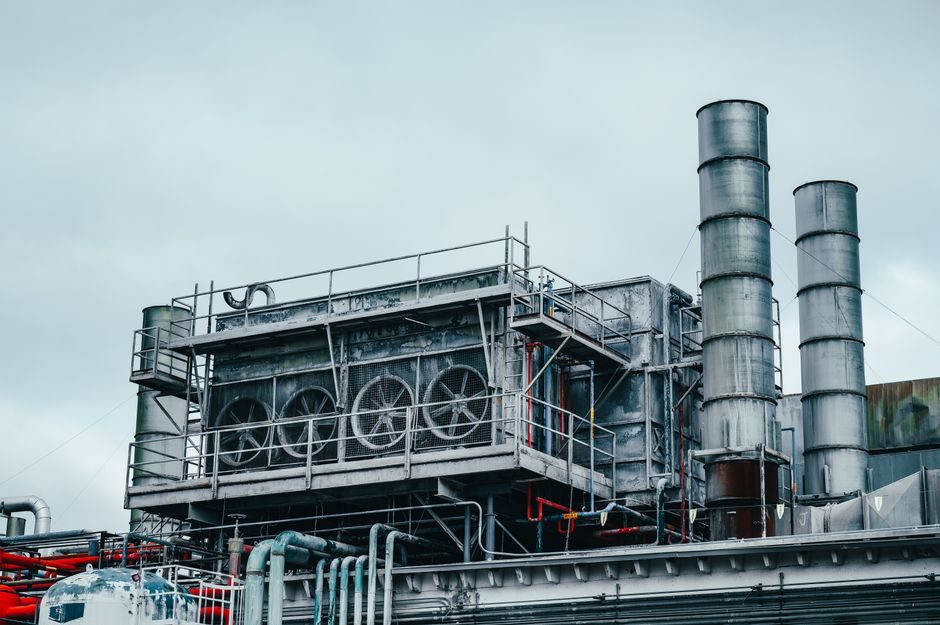
Industrial steam demand, fuel logistics, and feedwater hardness together drive boiler type selection more than any single brand specification, per current manufacturer guidance [S2][S3].
Output ranges from packaged 0.5 t/h gas-fired fire-tube units up to 100+ t/h CFB utility boilers, with thermal oil heaters and biomass-fired chain-grate designs filling the 1-20 MW process-heat niche [S2][S8].
Boiler Family Map: Fire-Tube vs Water-Tube vs Thermal Oil vs CFB
Fire-tube shell boilers dominate the 0.5-10 t/h saturated steam band because their welded shell-and-firebox geometry is cheaper to fabricate per kW than a membrane-walled water-tube bank [S2][S3]. Water-tube designs (DHL, SZL, CFB series in current vendor catalogs) take over above roughly 10-15 t/h because higher pressure ratings, faster load response, and lower blowdown rates outweigh higher fabrication cost [S2][S6][S8]. For processes that need 200-350 °C process heat without the ASME Section I stamping burden — bitumen tanks, chemical reactors, wood-board presses — thermal oil heaters (YYL, YQL series) transfer heat through a closed diathermic loop and tolerate lower pressure-class piping [S2][S3].
Circulating Fluidized Bed (CFB) boilers handle low-grade fuels with high ash or moisture, including coal tailings, rice husk, palm kernel shell, and pet-coke blends, because the fluidized bed keeps combustion temperature around 850-900 °C — below the ash fusion point of most problem fuels, which suppresses slagging [S2]. For a parallel overview of how pressure-class and code mapping drives a different utility item, see the Pressure Relief Valve Selection: Sizing, Type Match, and Code Anchors reference. When a buyer is balancing fuel flexibility against footprint, the Industrial Chiller Selection: Capacity, Compressor, and Duty Map piece shows the same duty-fit logic applied to process cooling.
Selection Criteria: Steam Pressure, Fuel, Feedwater, Emissions
Steam pressure is the first hard filter: saturated steam below 1.0 MPa fits fire-tube shells, while 2.5-9.8 MPa superheated supply for turbines or sterilization almost always requires a water-tube membrane wall [S2][S6].
Fuel availability comes second. Natural gas and LPG are the cleanest path (NOx under 30 mg/Nm³ achievable on low-NOx burners per current OEM data sheets [S3][S7]), but require a stable pipeline or bulk-LPG supply. Diesel and heavy oil burn on most gas/oil dual-fuel units with only a burner-orifice change. Biomass — wood chip, bagasse, palm EFB, rice husk — mandates a chain-grate or CFB design with ash handling, typically sized 1-20 t/h for industrial users and 20-130 t/h for sugar mills and rice processors [S3][S6][S8].
Emissions constraints — typically 30-100 mg/Nm³ NOx and 30-50 mg/Nm³ SOx in regulated markets — push the spec toward low-NOx staged burners or a CFB with in-bed desulfurization; gas-fired units meet the cleanest ceilings with no post-combustion hardware [S7].
Comparison of Main Industrial Boiler Options
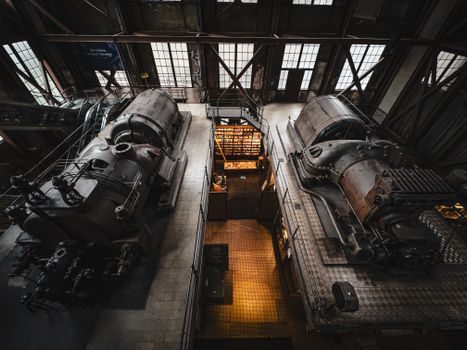
Packaged gas/oil fire-tube steam boilers suit 0.5-10 t/h at 1.0-1.6 MPa for textile, food, and laundry sites needing fast installation and a 6-12 month payback on fuel switching [S3][S5]. Water-tube biomass chain-grate boilers (SZL, DHL series) deliver 10-35 t/h at 1.25-2.45 MPa for feed mills, breweries, and chemical plants with on-site agricultural residue, achieving 82-88 % thermal efficiency on a typical 0-6 mm moisture fuel [S6][S8]. Thermal oil heaters cover 0.35-14 MW (≈0.5-20 t/h steam equivalent) at 0.7-1.0 MPa coil pressure with a 250-350 °C oil outlet, used where steam would be unsafe or uneconomical [S2][S3]. CFB utility boilers run 35-130 t/h and burn low-grade coal or biomass with ≤30 mg/Nm³ NOx when fitted with SNCR, favored in paper, power, and large chemical complexes [S2].
Vendor portfolios in this segment — including ZOZEN, Fangkuai, EPCB, Bidragon, and IB&M — overlap heavily on the gas-fired 1-10 t/h band, so differentiation there is service, burner brand, and ERP integration rather than core engineering [S5][S6][S8][S9]. The trade-off is consistent across the catalog: lower capex per kW correlates with longer delivery and slower load swing; faster delivery correlates with higher $/kW and tighter fuel slate [S3][S6].
Who Should NOT Pick the Cheapest Packaged Option
A low-cost packaged gas-fired fire-tube boiler is a wrong choice when the site has any of: (a) fluctuating demand below 30 % of nameplate for more than 4 hours/day, (b) high TDS feedwater above 1500 ppm, or (c) need for rapid steam pressure ramping (sterilization retort cycles under 15 minutes from cold). In those cases a water-tube design with a bigger steam drum and modulating burners is mandatory, even at 1.5-2× the capital cost [S2][S6].
Similarly, biomass chain-grate boilers are a poor fit for sites with seasonal biomass supply — sugar mills that run 6 months/year, or rice plants with a single harvest — because fuel storage and moisture control dominate the lifecycle cost, not the boiler itself [S3][S8]. For those users, a condensing gas-fired unit or a thermal oil heater on light fuel oil typically returns a lower 10-year cost [S2][S3].
Buyers who do not have an on-site water treatment scheme should also avoid a 9.8 MPa water-tube unit, because once-through supercritical geometries have zero tolerance for hardness excursions; the right interim step is a saturated-steam drum boiler with a packaged softener skid [S2][S6].
Standards, Emissions, and Code Anchors
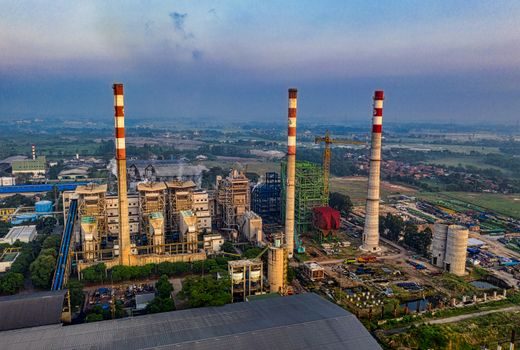
China-based industrial boiler manufacturers in the current supply chain ship with EN 12953 (for shell boilers) and EN 12952 (for water-tube) on EU-bound projects, ASME Section I on North American projects, and the GB/T 16507 and GB/T 16508 codes for the domestic Chinese market — these are the four reference standards cited across vendor literature [S2][S3][S5][S6]. Thermal efficiency is measured against GB 24500-2020 in China and against EN 303-5 in the EU, with current gas-fired units reporting 92-96 % net efficiency and biomass units 82-88 % [S2][S3][S8].
Emissions compliance is governed regionally: EU IED limits and the Medium Combustion Plant Directive (MCPD) for units 1-50 MWth; US NSPS Subpart Db for boilers above 73 MWth and Subpart Dc for smaller units; in China, GB 13271-2014 sets NOx ≤ 200 mg/m³ for gas boilers and ≤ 300 mg/m³ for coal units, with stricter local overlays in Beijing, Shanghai, and the Pearl River Delta [S2][S3][S7]. Stamped pressure vessels must carry CE/PED Module B+D, ASME U-stamp, or SELO depending on jurisdiction, and every current model catalog in the research references at least one of these certifications on the data sheet [S2][S5][S6].
Real Industrial Use Cases and Selection Logic
Textile dyeing and finishing plants in Southeast Asia and South Asia typically install 2-8 t/h gas-fired fire-tube units at 0.8 MPa because the process is heat-only with no superheat demand and the local gas grid is reliable [S2][S3]. Breweries and distilleries favor 1-4 t/h gas/biomass dual-fuel water-tube designs at 1.0-1.6 MPa to ride out grain-husk availability swings, with the steam routed through a brew-kettle jacket and a CIP skid [S3][S5]. Chemical plants handling bitumen, caustic, or polymer reactors run 1-10 MW thermal oil heaters so the heating loop stays below 1.0 MPa while the oil reaches 280-320 °C — eliminating the need for a high-pressure steam header [S2][S3].
Feed mills, rice mills, and oilseed processors anchor 10-35 t/h biomass chain-grate boilers (rice husk, bagasse, palm EFB) to displace furnace oil and lock in a 1.5-3 year payback, with the ash typically sold as a soil amendment or pozzolan [S3][S6][S8]. Large paper mills, refineries, and district-heating utilities deploy CFB boilers in the 35-130 t/h band, often co-firing coal tailings with biomass up to 20 % to meet emissions and carbon-intensity targets [S2].
Limitations, Sourcing Risks, and Verifiable Signals
The biggest selection failure mode is a fire-tube unit specified for a process that later moves to 24/7 operation, because shell boilers have lower turndown and shorter refractory life under continuous duty — typically 8-10 years between turnarounds versus 15-20 for water-tube [S2][S6].
Sourcing risks in 2026 remain concentrated on long-lead items: membrane water-wall panels (12-20 week lead time), CFB refractory bricks, and ASME-stamped headers — so a buyer evaluating Seamless Steel Pipe Buying Guide 2026: Standards, Grades, Price Bands should plan the boiler tube and economizer pipe orders in parallel. Fuel-supply contracts with biomass or process-gas vendors should be locked before boiler commissioning, because a water-tube chain-grate can lose 10-15 % efficiency when fired on wetter-than-spec fuel [S2][S3][S8].
Trackable signals to monitor: vendor-published 2026 model catalog updates (ZOZEN wood-chip and biomass thermal oil announcements dated 2026-07-03 [S8]); UL 795 / CSA B140.10 certification issuance for new US-bound burners; and GB 13271 enforcement timing in lower-tier Chinese cities, which will phase out the last 35 t/h coal units before 2027. Confirm PED Module H1 on EU-bound CFB bids and verify [Industrial Boiler & Mechanical] emergency-rental capacity if a steam outage risk exceeds 24 hours on a continuous process [S9].
Spec-level background on the components involved: linear guide, crossed roller guide, and industrial adhesive.