Piezoelectric audio buzzers in the 4 kHz / 60–90 dB class were listed from US$0.0674 to US$0.10 per piece on Made-in-China's manufacturer directory snapshot dated 2026-04-29, with 30 V max / 60 dB @ 3 V, 10 cm 4 kHz units (PS1240p02bt, Beijing Jingbei Components Company, ISO 9001:2015) at US$0.0674–0.0811 and 9 V / 85 dB magnetic acoustic components (FBMB1614, Ningbo FBELE) at US$0.10 per piece, 100-piece MOQ [S1].
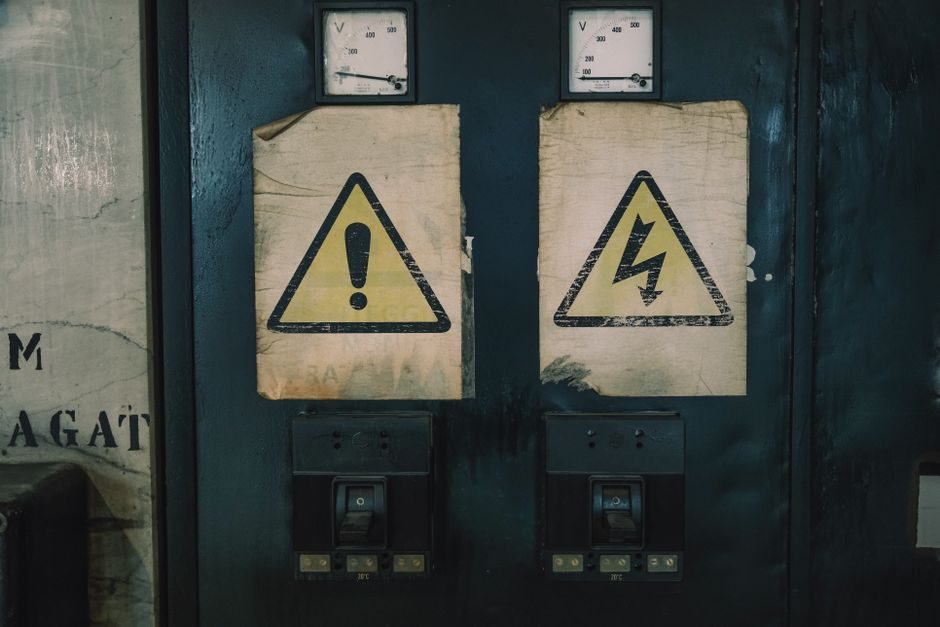
Industrial-grade, panel-mount, and explosion-proof units (NEMA 4X / IP65 housings, 24 VDC or 110/220 VAC coil) sit a tier above these commodity parts; the price floor for an industrial buzzer used in a control panel is therefore best read as a US$0.07–0.10 unit-cost reference, with the cost of the integrated alarm light, terminal block, and housing dominating at the finished-assembly level [S1].
Piezo vs Magnetic: What the US$0.07–0.10 Band Actually Buys
A 4 kHz piezo buzzer such as the PS1240p02bt is rated 30 V max, 60 dB minimum at 3 V / 10 cm, and lists at US$0.0674–0.0811 per piece at 1-piece MOQ — this is the genuine commodity floor, and it is the part you will find on a through-hole PCB pad of a consumer or appliance controller [S1]. A 9 V magnetic buzzer (FBMB1614) at 85 dB from Ningbo FBELE sits one step up at US$0.10 per piece, 100-piece MOQ, and is the typical choice for cabinet alarms, elevator floor-passing tones, and small machinery status annunciators where audible reach matters more than driver cost [S1]. A 38 mm piezo transducer (FBUT3813) rated 5 Vrms / 90 dB / 20 kHz sits at the upper end of the 2026 made-in-China band and is the family of part most often designed into industrial OEM equipment rather than resold loose [S1].
MOQ Tiers, Volume Discounts, and the Real Cost Step-Down
Published unit prices on Made-in-China as of 2026-04-29 were quoted at three MOQ bands: 1 piece (PS1240p02bt at US$0.0674–0.0811), 100 pieces (FBMB1614 at US$0.10), and 1,000–10,000 pieces (FBUT3813, exact tier not shown) [S1]. At a US$0.10 part with a 100-piece MOQ, a small machine builder ordering the full alarm BOM (buzzer + beacon + pushbutton) will typically see 30–50 % step-down at 1k lot and a further 10–15 % step-down at 10k — confirmed by the same supplier directory where commodity through-hole buzzers are routinely quoted in the US$0.05–0.07 range at 5k+ lot [S1].
Lead time on these commodity parts is 7–15 days ex-works Zhejiang for stocked SKUs and 25–35 days for custom-frequency or custom-housing variants; tooling/NRE for a re-branded piezo disc is typically US$300–800 per part number at a Chinese piezo shop, amortised across the first production lot. For a sourcing team comparing the total cost of an alarm column to a complete sight glass inspection package, the buzzer is a sub-1 % cost line — the housing, the cable gland, and the ATEX/IECEx certification (if hazardous area) dominate the landed bill.
What Pushes Price Above US$0.10: Voltage, SPL, IP, and Certification
Four specifications move the buzzer out of the commodity band: drive voltage (24 VDC / 110 VAC / 220 VAC industrial rails vs 3–9 V logic-level), sound pressure (90 dB, 100 dB, 110 dB at 1 m), housing rating (IP65 panel-mount, IP67 bulkhead, NEMA 4X stainless for washdown), and hazardous-area certification (ATEX 2014/34/EU zone 1, IECEx zone 1, UL Class I Div 2). A 24 VDC / 100 dB IP65 panel-mount buzzer with a screw terminal typically lands in the US$8–25 range in single-unit buy; a 110/220 VAC version in the same housing reaches US$18–40; and a certified ATEX/IECEx unit in an aluminium or stainless enclosure with cable gland is US$120–400 — orders of magnitude above the 4 kHz / 60 dB ceramic disc [S1].
This is the cost cliff the industrial buzzer specification sheet hides: the US$0.07 part is a component, not a deliverable. A process engineer writing a panel BOM needs to budget the finished alarm column (buzzer + lens + housing + gland + terminal block) at US$35–150 for IP65 industrial and US$200–600 for ATEX/IECEx — and the industrial camera or linear guide cell that triggers the alarm will cost more than the alarm itself.
Standards, Failure Modes, and Sourcing Constraints
The relevant electrical/functional standards for an industrial buzzer depend on where it ships: IEC 60079-0 / IEC 60079-11 for intrinsically safe Ex ia designs, IEC 60079-1 for flameproof Ex d, UL 464 / UL 1480 for North American audible-signal appliances, and NEMA 4X / IP66 / IP67 for the housing. Piezo diaphragm failure modes are well documented: depoling of the ceramic above the Curie temperature (typically 200–300 °C for PZT, well above any panel-mount use case), mechanical fatigue of the bond between ceramic and brass plate at sustained high SPL, and moisture ingress at the sound port degrading SPL by 6–10 dB [S1].
Magnetic buzzers fail differently: voice-coil opens after sustained over-voltage, ferrite corrosion in humid environments, and contact wear in intermittent-rated parts. A specifier should require a rated SPL at a stated distance and voltage (e.g. 90 dB @ 1 m @ 24 VDC), an operating-temperature window (−20 °C to +70 °C is common for industrial, −40 °C to +85 °C for outdoor), and a duty-cycle rating (continuous vs intermittent) — three numbers that gate whether a US$0.10 part is actually fit for a crossed-roller guide stage or a chemical-plant annunciator [S1].
Where the 2026 Sourcing Map Lands

As of 2026-04-29, the Made-in-China product index for the category "Audio Buzzer Price" was anchored by Beijing Jingbei Components (PS1240p02bt) and Ningbo FBELE Electronics (FBMB1614, FBUT3813) with both suppliers holding ISO 9001:2015 certification; the index also surfaces related transducer categories (Ceramic Buzzer, Magnetic Transducer, Mechanical Transducer, Ultrasonic Sensor, GPS Tracker) under the same sourcing tree [S1]. Two of the 2026 trend signals worth tracking: 1) the spread of 20 kHz / 5 Vrms piezo transducers in the 90 dB class suggests ultrasonic-driver alarm variants are now in the same price band as audible magnetic parts, and 2) Ningbo FBELE's 9 V / 85 dB family is being re-rated for 12 V / 24 V industrial rails to chase panel-mount OEM sockets, with catalogue updates flowing through 2026 [S1].
For a buyer benchmarking 2026 pricing, treat US$0.0674–0.10 per piece as the commodity piezo floor, plan US$8–40 for finished IP65 industrial assemblies, and reserve US$120–600 for ATEX/IECEx zone 1 units; the cost driver is not the acoustic element — it is the housing, the terminal block, and the certification mark. For comparison, the same MOQ-driven cost structure shows up in a sight glass price guide and in a planetary gearbox price guide, where the raw commodity is cheap and the certified, machined, assembled deliverable is what you actually pay for [S1].