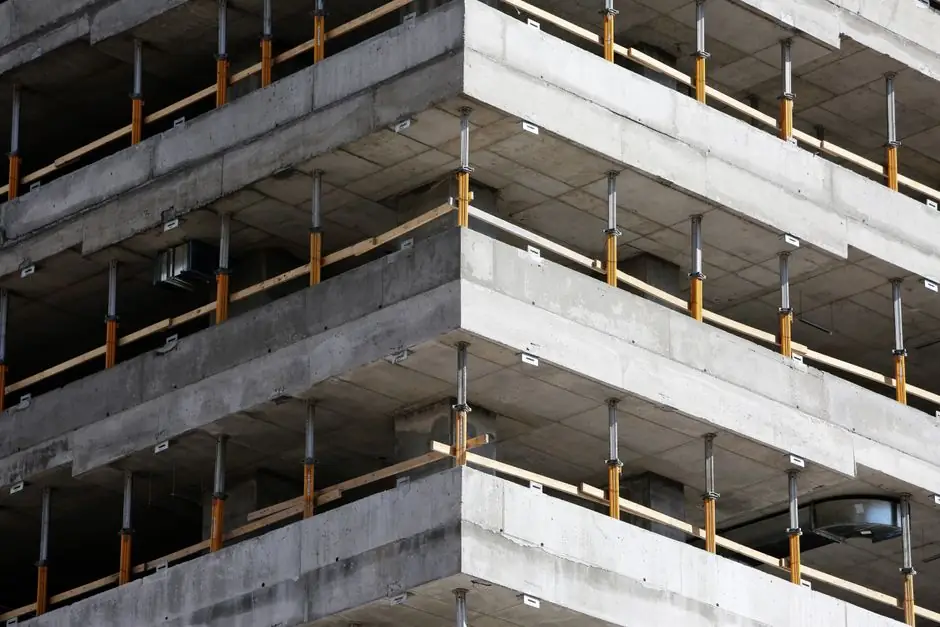
Specifying a camera for a structural fabrication site is a three-axis decision: hazardous-area classification, ingress protection against welding spatter and dust, and an EMC/EMI envelope that survives the VFD-rich yard. The first axis, certification scope, is where most procurement errors happen, because a CE-marked industrial camera without an explicit Ex marking has no legal standing in a Zone 1 atmosphere under ATEX 2014/34/EU [S4].
For structural fabrication work, the typical job-site picture includes a mix of open-yard welding (non-classified), paint booths (Zone 1/2 depending on solvent flash point), confined-space tank interiors (Zone 0/1), and outdoor storage (NEC typically unclassified but weather-exposed). A single procurement order usually needs at least two device classes: a rugged IP-rated camera for general progress documentation and an Ex-certified unit for confined-space and coating-area inspection [S3].
ATEX vs IECEx vs NEC Class/Division: Pick the Mark Before the Model
ATEX 2014/34/EU is the mandatory legal framework inside the European Union and assigns gas/vapor Zones 0, 1, 2 and dust Zones 20, 21, 22 based on how often an explosive atmosphere is present during normal operation [S4]. A Zone 1 camera is engineered for areas where an explosive mixture is likely during normal use, which is the most common specification for structural-fab paint shops and solvent storage rooms adjacent to fabrication bays.
IECEx is the international counterpart, accepted in over 30 countries, and aligns its equipment-protection-level (EPL) concept with ATEX zones: Ga/Da for Zone 0/20, Gb/Db for Zone 1/21, Gc/Dc for Zone 2/22 [S4]. For a fabrication contractor shipping modules to the Middle East or Southeast Asia, an IECEx certificate avoids re-testing the same camera body for each national scheme.
North American sites follow the NEC Class/Division system: Class I (gases/vapors), Class II (dust), Class III (fibers), with Division 1 indicating the hazard is present under normal conditions and Division 2 indicating it is only present abnormally [S3]. Third-party bodies, typically UL in the US and CSA in Canada, issue the certificate, and the camera's marking plate must explicitly state the Class, Division, and Group (e.g., Group D for many structural-shop solvents) before it can be energised in a classified area [S4].
Ingress, Impact, and Thermal: The Non-Ex Build Requirements
For non-classified outdoor structural work, the deciding spec is usually IP66 or IP67, not the Ex mark. IP66 protects against powerful water jets and total dust ingress, while IP67 adds temporary immersion to 1 m for 30 min, which matters for monsoon-season bridge or offshore-module yards where standing water is common [S3]. An IK10 impact rating (20 Joule) is the practical floor for any camera mounted within reach of crane hooks, falling tools, or rebar bundles.
Operating-temperature range drives sensor choice in steel-fab environments. Most industrial cameras are rated 0 deg C to 50 deg C, but cold-climate bridge sites (sub-zero start-up) and hot-climate shipyards (metal surfaces radiating 60+ deg C) push you toward -30 deg C to 70 deg C housings, or active heater/blower units [S3]. For a process overview of how these ratings map to on-site constraints, see the working engineer's reference on IR thermometer calibration, which follows the same traceable-spec discipline.
EMC/EMI compliance under FCC Part 15 (US) and the EU EMC Directive 2014/30/EU is non-negotiable in a fabrication yard full of variable-frequency drives, inverter welders, and radio-controlled cranes. A USB or GigE industrial camera without a documented EN 61000-6-2/EN 61000-6-4 conformity assessment will intermittently drop frames every time a 50 kA arc-stabilizer fires [S5].
Resolution, Frame Rate, and Sensor Choices for Weld and Surface Inspection
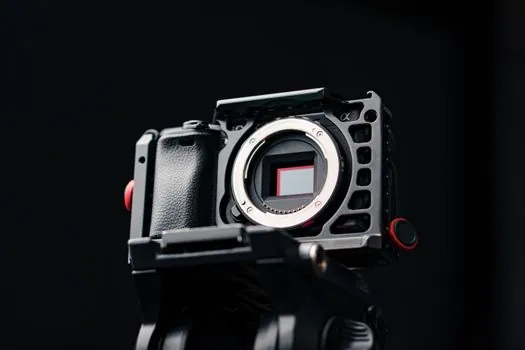
For visual progress documentation, 5 MP at 30 fps over GigE Vision or USB3 Vision is the 2026 workhorse baseline, with 12 MP and 20 MP units reserved for crack-mapping and paint-defect review where pixel-on-target density drives the call [S5]. A 1/1.8" or 2/3" CMOS global-shutter sensor is the right default for fabrication because rolling-shutter artifacts distort moving welds and rotating spools.
For confined-space and post-weld inspection, thermal cameras add value where visual cameras cannot. A FLIR-class thermal imaging core with MSX overlay, certified to ATEX Zone 2/22, lets a single operator document refractory lining condition, motor bearing temperature, and gas-leak signatures without changing tools [S3]. Below Zone 1, thermal is a maintenance aid, not a primary safety device, so do not over-spec the Ex rating on a thermal unit if the work is purely outside classified areas.
For structural steel that sits in chemically aggressive or marine atmospheres, the housing material matters as much as the optics. Type 316L stainless or hard-anodised aluminium with salt-spray certification to ISO 9227 (1000 h minimum) is the practical baseline; anything below that will show tea-staining within 12 months on a coastal module yard [S5].
Acceptance Evidence: What the Audit Actually Checks
An audit-grade camera certificate for a structural fab job is a four-document package, not a single PDF. The first document is the EU Type Examination Certificate (ATEX) or Certificate of Conformity (IECEx) issued by a Notified Body, with the specific Zone or EPL printed on the certificate, not just in the marketing datasheet [S4]. The second is the North American certificate from UL or CSA, listing Class, Division, and Gas Group, with the matching marking plate photograph.
The third is the test report for the specific standard family. For Zone 1 gas, that is the IEC 60079-0 plus IEC 60079-11 (intrinsic safety) or IEC 60079-1 (flameproof enclosure) set, depending on the protection concept; for dust, IEC 60079-31 [S6]. The fourth is the manufacturer's Declaration of Conformity and, for US shipments, a valid FCC ID for any radio-enabled body-worn or wireless unit [S5].
To verify a supplier's certificate is real and in scope, cross-check the certificate number on the issuing body's public database (for example, the IECEx OD database or UL's iQ database), and confirm that the model number on the certificate exactly matches the model number on the camera's marking plate, including any suffix that denotes the lens or housing variant [S3]. A certificate covering a base model does NOT automatically cover a -X1 or -H variant with a different lens, which is a common gap finding in fabrication-yard audits [S6].
Selection Criteria for the Common Camera Classes
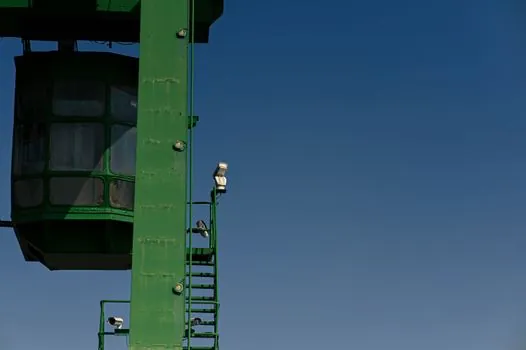
Three camera classes cover roughly 90% of structural-fab inspection and documentation work, and a direct comparison helps procurement write the spec. The compact digital Ex camera (for example, the Ecom Smart-Ex 03 at 13 MP, ATEX Zone 1/21 and NEC Class I Division 1) is the right pick for field inspectors walking classified areas with a handheld unit [S3]. The thermal Ex camera (for example, FLIR Cx5, ATEX Zone 2/22) is right for maintenance crews scanning motors, refractory, and gas plumes outside the most aggressive zones [S3]. The fixed IP66/IK10 industrial vision camera (non-Ex) is right for weld-cell monitoring, yard perimeter, and crane-cab documentation where the area is unclassified.
For each class, the decision criteria line up as: certification scope (Zone/Division and gas group), minimum ingress rating, sensor type (global vs rolling shutter), interface (GigE Vision, USB3 Vision, or 3G-SDI for legacy CCTV retentions), operating-temperature range, and housing material [S5]. A camera scoring well on resolution but lacking the right EPL is unbuyable for Zone 1; a camera with the right EPL but only IP54 is unbuyable for outdoor yard work [S6].
If the project is a non-classified indoor fab with light dust and no solvents, the right answer is often a CE-marked machine-vision camera with EN 61000-6-2 EMC compliance and IP30, not an Ex camera at all, because the Ex premium buys no safety benefit where no explosive atmosphere exists [S7]. The discipline is to match the mark to the actual zone, not to the worst-case zone the marketing brochure mentions.
Common Failure Points and How to Avoid Them
The first recurring failure is mixing ATEX and IECEx markings on a single camera without a valid dual-mark certificate. A camera marked only "ATEX Zone 1" cannot be deployed under an IECEx regulatory framework (for example, Australia, Singapore), and the reverse is also true; the certificate, not the datasheet, is the legal artefact [S4]. The second is assuming a Division 2 camera is acceptable in Division 1, which it is not, because Division 1 requires the device to remain safe under normal operating conditions, not just during abnormal events [S3].
The third is ignoring the dust marking. A camera certified for Class I Division 1 (gas) has no automatic standing in Class II Division 1 (dust), which matters in any fab shop cutting or grinding aluminium or magnesium, where combustible dust is the primary hazard rather than vapour [S6]. The fourth is buying body-worn or handheld units without confirming the battery is the specific part-number listed on the certificate, because substituting a higher-capacity aftermarket battery voids the Ex approval on most intrinsically safe cameras [S3].
The fifth is treating the camera as a standalone component rather than part of a system. Cabling, glands, and the host enclosure must carry their own certification appropriate to the zone, and a Zone 1 camera with a non-Ex cable gland is an audit finding waiting to happen [S6]. A structured certification checklist for industrial sensors used in harsh factory floors follows the same evidence-and-marking logic and is a useful parallel reference for procurement writing the camera spec.
Actionable Pre-Shipment Checklist for the Buyer
Before signing the PO, the buyer's engineer should confirm six items in writing. First, the certificate number, issuing body, and exact model string on the certificate match the marking plate. Second, the Zone or Division on the certificate covers the worst area where the camera will be used, including any confined-space entry. [S3]
Third, the IP and IK ratings are documented to IEC 60529 and IEC 62262 respectively, not paraphrased as "waterproof" or "rugged". Fourth, the operating-temperature envelope covers the project's seasonal range, with a -10 deg C margin at each end. Fifth, EMC compliance is documented to EN 61000-6-2 or FCC Part 15, with a test report dated within the last 36 months. Sixth, any radio or wireless feature carries a valid FCC ID, CE-RED, or equivalent, and the radio module is listed on the same Ex certificate scope or on a separately certified accessory [S4][S5].
Two trackable signals confirm the spec is still right on 2026-08-24. ATEX 2014/34/EU remains the controlling EU directive with no replacement date published; IECEx continues to publish OD-certified equipment lists weekly, so a same-week re-check is feasible before any shipment leaves the supplier warehouse [S4][S6]. The third signal is the supply-chain reality: lead times for Zone 1 intrinsically safe cameras are typically 10-16 weeks versus 2-4 weeks for non-Ex industrial cameras, so the certification choice directly drives the project schedule and should be locked at the engineering-procurement kickoff, not at the inspection-call stage.
For the relevant spec sheets and selection criteria, see safety certification, industrial camera, and industrial adhesive.