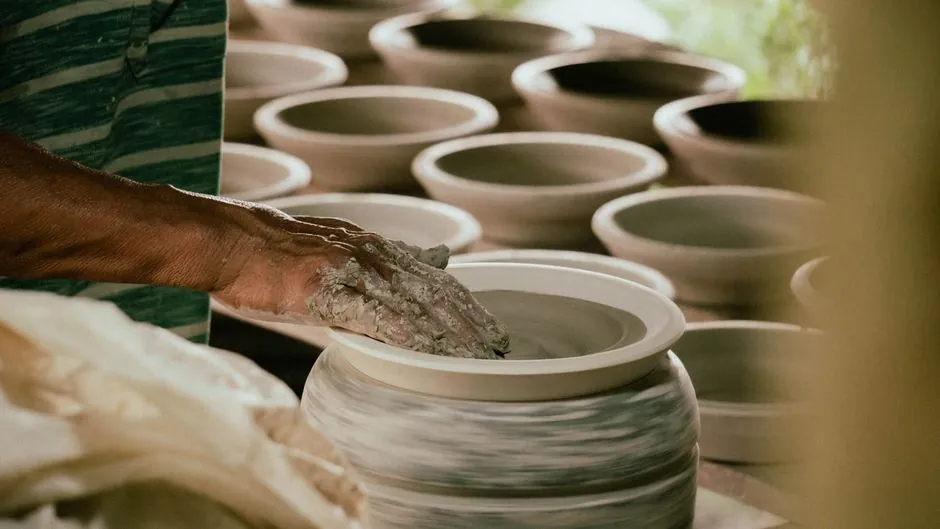
Industrial ceramics are inorganic, non-metallic materials formed by shaping and firing inorganic precursors, and they are routinely classified along two complementary axes: traditional versus advanced, and by chemistry (oxide, carbide, nitride, boride, silicate, glass-ceramic) [S3][S4]. The traditional-versus-advanced split reflects raw materials and process control, while the chemistry split drives properties such as hardness, thermal conductivity and electrical behaviour [S2][S4].
The American Ceramic Society's 1939 classification mirrored eight industry divisions, including Refractories, Structural Clay Products and White Wares; that taxonomy has since expanded to 11 divisions covering bioceramics, electronics and energy, illustrating how far the field has moved beyond pottery [S1]. For working engineers the practical question is which ceramic family fits a given service, and that answer starts with composition, then narrows to grade, density and machining tolerance.
Traditional Ceramics: Silicate Family and Pottery Grades
Traditional ceramics are produced from natural raw materials such as clay, silica, feldspar and water, shaped by handbuilding, wheel-throwing or slip casting, then kiln-fired to drive vitrification [S5]. Earthenware (terracotta, brick, tile) is fired below vitrification and remains porous; stoneware is fired higher with an enamel glaze to reduce porosity; porcelain is fired at roughly 1,200-1,420 degrees Celsius and develops the silicate mineral mullite, giving high strength and heat resistance; bone china adds bone ash to the kaolin-feldspar mix for translucency [S5].
The silicate family also covers refractory bricks, porcelain insulators and cordierite, all of which share low cost, good electrical insulation and a service ceiling well below that of advanced ceramics.
Advanced Ceramics: Oxide, Carbide, Nitride and Boride Families
Advanced ceramics are synthesised from high-purity inorganic powders with tightly controlled sintering, producing dense, defect-tolerant microstructures with engineered properties [S2][S4]. By composition they split into oxide ceramics (alumina Al2O3, zirconia ZrO2, magnesia MgO, silica SiO2), non-oxide ceramics (silicon carbide SiC, boron carbide B4C, tungsten carbide WC, silicon nitride Si3N4, aluminium nitride AlN, boron nitride BN) and a boride subset (titanium diboride TiB2, zirconium diboride ZrB2) [S3][S4].
Each family targets a different property window: oxide ceramics deliver chemical stability, high melting points and electrical insulation; carbide ceramics deliver extreme hardness and wear resistance; nitride ceramics deliver a mix of thermal conductivity (AlN), toughness and thermal-shock resistance (Si3N4), and machinable lubrication (h-BN); boride ceramics push into ultra-high-temperature territory above 2,000 degrees Celsius [S4]. Alumina, zirconia, SiC and Si3N4 are the workhorses seen across electronics, semiconductor, aerospace and medical implants, while Si3N4 has been demonstrated in rocket thruster test stands fired with H2/O2 propellants [S3].
Composition-Based Classification: A Decision Comparison
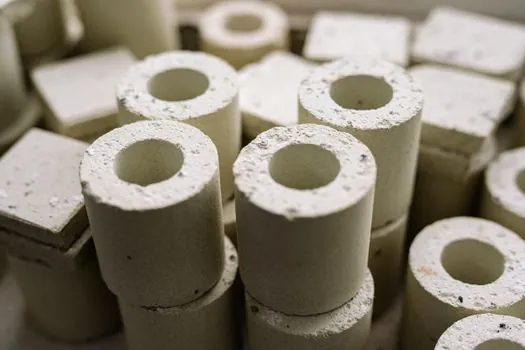
Alumina (Al2O3) sits in the 3.9 g/cm3 density band with high hardness, electrical insulation and a service ceiling near 1,750 degrees Celsius, making it the default for wear liners, electronic substrates and high-voltage insulators. Zirconia (ZrO2) is roughly 6.0 g/cm3, exceptionally tough through transformation toughening, and is widely specified for cutting tools, dental crowns and structural valve components. Silicon carbide (SiC) keeps a low density near 3.1 g/cm3 with very high thermal conductivity and hardness, and is the standard pick for mechanical seals, heat-exchanger tubes and semiconductor wafer-handling parts. Silicon nitride (Si3N4) trades some hardness for fracture toughness and thermal-shock resistance, so it shows up in bearings, turbocharger rotors and molten-metal handling [S4].
Among non-oxide families, AlN is the substrate of choice where high thermal conductivity is needed alongside electrical insulation, while hexagonal BN acts as a machinable, lubricious solid for high-temperature release applications; B4C is the armour-grade option, and TiB2 / ZrB2 are reserved for hypersonic and ultra-high-temperature structural parts above 2,000 degrees Celsius [S4]. The selection logic is straightforward: pick the family whose weakest property still beats the application's hardest constraint, then qualify a specific grade within it.
Properties That Drive Selection: Hardness, Thermal, Electrical, Chemical
Most ceramics are electrical insulators with band gaps well above 3 eV, which is why alumina, AlN and BN are used as substrate and insulator materials in power electronics; a small subset (doped zirconia, some borides, mixed conductive oxides) is engineered to conduct, and these are the materials that become heating elements, oxygen sensors and SOFC electrolytes [S2][S3].
Thermal-shock resistance, not peak temperature, is usually the binding constraint in cyclic service: Si3N4 outperforms SiC and Al2O3 in that regard because of lower thermal expansion and higher fracture toughness, which is why Si3N4 diesel and turbocharger components survived where SiC equivalents did not [S2][S4].
Industrial Applications: Wear, Heat, Electronics, Medical
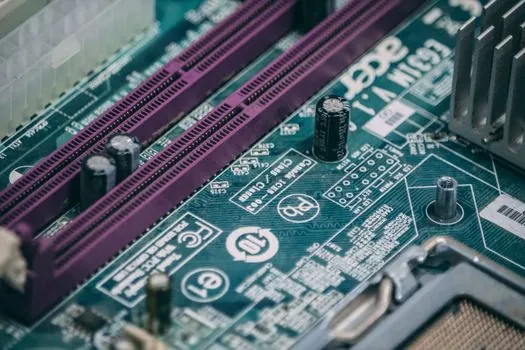
Wear and abrasion duty is the largest single industrial outlet for advanced ceramics: SiC and B4C nozzles, Al2O3 and ZrO2 liners, WC-Co cutting tools, and Si3N4 rolling elements for bearings operating without oil lubrication [S4]. In high-temperature process equipment SiC furnace tubes, Al2O3 crucibles, ZrO2 oxygen-sensor bodies and Si3N4 molten-metal handling parts are the standard inventory items; for ultra-high-temperature aerospace, ZrB2 and TiB2 matrix composites are under continued development for hypersonic leading edges [S3][S4].
Bioceramics, the youngest ACerS division (formed 2017), trace back to Larry Hench's 45S5 Bioglass discovery at the University of Florida and now include alumina and zirconia for hip-replacement heads and liners, glass-ceramic dental crowns, hydroxyapatite bone fillers, and silicon nitride candidates for spinal implants [S1].
Limitations, Failure Modes and Selection Pitfalls
Ceramics are brittle: they are strong in compression, weak in tension and shear, and sensitive to surface flaws, which is why design must avoid sharp corners, point loads and tensile stress concentrators [S3]. Thermal-shock failure is the most common field failure mode, driven by rapid temperature change and a high coefficient of thermal expansion; specifying a tougher, lower-expansion grade (Si3N4 over Al2O3) is the usual fix [S4].
Material pairing is the next common pitfall. Surface grinding, lapping and, where possible, transformation-toughened zirconia over monolithic alumina should be specified for any part that sees impact or cyclic stress [S3][S4]. A practical selection map is to start with the operating temperature and chemical environment, then filter by required toughness, then by machinability, and only then compare price; doing it the other way around is how plants end up with a cracked SiC tube where a Si3N4 one would have run for years.
Standards, Sourcing and Trackable Signals
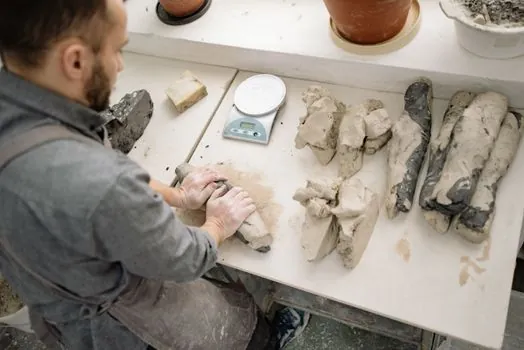
There is no single ISO or ASTM standard for "the ceramic family" as such; instead, property-specific standards (ASTM C1161 for flexural strength of advanced ceramics, ASTM C1421 for fracture toughness, IEC 60672 for ceramic insulators) govern the test methods behind the datasheet numbers, and procurement should reference these when accepting a shipment [S3]. For composition classification the widely cited taxonomy is composition-based: oxide, carbide, nitride, boride, silicate, glass-ceramic, with alumina, zirconia, SiC and Si3N4 as the four workhorse families that cover roughly the majority of industrial orders [S4].
Trackable signals to watch over the coming quarters include the September 2026 industry guide's continued emphasis on composition-based classification [S4], ACerS division updates on bioceramics and electronics, and continued movement of silicon nitride into spinal and dental implant indications following earlier 45S5 Bioglass work [S1]. For engineers comparing ceramics to other engineering-material families, the Engineering Plastics: Five Major Grades, Super-Polymers, and Selection Map reference covers the polymer side, the Nylon (PA) Types and Classifications page covers polyamide grades, and the broader industrial ceramic encyclopedia entry rounds out the material overview.
For component-level specifications, see construction machinery and equipment, and lamps and light fittings.