
PA 12 is the most specified nylon for modern aerospace applications, pairing polyolefin-like flexibility with polyamide strength, a 176-180°C DSC melting point, and 30-45% crystallinity that holds impact at -40°C to -60°C [S3]. PA 6 and PA 6/6 still dominate machined structural brackets, wear pads, and gear-train hardware where higher modulus and proven qualification pedigree outweigh moisture sensitivity [S1][S4].
The two families are not interchangeable: short-chain PA 6 and PA 6/6 deliver higher strength, temperature resistance, and abrasion performance; long-chain PA 12 (twelve methylene groups between amide linkages) sacrifices peak modulus for lower water pickup, better dimensional stability, and chemical resistance against jet fuel and Skydrol hydraulic fluid [S1][S3]. In practice, aerospace programs default to PA 6/6 for CNC-machined flight-control brackets, bushings, and insulators, and to PA 12 for SLS or Multi Jet Fusion printed ducting, clips, and fuel-line manifolds.
Why PA 12 leads in modern aerospace nylon selection
PA 12's chemistry is the differentiator. With twelve -CH₂- groups separating each amide linkage, amide-group density is significantly lower than in PA 6 or PA 6/6, which translates into roughly half the moisture absorption and far tighter dimensional drift under humidity cycling [S3]. The polymer is supplied with number-average molecular weights between 10,000 and 100,000 Da and a polydispersity index of 1.6-1.9, a window that balances melt strength with injection-molding and extrusion throughput [S3].
Relative viscosity of aerospace-grade PA 12 sits between 1.9 and 3.5 in 98% sulfuric acid at 10 g/dm³ and 25°C, with melt flow rate ≥0.1 g/10 min at 235°C / 2,160 g, the rheological envelope suppliers target for thin-wall fuel tubing and convoluted ducting [S3]. DSC analysis shows a 176-180°C melt and a 40-50°C glass transition, a broad enough processing window to support injection molding, extrusion, and powder-bed fusion on the same resin source [S3].
End-group chemistry is also specifiable. Amine-terminated PA 12 with 10-110 mmol/kg end-amine content is the grade of choice for glass-fiber reinforcement and for fuel-system parts exposed to acidic hydrolysis, because the amine ends bond more strongly to glass and resist degradation in hydrocarbon service [S3].
Where PA 6 and PA 6/6 still beat PA 12
PA 6/6 is the default when the part is CNC-machined, not printed, and when the duty cycle is hot and dry. Both PA 6 and PA 6/6 are described as the two most widely used polyamides globally, with a performance/cost ratio that has kept them in machined aerospace hardware since the 1930s [S1][S4]. Compared with PA 6, PA 6/6 carries higher modulus and a higher continuous-use temperature, which is why it shows up in flight-control hardware, valve seats, and structural insulating blocks.
PA 6 trades a bit of stiffness for better toughness, a lower density, and a lower processing temperature, which is useful for large molded housings and textile-derived aerospace components such as parachute webbing, tire cord, and rope [S4]. For machinable aerospace stock, both grades offer the key properties: high crystallinity, resistance to hydrocarbon swelling, low coefficient of friction, and roughly one-seventh the weight of bronze in equivalent bushings [S4].
Neither short-chain nylon is the right call if the part lives in fuel or wet air. PA 6 and PA 6/6 absorb moisture at roughly twice the rate of PA 12, which swells dimensions and shifts critical clearances on a precision flight-control bushing. For anything wetted by Jet-A, Skydrol, or de-icing fluid, spec PA 12 or a PA 12 copolymer.
PA 6 vs PA 6/6 vs PA 12: decision criteria compared
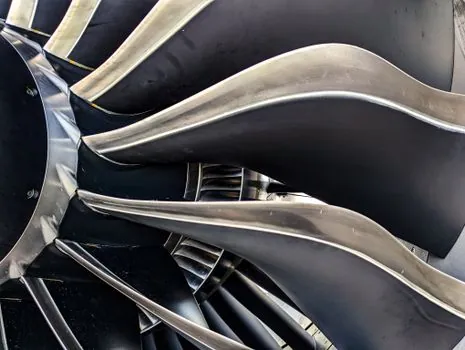
Choosing among the three comes down to four axes: moisture pickup, low-temperature impact, processing route, and chemistry compatibility. PA 12 leads on moisture (lowest of the three) and on cold impact retention down to -40°C to -60°C; PA 6/6 leads on modulus and continuous-use temperature; PA 6 sits in the middle with the lowest density and best surface finish of the three [S1][S3][S4].
For processing, PA 6 and PA 6/6 dominate CNC machining and injection molding of structural parts, while PA 12 dominates powder-bed additive processes. HP Multi Jet Fusion uses a dedicated PA 12 powder that fuses with a combination of fusing agents and infrared energy, while SLS melts PA 12 powder with a laser; the resulting parts are strong, chemically resistant, and flexible, well suited to aerospace, medical, and industrial use [S5][S7]. Compared with FDM filaments (ABS, PLA), MJF PA 12 parts offer better toughness, surface finish, and isotropy; compared with stereolithography resins, they avoid the warping, shrinkage, and UV-driven discoloration that resin parts show on long service [S5].
For chemical compatibility, all three polyamides resist hydrocarbons, but PA 12 is the only one routinely used in amine-terminated, glass-fiber-reinforced compounds qualified for fuel-line and oil-and-gas service, with end-amine content of 10-110 mmol/kg [S3]. Aerospace design references for industrial valve seats, pressure sensor manifolds, and flow meter bodies commonly spec PA 12 or glass-filled PA 12 where media compatibility drives the choice.
Additive manufacturing routes: SLS and HP Multi Jet Fusion with PA 12
Two powder-bed routes dominate 3D-printed nylon aerospace hardware: selective laser sintering (SLS) and HP Multi Jet Fusion (MJF). Both use PA 12 powder, but the energy source and the resulting part behavior differ. MJF deposits fusing and detailing agents and then fuses the layer uniformly with infrared energy, producing parts with smoother surface, finer feature resolution, and better isotropy than SLS [S5].
HP's PA 12 powder is engineered for MJF specifically, marketed as a high-performance nylon with good thermal and chemical resistance, biocompatibility, and high recyclability of unfused powder [S5]. SLS with PA 12 is the more accessible route used in service bureaus and is widely cited as strong, chemically resistant, durable, and flexible, making it a common choice for aerospace brackets, jigs, and duct prototypes [S7].
MJF PA 12 is increasingly used to replace metal manufacturing aids and small flight-cabin brackets, where Design for Additive Manufacturing cuts part count and assembly time [S5]. FDM-printed ABS and PLA do not match PA 12 on toughness, fatigue, or thermal performance, which is why aerospace programs do not qualify FDM polymers for functional flight hardware; SLS and MJF PA 12 are the standard for non-metallic additive parts.
Where nylon is not the right aerospace material
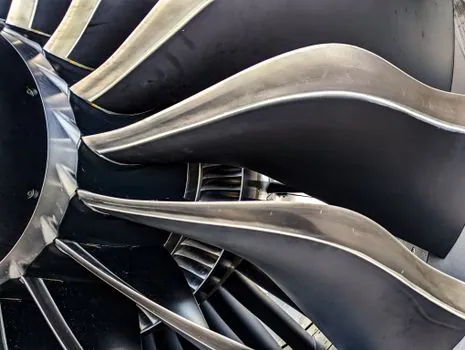
Do not spec unreinforced nylon where the part sees sustained temperatures above the polymer's continuous-use rating, where it is load-bearing on a primary structure, or where it is exposed to strong acids, bases, or UV without a stabilization package. Nylon is hygroscopic; without conditioning, PA 6/6 can move dimensions by 1-2% across humidity cycles, enough to seize a precision-machined bearing or pressure transmitter seal face [S1][S4].
For sustained skin or primary-structure temperatures above 150-180°C, specify PEEK, PPS, or PI (Vespel, Torlon) instead. Nylon also burns; for interior cabin parts, FAA flame-smoke-toxicity (FST) requirements typically force a qualified flame-retardant grade, often a glass-filled PA 6/6 or PA 66 with halogen-free FR package, rather than a general-purpose grade. UV exposure yellows and embrittles neat nylon; exterior or window-line parts need a carbon-black-loaded or UV-stabilized compound.
For long-term Skydrol or phosphate-ester service at elevated temperature, PA 12 is the default; PA 6 and PA 6/6 degrade faster under the same exposure. When in doubt, validate the candidate grade against the specific fuel, hydraulic fluid, and thermal profile of the airframe before locking the spec.
Standards, certification, and sourcing signals for aerospace nylon
Aerospace nylon stock and finished parts are typically released against ASTM and ISO tensile, flexural, and impact methods (ASTM D638, D790, D256), with material traceability per AS9100 and, for many prime contractors, MMS, BMS, or DMS line-callouts built on top of the base resin. ASTM D6779 covers PA 12, while PA 6 and PA 6/6 fall under ASTM D4066 and the broader ASTM D4000 classification scheme used in plastics spec sheets. [S5]
For additive PA 12, OEM process and material specifications are the controlling documents, e.g. EOS data sheets for SLS PA 12 (PA 2200, PA 2210FR) and HP's MJF PA 12 powder data sheet, both of which feed into part qualification via ASTM/ISO mechanical testing of witness coupons. For qualified flight hardware, expect an OEM-issued material specification plus a process specification controlling powder reuse, build parameters, and post-cure.
Trackable signals through 2026: (1) continued displacement of machined PA 6/6 brackets by MJF PA 12 in flight-cabin and ECS ducting, driven by part-count reduction; (2) growing use of glass-fiber-reinforced, amine-terminated PA 12 in fuel and oil-and-gas transfer lines, where 10-110 mmol/kg end-amine content is the chemistry benchmark [S3]; (3) sustained specification of PA 6/6 for CNC wear parts, gears, and flow meter bodies where modulus and proven pedigree dominate; the comparison article on POM homopolymer vs copolymer grades is a useful cross-reference when acetal is the alternative on the drawing.