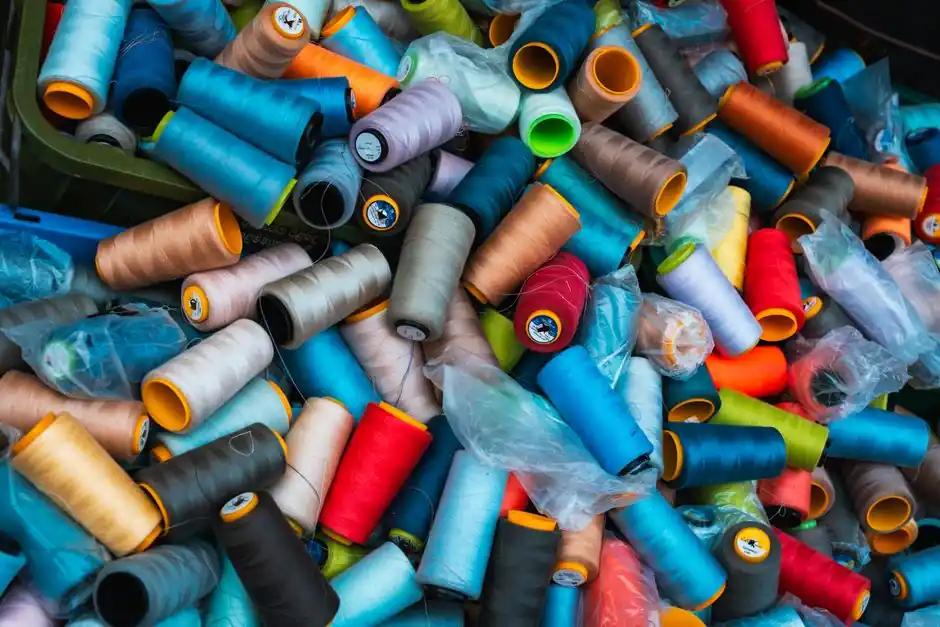
Polyamide (nylon) is not one material but a family of semi-crystalline thermoplastics whose properties shift with monomer chain length, amide-linkage density, and reinforcement, with the two dominant grades globally being PA 6 and PA 6/6 [S1][S2].
Commercial nylons fall into two naming conventions: the nylon-XY family (diamine + dicarboxylic acid, e.g. PA 6/6 from hexamethylenediamine and adipic acid) and the nylon-Z family (single aminocarboxylic acid or lactam, e.g. PA 6 from caprolactam), with density around 1.15 g/cm 3 and a melting-temperature window of 463-624 K (190-351 C) depending on grade [S2].
Aliphatic Nylons: The Workhorse Grades PA 6 and PA 6/6
PA 6 and PA 6/6 together account for the bulk of engineering thermoplastic volume, with PA 6/6 melting at approximately 255 C versus about 220 C for PA 6, and PA 6 offering slightly higher impact resistance in thin sections because of lower crystallinity [S3][S5]. PA 6/6 is the default choice for structural brackets, gears, fasteners, and under-hood automotive clips; its trade-off is hygroscopicity, with unfilled PA 6/6 absorbing 2.5-3.0% moisture by weight in humid environments, which causes measurable swell and stiffness loss [S3].
PA 6 is preferred where impact toughness and processability outweigh peak heat resistance, including electrical connectors, consumer housings, and general-purpose injection-molded parts; its moisture absorption is marginally higher than PA 6/6, so dimensional tolerance on precision parts must be quoted on the conditioned (wet) specimen, not the as-molded dry state [S3][S5].
Long-Chain Aliphatic Nylons: PA 6/10, PA 6/12, PA 11, PA 12
PA 6/10 and PA 6/12 are the mid-chain options, with PA 6/10 (hexamethylenediamine + sebacic acid) offering reduced moisture pickup, better chemical resistance, and good dimensional stability for fuel lines, tubing, and precision industrial components [S2][S5]. PA 6/12 sits between PA 6/10 and PA 12 on the moisture-absorption curve and is commonly specified for automotive fluid-handling parts where consistent dimensions and fatigue endurance are required [S5].
PA 11 is a bio-based polyamide (castor-oil-derived) that delivers the lowest moisture absorption of the castor-derived grades, plus strong chemical resistance and low-temperature flexibility, and is widely used in high-performance automotive, aerospace, and industrial fluid systems [S3][S5]. PA 12 has the lowest moisture absorption of the common aliphatic grades, plus good flexibility, making it the standard pick for precision injection-molded medical devices, electronic housings, and lightweight automotive components such as fuel and brake lines [S5].
Specialty and High-Performance Variants: Semi-Aromatic, Transparent, Bio-Based

Beyond the aliphatic chain, three specialty classes matter for engineering buyers: high-temperature nylons (semi-aromatic polyamides such as PA 6T, PA 4T, PA 10T, and PA 12T), transparent amorphous nylons (cycloaliphatic structures, e.g. PA 6I/6T variants), and bio-based nylons derived from renewable feedstocks such as castor oil (PA 11, PA 10/10) or sebacic acid routes [S2][S4][S8]. High-temperature nylons extend continuous-use temperatures well above the 150-180 C ceiling of PA 6/6 and are specified for automotive cooling, SMT connectors, and oilfield parts; transparent nylons trade chemical resistance and peak temperature for optical clarity in sight glasses, flow indicators, and medical housings [S4][S8].
Bio-based nylons, anchored by PA 11, are increasingly specified where life-cycle assessment scores, bio-content declarations, or independent feedstocks (away from fossil caprolactam/hexamethylenediamine) drive procurement, while preserving the low-moisture-pickup and chemical-resistance profile of long-chain aliphatics [S4][S5][S8].
Reinforced and Modified Nylons: Glass, Mineral, Impact, Lubricated
Most engineering-grade nylon compounds are not neat resin: glass-fiber-filled grades (typically 15-50% GF) raise tensile strength, stiffness, and heat-deflection temperature and dominate metal-replacement brackets and structural covers; mineral-filled grades improve dimensional stability and surface finish with lower warpage than glass [S3][S5]. Impact-modified nylons (often with elastomer or maleic-anhydride-grafted polyolefin additions) restore ductility to glass-filled or high-modulus compounds, while lubricated grades (PTFE, MoS 2, silicone, or graphite additions) target gear and bushing wear with coefficients of friction commonly in the 0.1-0.3 range [S3][S5].
For metal-replacement programs in construction machinery and equipment, glass-filled PA 6/6 (typically 30-33% GF) is the common baseline, with 50% GF or carbon-fiber-filled variants where specific stiffness justifies the cost and processing penalty; every reinforced grade demands a higher melt temperature, a heated mold, and tighter moisture control (typically below 0.2% resin moisture) to avoid hydrolysis and surface defects [S3].
Selection Criteria: Moisture, Heat, Chemistry, and Process

The four decision gates for a nylon specifier are moisture pickup (PA 6/6 highest, PA 12 lowest in the aliphatic family), continuous-use temperature (PA 6/6 around 150-180 C, PA 6 around 120-150 C, semi-aromatic grades above 200 C), chemical and hydrolysis resistance (long-chain and bio-based grades generally better), and processability (PA 6 easiest to mold, PA 6/6 stiffer melt, long-chain grades require higher melt temperatures and longer cooling) [S3][S5][S8]. No single grade is best across all four axes, which is why nylon selection is a documented trade-off, not a single-resin decision [S3].
For tight-tolerance parts exposed to water or humidity, long-chain PA 11 or PA 12 outperforms PA 6 and PA 6/6 on dimensional change after conditioning; for high-heat under-hood or SMT applications, semi-aromatic high-temperature nylons are the only aliphatic-family option, and even then only specific grades carry the required continuous-use and comparative-tracking-index ratings [S4][S8]. For general engineering where cost dominates, PA 6/6 with 30% glass fiber remains the default reference compound, and the rest of the family is justified only when a specific property gap is documented [S3][S5].
Comparison Table: Aliphatic Nylon Grades at a Glance
For procurement readers, the common aliphatic grades line up against three practical criteria: melting point, moisture absorption, and typical end-use, all grounded in published grade-level data [S2][S3][S5].
PA 6: melting point ~220 C, higher impact / moisture pickup than PA 6/6, typical use in housings, connectors, consumer goods. PA 6/6: melting point ~255 C, highest stiffness in the family, 2.5-3.0% moisture absorption unfilled, typical use in gears, fasteners, structural brackets, under-hood parts. PA 6/10: lower moisture pickup than PA 6/6, good chemical resistance, typical use in fuel lines, tubing, precision industrial parts. PA 6/12: balanced strength and low water absorption, typical use in automotive fluid-handling. PA 11: bio-based, very low moisture absorption, low-temperature flexibility, typical use in high-performance automotive, aerospace, and industrial fluid systems. PA 12: lowest moisture absorption, flexibility, typical use in medical devices, electronics, and lightweight automotive parts [S3][S5].
Standards, Specifications, and Application Anchors
For electrical and lighting applications using molded nylon, the same hygroscopicity concerns apply and additional flame-retardant and comparative-tracking-index (CTI) grades are typical, as cataloged under lighting equipment and electric lamps and lamps and light fittings where nylon housings, sockets, and connectors are common.
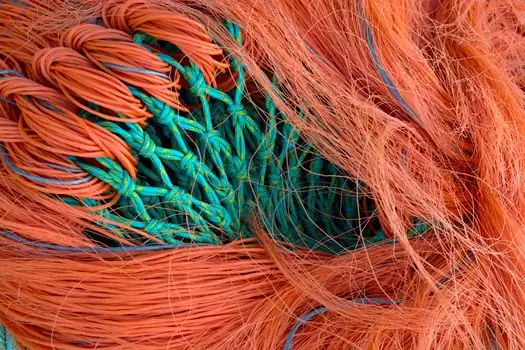
On the textile and industrial-fiber side, the same PA 6 and PA 6/6 chemistries are sold as filament yarns for tire cord, conveyor fabrics, and rope; here the relevant spec is tensile strength per denier and heat-of-shrinkage rather than impact or wear [S2].
Failure Modes and Limitations Buyers Must Plan Around
The three documented failure modes for engineering nylons are moisture-induced dimensional change, hydrolysis (especially in hot water or glycol exposure where PA 6 and PA 6/6 degrade faster than long-chain grades), and UV-driven embrittlement if a UV stabilizer package is not specified [S3][S5][S8]. Glass-filled compounds are abrasive on tooling and demand hardened screws, barrels, and molds; neat PA 6/6 parts left in a humid service environment for months will measurably drift from as-molded tolerances, so any drawing callout must reference the conditioned state and a moisture-equilibrium assumption [S3].
Additionally, the aliphatic grades burn without flame-retardant modification and most engineering specifications demand a UL 94 rating (commonly V-2 or V-0) plus a yellow-card listing, which is a separate decision from the base resin and must be confirmed on the specific compound data sheet, not extrapolated from the neat polymer [S7].
Trackable signals for the next spec cycle: the ongoing shift in OEM programs toward bio-based PA 11 and PA 10/10 for low-carbon targets, and the wider use of semi-aromatic high-temperature nylons in 800 V automotive electrical architectures and SMT connector bodies where PA 6/6 is at its thermal ceiling.
See also our earlier report, Nickel Alloy TCO: Cost Drivers, Service-Life Math, and 2026 Sourcing Reality.