
Industrial Ethernet is not a different protocol from commercial Ethernet; it is the same IEEE 802.3 physical and data-link layer engineered for OT conditions, including wide-temperature operation, redundant power inputs, industrial-grade switch hardware, and support for deterministic, time-sensitive industrial protocols [S2].
In oil and gas it stretches from upstream exploration sites and wellhead pads, through midstream pipeline compressor stations, into downstream refining and petrochemical complexes, providing secure and continuous communications across geographically distributed assets that often run on separate grounding systems [S2].
Upstream vs Downstream: What the Network Actually Carries
Upstream segments in oil and gas favour low-bandwidth, deterministic telemetry for wellhead instrumentation, RTUs, and SCADA polling, while downstream refining plants concentrate on high-density, deterministic control traffic for DCS, safety instrumented systems, and process analytics that need time synchronization [S2][S5].
Port-count sizing follows a simple upstream-downstream split: traffic-group uplink demand equals the number of edge devices multiplied by their peak per-device bitrate, and the access switch must have enough headroom to absorb both ring telemetry and an RSTP or DLR reconvergence burst without dropping CIP connections [S3].
Media Selection: Copper 100 m Ceiling vs Fiber Reach
Twisted-pair copper (CAT5e, CAT6, CAT6A, CAT7, CAT8) is capped at 100 m total channel length, patch cords included, which forces fiber for any inter-building or inter-skid run that exceeds that limit [S4].
For typical plant extensions, OM3 multi-mode fiber with 1 Gb/s SFP transceivers is the cost-effective sweet spot up to 550 m; OS2 single-mode fiber is the right call above 550 m or whenever a future 10 Gb/s upgrade is on the roadmap, with 10GBASE-LR reach of 10 km or more on OS2 [S4].
Inter-building copper runs also carry documented lightning-surge risk, so data-line surge protectors with 90 V to 230 V gas discharge tubes and sub-1 ns TVS clamping are specified at building entry points, and fiber is preferred whenever separate building grounds make galvanic isolation the safer answer [S4].
Power over Ethernet and Field Junction Box Layout
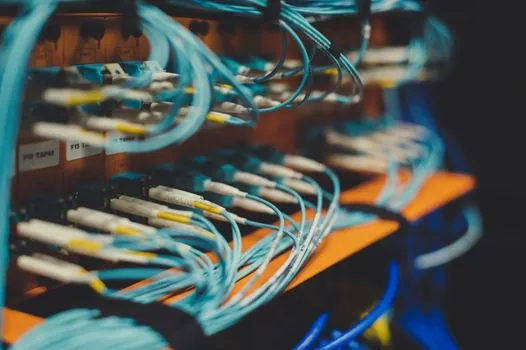
PoE lets a single copper run carry both data and power to IP cameras, wireless APs, and VoIP phones, which is why field junction boxes commonly spec an industrial managed switch paired with a DIN-rail PoE injector and UPS for switch uptime during brownouts [S4].
The Allen-Bradley 1756-EN2T is a concrete example of an industrial managed switch module cited for 128 CIP connections and DLR (Device Level Ring) redundancy in such field-JB deployments, paired with an SFP media converter if fiber is used upstream from copper downstream [S4].
Enclosure spec for outdoor field JBs starts at IP65, with fiberglass or stainless steel enclosures rated across a -20 to 60 °C range, and pole or wall mounting chosen with flood-avoidance clearance in mind [S4].
Protocol Stack: EtherNet/IP, CIP, and the Oil and Gas Use Case
EtherNet/IP is the industrial network protocol that runs the Common Industrial Protocol (CIP) over standard Ethernet, and it covers upstream, midstream, and downstream oil and gas applications with explicit messaging for configuration and implicit messaging for real-time I/O [S6].
Because EtherNet/IP sits on top of standard IEEE 802.3, the same physical plant that carries PROFINET or Modbus TCP traffic can host CIP, but explicit and implicit message classes must be mapped to separate VLANs with QoS priorities, since implicit I/O traffic is latency-sensitive while explicit messaging is not [S6].
Who Industrial Ethernet Is For, and Where It Is Overkill
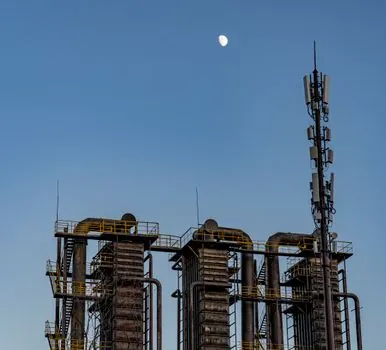
Industrial Ethernet is the right answer for greenfield process plants, refinery revamps, substation upgrades, and any cell or area where deterministic control, redundancy (RSTP, ERPS, DLR), and long-term lifecycle support are written into the spec [S2][S5].
It is overkill for short, single-cable office-style links under 100 m that do not need redundant power, wide-temperature operation, or industrial protocol support; a commercial switch and patch panel will do, at lower cost and shorter lead time [S2].
It is also a poor fit for hazardous-area links where intrinsic safety and power limits on PoE are mandatory; in Zone 0 or Zone 1, fiber with no copper energy in the classified area, or industrial Ethernet-APL (Advanced Physical Layer) with energy and data on a single 2-wire trunk, is the engineered answer rather than PoE+ copper [S2].
Comparison: Unmanaged vs Managed vs Layer 3 Industrial Ethernet
Unmanaged industrial switches give plug-and-play connectivity with wide-temperature operation and redundant power input, but no VLAN, no QoS, no RSTP, and no cybersecurity controls, so they fit only on isolated machine-level cells [S2].
Layer 2 managed switches add VLAN, QoS, RSTP, ERPS, IGMP Snooping, ACL, and SNMP, which is what most upstream wellhead pads and downstream skid networks need to segment CIP explicit from implicit traffic and survive a single fiber break inside an ERPS ring under 50 ms [S2].
Layer 3 industrial switches add dynamic routing for large plant backbones and substation cores, where multiple VLANs must be routed between process areas, and where time-sensitive networking or IEEE 1588 PTP is needed across the plant [S2][S5].
Standards and Sourcing Anchors
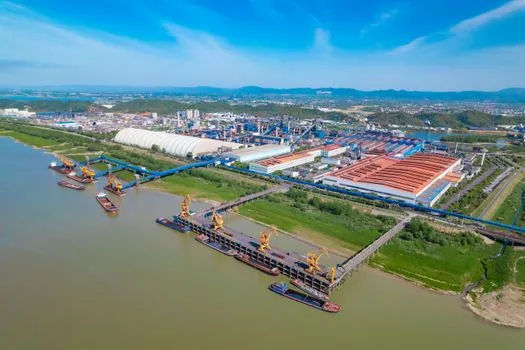
The physical and data-link layer is governed by IEEE 802.3 family standards, the redundancy behaviours by IEC 62439 (MRP, PRP, HSR) and ODVA's CIP Safety / DLR, and the EtherNet/IP application layer by the Common Industrial Protocol maintained by ODVA [S6].
Procurement teams should anchor any spec on port count, uplink bandwidth, media type, PoE class, operating temperature, and redundancy protocol, and then verify the BOM against the SCADA upstream and downstream stack map and the SCADA supply-chain risk gates before locking the long-lead items.
Trackable signals for the next quarter: OM3 SFP transceiver pricing relative to OS2 LR optics, DLR versus HSR adoption in new upstream wellhead RTU panels, and PoE+ (802.3at) versus PoE++ (802.3bt) class budgets for field junction box cameras and wireless access points [S3][S4][S6].
The underlying component specifications are covered under lighting equipment and electric lamps, and industrial adhesive.