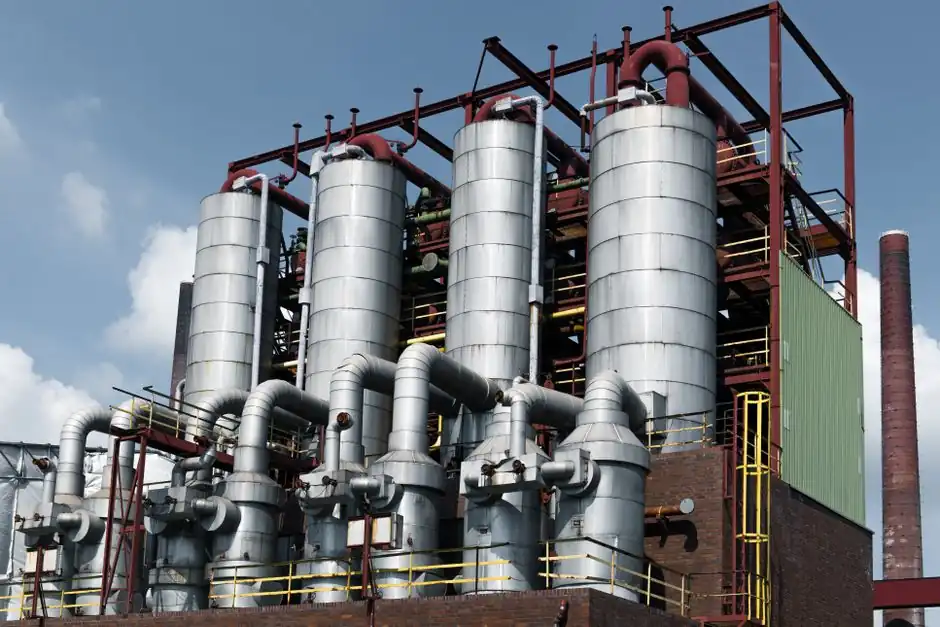
In oil and gas, a SCADA layer spans both ends of the value chain: it polls RTUs and PLCs at wellheads, flow stations, and pipelines in upstream operations, and it supervises refinery units, tank farms, and terminals in downstream operations, with the same supervisory control function appearing at every site-specific layer of a typical SCADA stack [S2].
Upstream covers exploration and production, while downstream covers refining, distribution, and retail; midstream (gathering, processing, pipelines) is often grouped with upstream in SCADA vendor literature, and ISA's ANSI/ISA-112 functional architecture standard lets an operator scope SCADA to only the backhaul-relevant sections of its lifecycle model [S5]. On the procurement side, the oil and gas SCADA market is sized 2026-2033 by Grand View Research with growth driven by real-time monitoring of widely dispersed upstream assets and remote management of downstream sites [S4].
Upstream SCADA: What gets supervised, and against what spec
Upstream SCADA workloads centre on wellheads, artificial lift systems, gathering networks, water injection, and gas processing skids, where RTUs (often solar-powered, Class I Div 2 packaged) and PLCs poll a mix of pressure, temperature, flow, and level instruments on serial or Ethernet radio backhaul. A 2026 vendor case study of a Fortune 10 integrated oil and gas operator described upstream fields running site-by-site architecture with different tags, naming conventions, networks, and software versions across decades of accumulated configurations [S2].
That fragmentation is exactly what ANSI/ISA-112 targets: the standard, issued in February 2026, formalises functional architecture models across the SCADA lifecycle, so an operator can scope SCADA narrowly to backhaul components and still apply the relevant model sections [S5]. Field communication on these sites is typically Modbus serial, DNP3, or IEC 61850 over process bus, with cellular or satellite IP backhaul; the upstream-to-midstream handoff is usually a flow computer that hands custody transfer data into historian and enterprise reconciliation [S3].
Note that on the protocol layer SCADA is the supervisory function, not the control layer: a typical upstream station also embeds a DCS/PLC controller doing closed-loop control, with the SCADA host acting as the HMI, alarming, and trending layer above it. Selection criteria that matter most on the upstream side are: radio coverage and backhaul power budget, RTU I/O count per well, solar autonomy days, Class I Div 2 vs IECEx Zone 2 certification, and DNP3 secure authentication (IEC 62351-5) for pipelines crossing public infrastructure.
Downstream SCADA: Refineries, terminals, and the OT-IT seam
Downstream SCADA wraps a different set of physical assets: refinery process units (CDU/VDU, hydrocracker, reformer), tank-farm level and temperature, terminal truck and rail loaders, and pipeline pump stations; these sites typically run a layered stack of DCS, PLC, SCADA, process historian, MES, and EAM, with each layer accumulating site-specific configurations over decades of brownfield expansion [S2].
The same case study noted that work orders in EAM/CMMS often failed to align with real operating conditions because DCS/PLC signal integration with enterprise workflows was incomplete, an OT-IT seam that modern historians and ISA-112 functional models are designed to close. For refinery DCS/SCADA, ISA-84 / IEC 61511 governs safety-instrumented functions; the SCADA host is a non-SIS layer and must not be used as the primary safety shutdown unless the platform itself is SIL-rated. Communication between SCADA and enterprise layers is increasingly OPC UA over TSN for new builds, while legacy sites still run OPC Classic DA against an OSIsoft PI historian.
Selection criteria on the downstream side shift toward: IEC 61508/61511 SIL capability if any shutdown logic is in scope, historian tag rate (events/sec) and retention, MES interface (ISA-95 B2MML) depth, and high-availability server pairing (redundant historians, dual SCADA servers) for 24/7 continuous process. A 2026 market study framed this as remote management of dispersed downstream assets as a primary growth vector, paralleling the upstream driver [S4].
Cross-industry upstream and downstream maps: water, power, mining
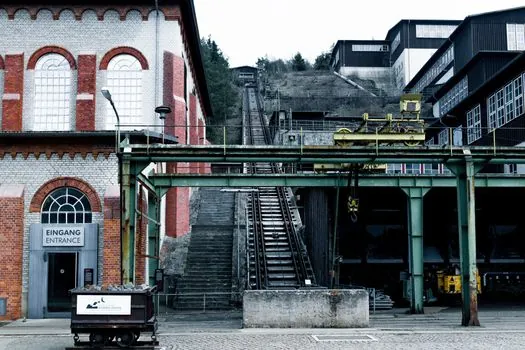
SCADA terminology is not unique to oil and gas: in any supply chain, "upstream" means the suppliers feeding the operation, and "downstream" means the customers receiving the output, and the same SCADA host supervises both directions of flow at a given site. Beyond hydrocarbons, the same layered DCS/PLC/SCADA + historian + MES + EAM stack appears in water and wastewater (treatment works, lift stations, reservoir SCADA), power (transmission SCADA under IEC 61850, distribution under IEC 60870-5-104), and mining (conveyor, hoist, processing plant SCADA), all of which need real-time monitoring of widely dispersed assets that drove the oil and gas SCADA market growth in the 2026-2033 window [S4].
The cross-industry pattern is consistent: SCADA sits between the shuttle system of field devices (RTUs, PLCs, smart instruments) and the enterprise application layer, with historians, MES, and EAM serving as the bridging data plane. One operational difference is bandwidth budget: transmission SCADA in power is tightly bounded by IEC 61850-90-5 R-GOOSE over WAN, while refinery SCADA is typically on a closed process-control LAN with controlled egress to the enterprise DMZ. The procurement signal downstream of these projects often flows through EPC and integrator channels rather than direct OEM sales, as the case study's 800+ application enterprise landscape illustrates [S2].
Standards, lifecycle, and what the 2026 sourcing change is
Three standards are most cited for SCADA across upstream and downstream oil and gas: ANSI/ISA-112 (functional architecture and lifecycle model, issued 2026), IEC 62443 (industrial cybersecurity zones and conduits), and IEC 61508/61511 (functional safety) for any shutdown logic in scope. On the lifecycle side, ISA-112 is what most changed in the past six months: it gives operators a vendor-neutral way to scope, document, and audit SCADA across both upstream and downstream, rather than maintaining ad-hoc site architectures as the 800-application Fortune 10 case showed [S2][S5].
For 2026 spec work, the practical change is: greenfield projects can now write SCADA scope against ISA-112 model sections, and brownfield operators can use the same sections to rationalise site-by-site tag and naming divergence accumulated across decades. The market data for 2026-2033 ties the spend to the same root cause: dispersed upstream and downstream assets that need remote, real-time supervision [S4]. For specifiers weighing the sorting system integration at terminals, the SCADA host is typically the supervisory layer above the sorter PLC, with OPC UA carrying events to the historian; an ASRS system at a finished-product warehouse is a separate downstream WCS/WMS node, usually interfaced to the same enterprise MES rather than to the process SCADA. Whether to install or update SCADA today depends on whether the existing host can carry ANSI/ISA-112 model sections, IEC 62443 zone segmentation, and the historian tag rate your lighting equipment and electric lamps on tank-farm flame detection or platform lighting circuits need to be alarmed against; that checklist, not vendor branding, drives the 2026-2027 upgrade cycle.
For related coverage, see European municipal bus demand clusters around low-floor and school fleets.