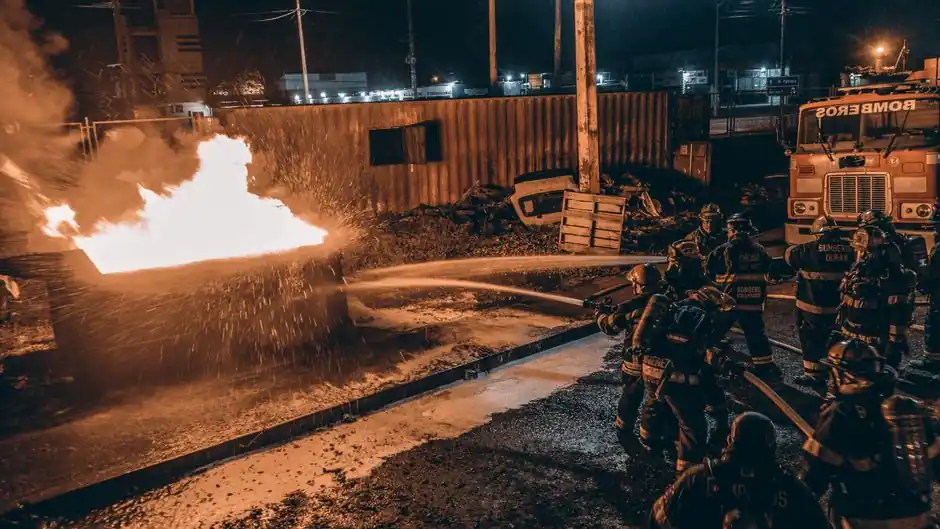
For 2026 industrial firefighting camera procurement, bi-spectrum early fire detection cameras pairing a VOx uncooled thermal sensor with a visible-light lens are now the dominant specification, with Hanwha Vision launching such a product line on 2025-10-09 to deliver continuous 24/7 radiometric temperature monitoring alongside optical confirmation [S2].
Selection divides into two distinct hardware classes: portable thermal imaging cameras (TICs) carried by responders, and fixed/mounted industrial surveillance cameras used for perimeter and asset monitoring. Both share core infrared physics but diverge sharply on resolution, optics, and environmental ratings, with portable units starting around 160x120 IR and fixed industrial systems commonly specified at 640x512 [S1][S3][S4].
Core Sensor Stack: VOx Uncooled Thermal and Visible-Light Pairing
A firefighting thermal imaging camera detects infrared radiation and converts temperature differences into a visible thermal image, enabling identification of heat sources, hotspots, and thermal conditions that conventional visible-light cameras cannot resolve in smoke or darkness [S4]. Modern units combine a VOx (vanadium oxide) uncooled thermal sensor with an infrared lens, image processor, high-brightness display, temperature measurement function, rechargeable battery, and a rugged waterproof housing, with protective lens covers as standard issue [S4].
The operating chain is straightforward: infrared radiation is collected by the lens, converted by the VOx sensor, processed for emissivity and span, and rendered on the display as a thermal map. The two-tier architecture used in industrial bi-spectrum cameras adds a visible-light sensor (commonly 2 MP to 4 MP) on the same housing, so a single device produces a thermal channel for hot-spot detection and an optical channel for scene confirmation, which is the architecture Hanwha Vision markets for early fire detection at industrial sites [S2]. For more on the broader surveillance camera category in industrial settings, the bi-spectrum pattern is now the most common radiometric form factor. Fixed thermal security units share the same VOx sensor family but add continuous-monitoring software, server-side analytics, and integration with VMS platforms, extending the surveillance security stack rather than replacing it.
Resolution Bands and What They Buy You
Portable situational-awareness TICs occupy the 160x120 to 320x240 thermal resolution band; the FLIR K1 sits at 160x120 as the entry-level situational awareness camera in the FLIR first-responder line [S1]. At 640x512, fixed industrial fire detection cameras gain the pixel density needed to detect a 0.5 m2 hotspot at 200 m or more, depending on lens focal length, which is the working range for warehouse and outdoor substation perimeters [S3].
For facility use, the most common lens choices run 13 mm, 19 mm, 25 mm, 35 mm, 50 mm, and 75 mm, with wider focal lengths giving a broader field of view for room scanning and longer focal lengths (50 mm and 75 mm) reserved for long-distance hotspot localisation across yards or forest perimeters [S4]. The vehicle-mounted thermal PTZ units listed in 2026 sourcing catalogues pair a 640x512 sensor with a 35 mm fixed lens and 2 MP visible-light channel at 20x optical zoom, rated IP66 for fire-truck and ambulance roof deployment [S3]. Industrial buyers comparing portable TICs against fixed industrial units should treat 160x120 as the minimum for crew safety and 640x512 as the minimum for continuous asset monitoring; anything below 160x120 should be rejected for primary fireground use.
Detection Metrics: NETD, Temperature Range, and Radiometry
NETD (Noise Equivalent Temperature Difference) below 50 mK is the working threshold for early fire detection in industrial applications; a higher NETD value means small temperature rises are lost in sensor noise, which is the difference between detecting a smouldering cable tray and missing it until flames erupt [S4]. When comparing thermal cameras across vendors, NETD values should be compared under equivalent conditions, since manufacturer datasheets often quote best-case figures at 30 C ambient and f/1.0 aperture [S4].
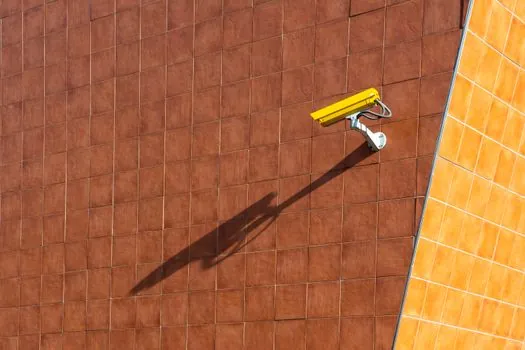
Industrial fire detection cameras from Hanwha Vision combine dual thermal radiometry with visible-light imaging, supporting both fire detection and continuous temperature monitoring with reliable 24/7 surveillance as the published value proposition [S2]. On the portable side, the FLIR K1 covers a temperature range suited to identifying hotter objects in a fire scene, with higher-end handheld TICs adding multiple colour palettes (white-hot, black-hot, iron, rainbow) for distinguishing small thermal gradients in overhaul operations [S1][S4]. A useful detail: thermal imaging is not equivalent to seeing through all smoke or obstacles, since dense smoke, steam, walls, and other materials can still attenuate the signal, so specifying a TIC should always be paired with a fixed bi-spectrum camera for areas where smoke pooling is expected [S4].
Environmental Ratings, Power, and Mounting
For fixed industrial deployment, IP66 is the minimum acceptable ingress rating and IP67 the preferred specification for outdoor or wash-down environments, with the LSJ F1200 640x512 thermal imaging camera listed at IP67 for firefighting and smoke-penetration duty [S3]. Operating temperature ranges for industrial-grade units typically span -30 C to +60 C, and many fixed bi-spectrum cameras accept 12 VDC or PoE+ input, which simplifies integration with existing industrial camera networks and VMS platforms.
Portable TICs run on rechargeable batteries, with hot-swap or USB-C charging as the 2026 norm; handheld units listed in current sourcing catalogues at 200 m detection range with 1x-8x digital magnification and a 5-inch display, weighing roughly 1 kg, are typical for crew-carry use [S3]. Helmet-mountable tactical cameras at 170 to 200 USD are an emerging low-cost option for documenting fireground operations, though they lack radiometric temperature measurement and should be treated as evidence devices, not primary firefighting sensors [S3].
Where Each Camera Class Fits and Where It Does Not
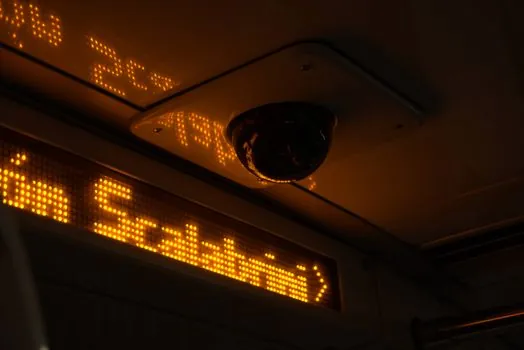
Bi-spectrum fixed cameras are the right specification for warehouse, substation, battery energy storage, and process-industry perimeters where 24/7 radiometric temperature monitoring plus optical confirmation is required, since they integrate with VMS platforms and analytics software for early fire detection [S2]. Portable TICs are the right specification for crew-carry use during interior attack, overhaul, and search operations, where mobility and one-handed operation matter more than long detection range [S1][S4].
Neither is a substitute for the other. A portable TIC lacks the continuous 24/7 monitoring footprint; a fixed bi-spectrum camera cannot be carried into a smoke-filled room. Fire detection drones (4K visible plus thermal, 20 km control range, 10,700 to 15,000 USD per unit) fill a niche for forest and large-area outdoor industrial surveys, but they are not a replacement for fixed or portable sensors in a facility [S3]. Related reading on industrial camera selection for confined space entry covers the probe-and-cable sub-class that pairs with portable TICs for tank and vessel inspection. Buyers should also note that ATPV 10-25 cal/cm HRC 1 flame-retardant suits (95 to 145 USD per piece) and firefighting PPE are specified separately from the cameras themselves, and a camera without a properly equipped crew is of no use at all [S3].
Standardisation, Limits, and Procurement Watchouts
No single IEC or ISO standard governs firefighting TIC performance as a whole; instead, manufacturers reference generic ingress (IEC 60529 for IP66/IP67), shock and vibration (commonly IEC 60068), and EMC (EN 55032 / EN 55035) compliance, and radiometric accuracy is generally quoted to within 2 C or 2 percent of reading above 0 C [S4]. Buyers should request the actual calibration certificate and the ambient conditions under which the NETD and accuracy figures were measured, since datasheet numbers are typically best-case.
Two procurement watchouts for 2026: first, ensure the bi-spectrum camera you specify supports ONVIF Profile S or T for VMS integration, since vendor-proprietary protocols lock the system to a single supplier; second, do not confuse radiometric thermal cameras (which output per-pixel temperature) with simpler thermal cameras that only output a thermal image, since only the radiometric variant supports automated temperature alarms and trend logging. Track the bi-spectrum product family rollouts from Hanwha Vision and the LSJ F1200-series availability as the two 2026 reference points for fixed and portable fire-detection camera specification, respectively [S2][S3].