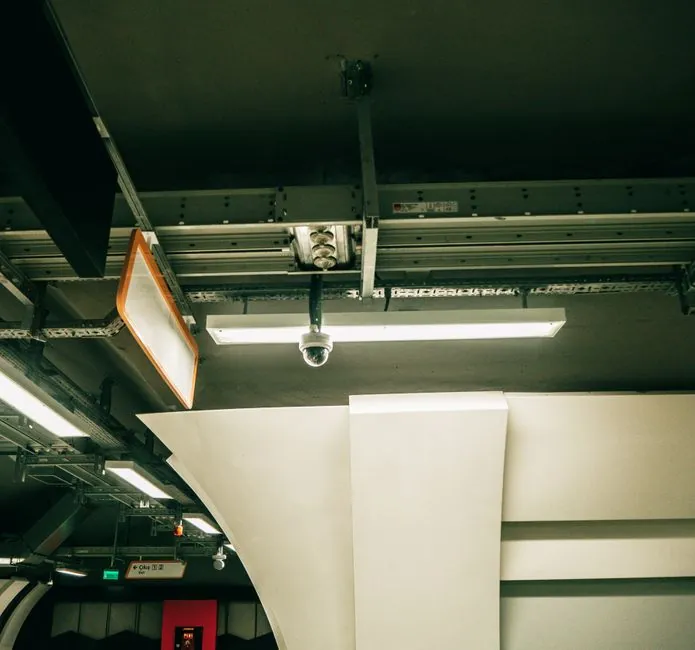
A 50,000 sq ft warehouse typically requires 20-30 cameras to eliminate blind spots, and a 100,000 sq ft facility needs 25-40 cameras for comprehensive coverage, with ceiling heights of 20-40 ft dictating lens and zoom selection [S4][S5].
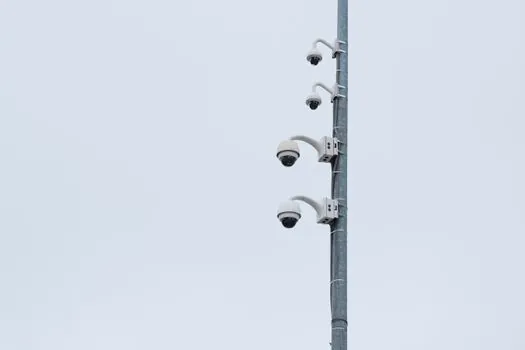
Bullet, PTZ, and dome form factors each address a different failure mode: long-range perimeter visibility, dynamic tracking of moving forklifts, and tamper-resistant 360-degree overview of packing or staging zones [S1][S6]. Combined with AI video analytics for PPE compliance, after-hours intrusion, and license plate recognition at dock doors, the system functions as both a deterrent and an operational telemetry layer [S1][S5].
Camera Form Factor vs Decision Criteria
Bullet cameras remain the default for outdoor perimeter and dock-door runs because the sealed cylindrical housing is straightforward to aim and weather-rate, and the form factor visually advertises surveillance coverage to deter intrusion [S1]. Dome cameras with a 360-degree field of view suit large open floor plates where a single ceiling-mounted unit replaces two or three fixed cameras, and the dome shell resists impact damage from pallet jacks or lift-truck contact [S6]. PTZ cameras with 30x to 40x optical zoom are the only practical answer for high-bay aisles where fixed-focal-length lenses cannot resolve a license plate or badge number at 30-40 ft mounting height [S4][S5].
The decision matrix below lines the three common form factors up against the criteria that drive warehouse specification: range, vandal resistance, optical reach, and AI analytics readiness.
Resolution, WDR, and Low-Light Performance
Minimum effective resolution for warehouse surveillance is 1080p, and 4K cameras are now commonly specified for high-value storage zones and license plate capture at dock doors [S2]. Wide Dynamic Range of 120 dB or higher is non-negotiable at loading bays: when a dock door opens, the camera must simultaneously render a dark interior and a sun-blown exterior without washing out, and a 120 dB+ WDR specification is the practical threshold most integrators write into bills of material for that application [S5].
For 24/7 operations, infrared illumination paired with low-light CMOS sensors extends usable coverage into unlit aisles and after-hours perimeter runs, and thermal-imaging modules are increasingly used at the exterior fence line where ambient light cannot be guaranteed [S2][S3]. When evaluating a surveillance camera for a warehouse retrofit, confirm that the quoted low-light sensitivity is specified in lux with a measured value, not a marketing term.
IP Rating, Operating Temperature, and Power
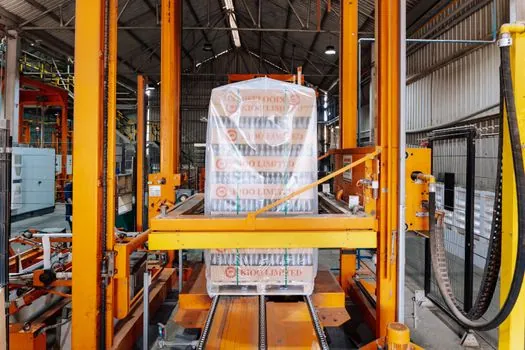
Outdoor and dock-adjacent cameras should carry an IP66 rating as a baseline; IP66 means dust-tight and protected against powerful water jets, which is the minimum survivable spec for an environment that cycles between humid interior air, dust from loading operations, and direct rain exposure at open dock doors [S4]. For cold-storage warehouses and freezer aisles, confirm the published operating temperature window covers the full negative range, and check whether the manufacturer rates the unit for continuous duty at that temperature or only for storage.
Surge protection and UPS-backed power are equally part of the camera spec, not afterthoughts. Lightning-induced transients on perimeter runs are a documented cause of repeated camera failures in subtropical and storm-prone regions, and the industrial camera selection criteria for warehouses always include surge protective devices sized for the cable run length and a documented power-loss ride-through [S4]. A simple check: if the camera datasheet does not list surge protection as a tested line item, the integrator is on the hook for warranty calls.
AI Video Analytics and Operational Telemetry
Five analytics classes now justify their cost in most warehouse deployments: forklift and vehicle detection for safety and traffic-pattern review, PPE compliance monitoring for hard hats and high-visibility vests, after-hours intrusion in restricted zones, loading-dock dwell time and unauthorized trailer access, and license plate recognition for automated check-in and check-out logging [S5]. The base layer of surveillance security still works without these analytics; the analytics are what convert a passive recording system into an operational tool that feeds KPIs back into warehouse management software.
Self-learning analytics are notably less noisy than rule-based motion detection in busy warehouses, because the model baselines the normal flow of forklifts, pallet movers, and shift-change foot traffic and only alerts on deviations [S5]. For integrators comparing platforms, the practical test is the false-alarm rate per camera per shift in a live warehouse: anything above a handful of false events per camera per shift will be muted by operators within a week.
Network Architecture, Storage, and Cyber Hygiene

Digital IP cameras transmit over Ethernet and are easier to integrate with access control and intrusion systems, but they expand the network attack surface and require VLAN segmentation, firmware update cadence, and credential rotation as part of the deployment plan [S2]. Analog coaxial-fed systems are less prone to certain classes of network interference and are sometimes specified for retrofits where running new Cat6 is cost-prohibitive, at the cost of lower maximum resolution and a separate recording infrastructure [S2].
Storage sizing should be calculated from a concrete retention target: at 1080p, 30 fps, H.265, a single stream averages roughly 2-4 Mbps continuous, which means a 30-day retention requirement for 30 cameras needs on the order of 5-8 TB of usable storage, and 4K streams multiply that by a factor of 3-4. NVRs remain common, but cloud-managed architectures that eliminate the on-site NVR closet are now standard for sub-200-camera deployments [S5]. For related warehouse-floor equipment decisions, a recent checkweigher selection spec map walks through analogous resolution and ingress logic for in-line weighing hardware.
Placement Plan, Lighting, and Field of View
Loading docks warrant one camera per door with paired LPR and overview coverage, and a single PTZ can supplement multiple dock doors for live operator follow-up [S4][S5]. Interior aisles should be covered at every third intersection with fixed dome or bullet cameras aimed down the aisle, and high-value storage gets dedicated analytics-enabled coverage rather than a shared overview [S5]. Perimeter runs along exterior walls typically use one camera every 100-150 ft with overlapping fields of view to eliminate the dead zone directly beneath the mount.
Camera-mount height and lens choice must be considered together: a 4 mm lens at 30 ft gives a wide overview but no detail, while a 12 mm lens at the same height gives identifiable faces but a narrow field of view that misses adjacent aisles. For high-ceiling warehouses, varifocal lenses or motorized zoom on a fixed camera is the most cost-effective answer where a PTZ is overkill, and the surveillance camera datasheet should quote the horizontal field of view in degrees, not just the focal length, so the layout can be validated against the floor plan.
Watch List: 2026 Standards, Cybersecurity, and Integration
For hazardous-area warehouses such as those storing flammable solvents or aerosols, follow-on reading on explosion-proof and remote surveillance cameras for oil and gas sites outlines the additional certification and housing requirements beyond IP66. The signals worth tracking into Q4 2026 are: ONVIF profile compliance statements for cross-vendor integration, the publication of any new NDAA Section 889-compliant camera lists from major U.S. federal buyers, and any updates to NFPA 72 fire alarm interfaces that increasingly consume video verification data from the warehouse camera network. [S1]