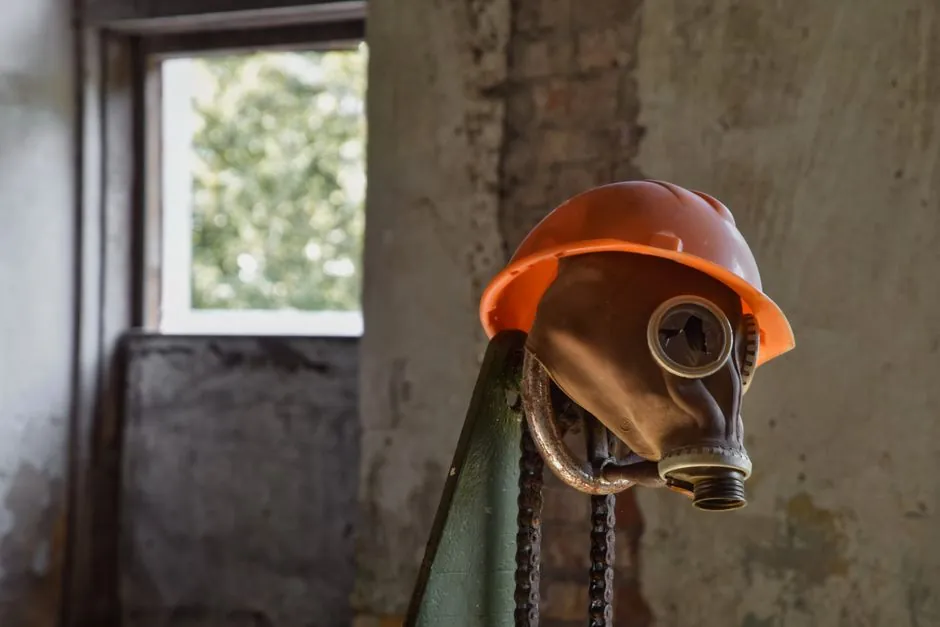
Construction sites pull five core industrial gases, oxygen, acetylene, argon, nitrogen, and carbon dioxide, for structural steel welding, oxy-fuel cutting, shielding, purging, and pipeline pressure testing [S3]. Cylinder design, refill life, and valve-outlet standards are governed under ISO/TC 58 and its subcommittees SC 2 (valve outlets), SC 3 (seamless steel and aluminium cylinder design), and SC 4 (periodic inspection) [S1].
Welding-grade shielding gases are the highest-purity SKUs on a site, while fuel-gas handling carries the most aggressive safety burden. Specifying the wrong one for the duty, or accepting multi-manufacturer small-bore fittings, has been documented to cost a major oil and gas project 12 weeks of delay and roughly $3 million in cost overruns on a single 2,000-connection topside module [S4].
Shielding Gas and Shielding Mix Selection
Argon is used as a shielding gas in structural steel welding to help protect weld areas from contamination, improving weld strength, stability, and appearance [S3]. Pure argon is reserved for TIG/GTAW on stainless and for MIG of aluminium and other non-ferrous alloys, where any oxygen contamination of the shielding stream discolours the weld and drops corrosion resistance [S3].
For flux-cored arc welding (FCAW) on heavy structural sections and bridge girders, self-shielded or CO2-shielded tubular wires are common because they tolerate outdoor wind better than gas-shielded MIG. Cylinder choice is largely a logistics decision here: high-pressure cylinders, typically charged to 200-300 bar (2900-4350 psi) service pressure, are standard for argon, argon/CO2 mixes, and pure CO2 across ISO/TC 58/SC 3 seamless steel and aluminium cylinder families [S1].
Oxy-Fuel Cutting: Oxygen and Acetylene Pairing
Oxy-fuel cutting relies on a fuel gas, almost always acetylene on construction sites, plus a high-purity oxygen stream that does the actual cutting exotherm. Acetylene is uniquely suited to portable site work because it burns at roughly 3,160 degC in pure oxygen, hot enough to ignite and oxidise mild steel, but it is also unstable above about 2 bar gauge, which is why acetylene cylinders are filled with a porous mass and saturated with acetone or DMF [S1][S3].
Alternatives such as propane and propylene run cooler (around 2,800 degC and 2,900 degC respectively in oxygen) and need an iron-powder or multi-flame injector nozzle to cut thicker plate; they are cheaper and easier to ship, but they cannot match acetylene for clean cuts on thin structural steel or for brazing adjacent to a finished weld. Fuel-gas cylinder selection should follow the project's pressure and flash-back arrestor requirements, not just the cheapest refill [S2][S3].
Nitrogen for Purging, Drying, and Pressure Testing
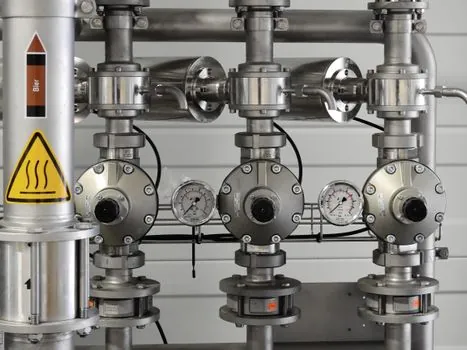
Nitrogen on a construction site is overwhelmingly an inerting and testing gas, not a shielding gas. It is used to purge stainless and alloy pipelines before commissioning, to pressure-test hydrostatically substituted systems (typically at 1.1-1.5 times design pressure in shop, then dropped to service pressure in the field), and to dry instrument air and control lines before startup [S3].
Specifying nitrogen for these duties means choosing the right purity grade: standard industrial grade (around 99.9% N2) is fine for pressure-test padding and general purging, while 99.999% (5N) or higher "zero-grade" nitrogen is required for stainless purging where any oxygen carryover will reproxide the inside of the pipe and re-wreck the corrosion resistance you paid for. Bulk liquid nitrogen with a low-pressure vaporiser is the standard supply mode for site pipeline work, with high-pressure cylinders as backup for small tie-ins and instrument air systems [S1][S2].
CO2 Beyond the Shielding Mix
Carbon dioxide in construction shows up in three places: as a component of Ar/CO2 shielding mixes (usually 15-25% CO2 for GMAW of mild steel), as a pure shielding gas for short-circuit MIG on thin sheet, and as a pressurising and inerting medium for closed-loop pipe systems. Liquid CO2 cylinders for welding run at roughly 57 bar (830 psi) at 20 degC, governed by ISO/TC 58/SC 3's seamless steel CO2 cylinder standard for fixed fire-fighting installations and the broader seamless-steel cylinder family [S1][S3].
On site, CO2 also has a structural role: dry-ice blasting for surface preparation before coatings or fireproofing, and concrete curing in cold-weather pours where CO2 injection accelerates early strength gain. Both jobs consume serious volume, so bulk liquid CO2 with on-site storage is the practical spec; high-pressure cylinders are only economic for small touch-up and repair work [S2].
Supply Mode and Cylinder Logistics
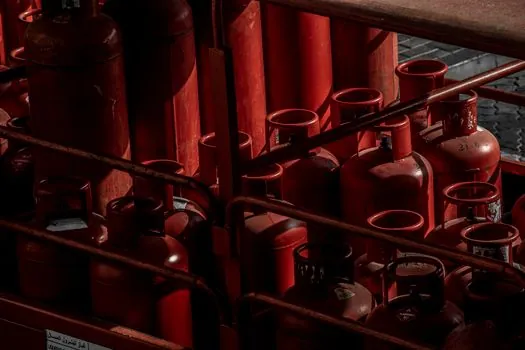
Construction supply runs across three modes: high-pressure cylinders (single cylinders or manifolded banks), microbulk tanks (typically 230-450 L liquid capacity for medium sites), and bulk liquid tankers (3,000-30,000 L for large infrastructure projects and pre-fab yards) [S2]. Selection is a function of daily draw, project duration, and the gas mix profile: shielding gases are almost always cylinders because microbulk and bulk argon/CO2 mix installations are not common outside of heavy manufacturing.
On the regulatory side, ISO/TC 58/SC 4 governs periodic inspection and testing of seamless steel cylinders, with the standard test interval and the mandatory precautionary labels; SC 2 sets the cylinder valve outlet selection and dimensioning so the same gas cannot be cross-filled through the wrong valve, a frequent site failure mode when contractors improvise adaptors [S1].
Fitting and Connection Discipline Across the Site
Cylinder-to-regulator hoses, regulator-to-torch leads, and small-bore tubing runs all have to come from a single manufacturer. JIP33 Specification S-716 puts it bluntly: "Fittings shall be from a single manufacturer. Intermixing of tube fittings from different manufacturers shall not be acceptable. Interchanging of tube fittings from different manufacturers shall not be acceptable" [S4].
That rule was written for oil and gas, but it applies just as cleanly to construction. Mixing a hose-end fitting from one vendor with a regulator nut from another does not usually leak on the bench, but on a vibrating structural steel frame in winter, intermix failures show up as gas-side porosity, flashback incidents, and slow pressure-test leaks that delay handover by days. For the broader equipment-pick logic that wraps around a gas train, see the Plasma Cutter Selection for Demolition: Spec Gates, Air, Duty Cycle reference, and for the gas-supply backbone itself the industrial gas page covers the cylinder-to-regulator chain. Welder PPE and gas-monitor logic sit under the construction tools and gas analyzer reference pages, while the heavy equipment consuming these gases for cutting and surfacing is catalogued in the construction machinery and equipment reference.
Trackable Signals for the Next Planning Cycle
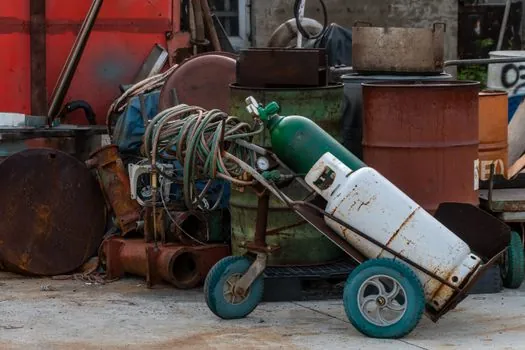
Two signals are worth pinning for the next gas-procurement review: ISO/TC 58/SC 3 has multiple active work items on refillable seamless aluminium alloy cylinders, and on quench-and-tempered steel cylinders with tensile strength below 1,100 MPa, both with technical corrigenda still in the 60.60 stage as of the September 2026 listing [S1].
The second signal is site-side: more general contractors are now standardising on bulk liquid argon plus on-site blending skids for structural welding, in place of cylinder-supplied premixed shielding gas, to cut per-cubic-foot cost and to lock the mix ratio. Track the project-side adoption on a per-yard basis and cross-check against cylinder-refill frequency before the next bulk-vs-cylinder make-or-buy review.