
Demolition work punishes plasma cutters: cuts are out-of-position, the workpiece is often painted, corroded, or laminated, and operators are rarely on a clean shop floor. Hypertherm's Powermax45 SYNC publishes a 20 mm (3/4") recommended cut on mild steel at 500 mm/min, a 32 mm (1-1/4") severance rating for hand cutting, and a 16 mm (5/8") pierce rating, all on a 9 kW, 20–65 A inverter running at 50% duty cycle at full output [S1].
That data point, more than any brochure line, frames the demolition selection problem. The Powermax125 steps that envelope to 125 A for thicker structural severance; mid-tier 50–60 A units such as the Lotos LTP5000D and PRIMEWELD CUT60 cover plate up to 3/4 inch for shop-and-site mixed use [S3][S4]. Going below roughly 45 A in the field is where cut speed collapses and dross climbs, a failure pattern we see weekly.
What "demolition-rated" actually means in plasma spec terms
Four published numbers decide whether a plasma cutter survives a structural-tear-down or scrap-recovery job: severance thickness on mild steel, pierce rating, duty cycle at full amperage, and inlet air pressure window. The Welders Warehouse puts cut capacity on mild steel as the reference datum, then flags stainless at roughly 10% less and aluminium at roughly 40% less, because plasma cuts by melting rather than oxidation, so the chemistry of stainless and the thermal conductivity of aluminium both eat into throughput [S2].
The Powermax45 SYNC's air envelope is the cleanest published reference: optimum 7.6–8.3 bar (110–120 psi), minimum 5.5 bar (75 psi), recommended flow 210 L/min at 5.9 bar (7.5 scfm at 85 psi) for cutting and 210 L/min at 4.8 bar (7.5 scfm at 70 psi) for gouging, using clean dry air or nitrogen [S1]. Undercut any of these and the arc loses constriction: kerf widens, dross doubles, electrode life halves. Miracher's export-market guidance is that single-phase 220–240 V / 50–60 Hz supply covers plasma up to roughly 50–60 A, so any demolition-class unit above 65 A is effectively a three-phase machine on European sites [S7].
Selection criteria: amperage, air, duty cycle, mass
JINSLU's 2026 selection guide ranks four parameters in this order: cutting thickness, power output (amperage), portability, and duty cycle as a percentage of a 10-minute window [S6]. For demolition, that order inverts for two of the four: portability and duty cycle rise above raw amperage, because the bottleneck on a tear-down is arc-on time while the operator repositions the torch, not the top-end cut.
Mass matters more than spec sheets admit. The Powermax45 SYNC ships at 27–29 kg (52.7–61 lb) with a 7.6 m (25 ft) torch lead, and the dimensions are 483 x 233 x 430 mm [S1]. Anything over 35 kg in this class gets left on the truck, which means consumables and downtime stack up on the platform. Arccaptain's CUT55 Pro pilot-arc portable at 55 A targets exactly this weight band for "heavy plate and structural projects" up to 3/4 inch steel, with a non-touch pilot arc for easier starts and longer torch life in dirty air [S4].
Who a demolition plasma is for, and who it is not for
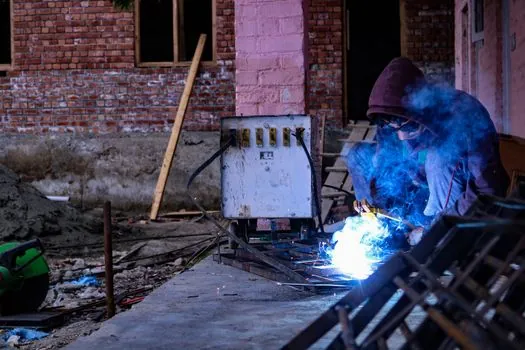
A 65–125 A inverter with pilot-arc start, mechanized-grade cartridge consumables, and a 7.6 m lead is for structural steel demolition, scrap-yard recovery, tank and vessel teardown, rebar-heavy concrete pre-cut, and bridge-deck cutting where the operator must work overhead. The same platform with a gouging cartridge (4.0 kg/hr metal removal, 2.9 mm D x 6.4 mm W groove on the Powermax45 SYNC) doubles as a back-gouging tool for weld removal before re-welding, which is a routine demolition step [S1].
It is not for: thin-gauge HVAC duct (a 40 A inverter cuts cleaner and cheaper), stainless architectural panels where hexavalent chromium fume becomes a respiratory hazard, or aluminium plate over 6 mm (cuts 40% slower than mild steel and warps without fixturing) [S2][S9]. It is also the wrong tool when the substrate is non-conductive (concrete, masonry, composite) or when the demolition is on a live process line that cannot be de-energised, because the open-circuit voltage of 265–270 VDC is a touch-lethal hazard around wet or salt-contaminated surfaces [S1].
Options compared on demolition-critical criteria
Three platform classes are realistic for demolition in 2026. Entry 40–50 A single-phase inverters (Hypertherm Powermax45 SYNC at 65 A on the upper edge, Arccaptain CUT50): up to 20 mm recommended, 16 mm pierce, 50% duty cycle at full output, 27–29 kg, single-phase 200–240 V compatible. Mid-tier 55–65 A units (Lotos LTP5000D, PRIMEWELD CUT60, Arccaptain CUT55 MP): 3/4 inch plate, pilot-arc start, mechanized-threading consumables, single or three-phase. High-end 85–125 A three-phase systems (Powermax125): up to 38 mm (1-1/2") severance, mechanized drag-cutting at a 45 degree angle for narrow kerf with minimal dross and HAZ, automated torch height control [S3][S8].
The decision drivers, in order, are: phase availability on site (single-phase 220–240 V caps usable amperage near 50–60 A) [S7]; maximum severance thickness in the worst member, not the average; gouging requirement (4.0 kg/hr on the 65 A class is enough for weld removal, but structural clean-up wants the 125 A); consumable logistics (cartridge RFID systems such as SmartSYNC eliminate mix-ups, which is decisive on multi-operator sites) [S1]. On cost per metre of cut, the 65 A class is the sweet spot for plate under 20 mm; the 125 A class earns its premium only when severance above 25 mm is routine, because severance cuts at 125 mm/min (5 ipm) at 32 mm eat operator hours faster than they save machine cost [S1].
Operating envelope and consumables on a dirty site
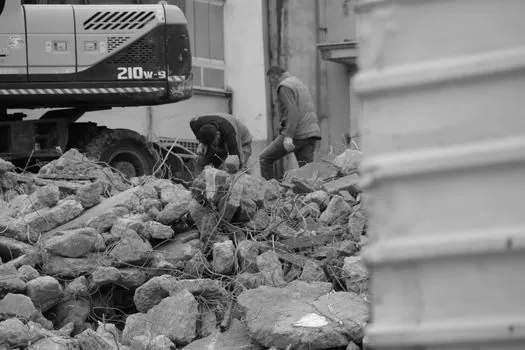
Demolition air is the most common failure cause. The Powermax45 SYNC spec is 7.6–8.3 bar optimum with a 5.5 bar minimum, and the manual calls for clean dry air or nitrogen, with a desiccant dryer mandatory below 0 deg C to keep the orifice from icing [S1]. On a real site that means a two-stage filter regulator plus a coalescing filter, not the single regulator that ships with most contractor compressors. Get this wrong and you see electrode wear double within a shift, and tip replacement becomes a daily event rather than weekly.
Consumable life drives the operating-cost case. Hypertherm's published "up to twice the life for handheld cutting" with optimized cartridges, and the SmartSYNC cartridge system with end-of-life detection, removes the operator guess-work that ruins torches in demolition work, where mixed operators cycle the same machine across shifts [S1]. The Arccaptain CUT55 MP positions its non-touch pilot arc explicitly for easier starts in dirty conditions and longer torch life, which is the same problem stated in different words [S4].
Safety and fume hazards specific to demolition
Plasma cutting on coated, galvanised, or stainless steel produces fume that standard welding PPE does not catch. AIMS Industrial Supplies flags hexavalent chromium from stainless cutting as a P3 respirator requirement, not a P2, and notes that aluminium cutting requires slightly faster travel speed to avoid HAZ build-up [S9]. Lead and cadmium-bearing coatings on demolition-era structural steel (pre-1990s bridge and refinery work) push this into supplied-air respiratory protection rather than disposables, and local exhaust ventilation with a 0.5 m/s capture velocity at the arc is the engineering baseline, not a recommendation.
Open-circuit voltage is the second hazard often missed. Powermax-class inverters publish 265 VDC (CSA) and 270 VDC (CE) OCV [S1]. On wet demolition decks, rebar contact, or in confined-space vessel entry, that voltage is a serious shock risk and demands Class 0 (1000 V) gloves for the operator and a dedicated ground stud bonded to the workpiece, not the building steel. Plasma cutting on painted or galvanised steel also generates zinc oxide and lead fume concentrations that exceed occupational exposure limits within minutes in unventilated spaces, which is why demolition-tier plasma jobs are increasingly scoped with a documented risk assessment for the specific coating system.
Where this leaves a 2026 demolition specification
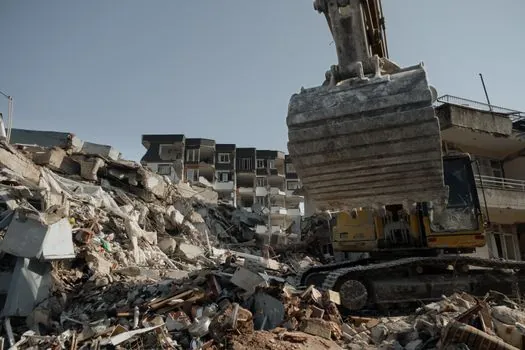
The defensible 2026 specification for a demolition-tier plasma cutter is: 55–125 A output, single or three-phase 380–400 V compatibility, 7.6–8.3 bar clean dry air at 210 L/min, 50% minimum duty cycle at full amperage, 100% at derated amperage (46 A on the 65 A class), pilot-arc non-touch start, cartridge-style consumables with RFID or equivalent end-of-life detection, and a 7.6 m lead [S1][S6][S7]. The same selection logic for adjacent structural cutting and finishing trades is covered in the plasma cutter spec map for interior finishing reference, and demolition work routinely pairs plasma with a demolition hammer for concrete pre-cut and a rebar cutter for the exposed rebar phase that follows.
Trackable signals for the next quarter: revised IEC 60974-1 plasma cutting safety guidance, OSHA updates to hexavalent chromium permissible exposure limits for stainless cutting, and OEM announcements of higher-amperage cartridge systems above 125 A for the structural demolition segment. Any of those will reset the spec gates discussed above, and the underlying air-pressure and duty-cycle physics will not change.
The underlying component specifications are covered under plasma cutter.