
Industrial gear selection in 2026 hinges on matching the gear class — spur, helical, bevel, worm or planetary — to torque, speed, duty cycle and the relevant AGMA, ISO 6336 or DIN 3962 load-capacity calculation, with a defined service factor of 1.0–2.5 applied to the driven machine [S2].
For most factory-engineering buyers, the decision tree collapses to four numbers: input power (kW), output speed (rpm), service factor (Sf), and required lifetime (L10h hours), with the gearbox type, ratio, mounting and lubrication chosen afterwards [S2].
Spur, Helical, Bevel, Worm and Planetary: Load and Noise Trade-offs
Spur gears remain the cheapest option for parallel-shaft drives up to roughly 200 mm centre distance and are commonly rated to 10–20 m/s pitch-line velocity, but their single-tooth mesh produces noise levels typically 6–10 dB(A) higher than an equivalent helical pair at the same pitch and speed [S2].
Helical gears cut the same ratios with a 15–25° helix angle, raising tooth contact ratio above 1.4 and dropping noise by a measurable margin, at the cost of axial thrust that must be absorbed by the bearing arrangement [S2]. Bevel gears (straight, spiral or hypoid) cover intersecting-axis drives, with spiral bevel handling pitch-line velocities above 25 m/s where straight bevel becomes a noise and wear liability.
Planetary Gearboxes: Torque Density and Servo-Drive Use
Planetary stages pack three or more planet gears around a sun gear, multiplying torque capacity by the planet count and giving a power density of roughly 1.5–3.0 kW per kg for servo-class units, an order of magnitude above a single-pair helical stage of the same bore size [S2].
Standard planetary ratios span 3:1 to 100:1 per stage, with two- and three-stage stacks covering 100:1 to 10,000:1, and backlash classes from standard (≈10–15 arc-min) to precision (≈3–5 arc-min) and ultra-precision (sub-1 arc-min) for robotics and CNC tool spindles [S2]. For high-cyclic servo applications — packaging, gantry, AGV drive wheels — AGMA 6034 and ISO 6336-2 are the typical rating references, while cyclic-duty verification follows AGMA 6106 for life under reversing load [S2]. Buyers comparing servo planetary units should weigh the industrial gear selection criteria against backlash, torsional stiffness (commonly 10–100 Nm/arc-min) and the matched low-rpm high-torque motor, all of which feed into machine settle time.
Materials, Heat Treatment and Surface Finish
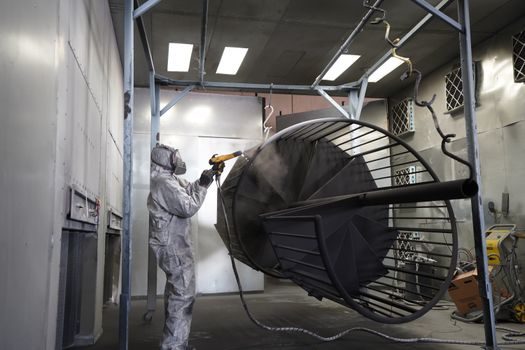
Carbon-steel gears (AISI 4140, 4340) through-hardened to 28–34 HRC or case-carburised to 58–62 HRC at the flank remain the default for industrial gear sets, with through-hardening used where core toughness matters and case-carburising where pitting resistance dominates [S2].
For corrosive or washdown service, 17-4 PH stainless to H1025 condition (≈40 HRC) or nitrided 316L is specified, accepting a 10–20% capacity derate versus case-hardened steel. Cast iron (ASTM A48 Class 30 minimum for gear bodies) is acceptable for low-speed housings and large ring gears, but tooth elements in power-transmission service should be forged or bar-stock steel. Ductile iron to ASTM A536 60-40-18 is widely used for gear blanks in worm and bevel reducers, with the bronze worm wheel (ASTM B584 C90700 / C91100) being the sliding pair that defines wear life [S2]. Surface finish on the active flank is typically specified at 0.4–0.8 µm Ra for hardened steel gears, with super-finishing (0.1–0.2 µm Ra) reserved for high-speed gearbox stages above 30 m/s.
Lubrication, Sealing and Maintenance Window
Gear lubrication falls into three practical bands: grease for life (small sealed units, 20,000–30,000 h), splash or splash-plus-pad oil (open industrial reducers, ISO VG 220–320 mineral or PAO synthetic), and forced-circulation oil with cooler and filter (high-power parallel-shaft and planetary units above 500 kW) [S2].
Oil volume for splash service is typically 0.3–0.5 L per kW of input power for helical-bevel units, with viscosity grade selected so that the operating temperature lands the oil in the 70–100 cSt range at the gear mesh. Sealing is the chronic failure point: dual-lip nitrile or fluoroelastomer seals on input and output shafts, with labyrinth auxiliaries, give the 30,000 h industrial baseline. For washdown or food-grade service, specify IP66/IP69K housing seals and a food-grade H1 lubricant. Service intervals typically land at 4,000–8,000 h for splash mineral oil, 10,000–20,000 h for PAO synthetic, and 2,000 h for the high-speed bearing stages of large gearboxes under AGMA 2004 duty.
Standards, Calculation Methods and Service Factor
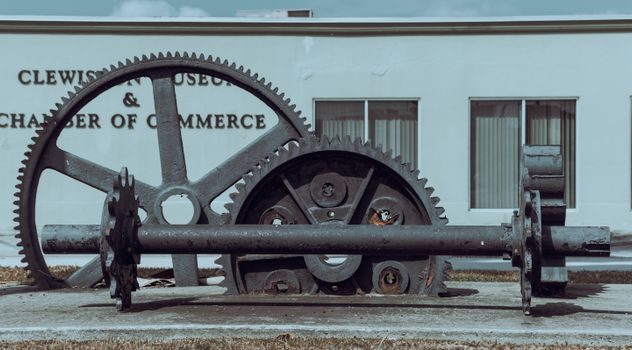
The dominant rating systems are AGMA 2001 / AGMA 6034 (US), ISO 6336 (international, superseded ISO 6336:2006 by ISO 6336-1:2019 in key markets), DIN 3962 / DIN 3990 (EU baseline, technically aligned to ISO 6336), and JIS B 1702 (Japan). Buyers cross-referencing European-built drives into North American equipment should confirm the supplier has re-rated to AGMA 2001, not just stamped the AGMA name on an ISO-rated box [S2].
Service factor is applied to the driven machine, not the prime mover: uniform duty (conveyors, fans, light mixers) takes Sf 1.0–1.25, moderate duty (machine tool drives, compressors) 1.25–1.5, heavy duty (crushers, mills) 1.5–2.0, and shock duty (punch presses, rock crushers) 2.0–3.0. Lifetime expectations: 10,000 h for light industrial, 25,000 h for general-purpose, and 40,000–100,000 h for 24/7 continuous process plants. Where the application is a sump pump or air compressor drive, the OEM-published service factor should be treated as the floor, not the design point.
Supplier QA: Forgings, Traceability and Mill Certificates
Industrial gear sourcing in 2026 still separates on whether the supplier controls the forging and heat-treatment chain. Tier 1 mills (Nanjing High Drive, Flender, SEW-Eurodrive, Sumitomo, David Brown) own forge or bar stock through heat treat and finish, and ship with full EN 10204 3.1 or 3.2 mill certificates covering chemical composition, mechanical properties and hardness survey per lot [S2].
Tier 2 producers buy blanks from external forge and heat treat, and their certificates are usually EN 10204 3.1 issued by the forge, not the gear maker. Tier 3 trading brands rarely have a heat-treat furnace in-house and depend on the sub-supplier; for nuclear, mining and forged-component applications, insist on a 3.2 certificate signed by an independent inspector (LR, BV, DNV, TÜV) and on witnessing the final magnetic-particle or dye-penetrant test on the tooth root. For buyers who also need related motion hardware, the same supplier stack often carries linear guide rails, crossed roller guide bearings and industrial adhesive for gearbox assembly, and consolidating those SKUs on one audited vendor is one of the 2026 sourcing plays to cut receiving-inspection hours.
Trackable next signal: the AGMA / ISO 6336 alignment review scheduled for late 2026 — once the updated load-capacity factors and lubrication factor tables are mirrored in the major OEM selection software, expect ISO 6336-1:2019 to displace older 2006 ratings on EU-built gearbox nameplates within two model years. Buyers should also pin the supplier's case-hardening depth (EHT, effective case depth to 550 HV) at 1.5–2.5 mm for typical 5–10 module gears, with a documented core hardness range of 28–35 HRC on the test coupon.