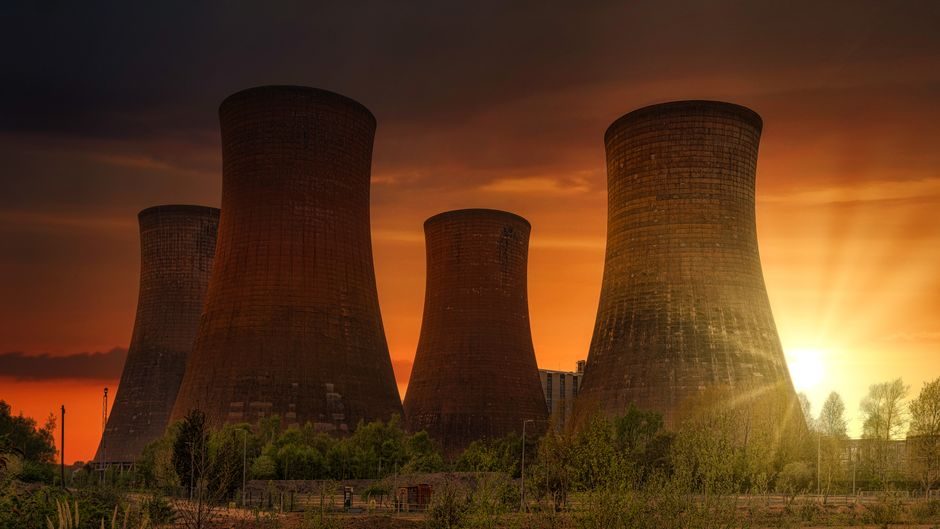
A nuclear island contains roughly 80,000+ individual components, and the supply chain that feeds it runs on a 24–36 month critical-path clock dominated by large forged reactor-vessel parts, heavy-walled piping, and enriched-uranium fuel assemblies [S3].
In practical procurement terms, mid-2026 buyers are watching three pressure points: (1) the small global pool of ASME Section III / RCC-M qualified forging shops, (2) the four-company concentration in Western enrichment (Urenco, Orano, ConverDyn/Centrus pipeline, Rosatom), and (3) the 18–30 month I&C and cable-lay cycle that now anchors the back end of every new-build Gantt chart [S2][S3].
Forged Components: Where the Schedule Actually Breaks
Reactor pressure vessel (RPV) shells, steam-generator channel heads, and pressuriser forgings are produced by a small set of qualified mills — historically dominated by Japan Steel Works (JSW), Doosan Enerbility (South Korea), and a handful of European forgers capable of 600-tonne ingot pours [S3].
Lead times for a single RPV shell forging sit in the 30–40 month range as of 2025, with engineering-critical forgings (reactor coolant pump casings, accumulator tanks) commonly quoted at 24+ months [S2]. Buyers building AP1000, EPR, and APR1400 variants are running parallel qualification with two mills to keep schedule float above 6 months. The ASME QSC (Nuclear Component) credential, not raw capacity, is the binding constraint — a mill can be 800-tonne-capable and still be non-schedulable on a nuclear project without the audit trail.
Material grades (SA-508 Grade 4N Cl.1, SA-533 Type B Cl.2, 16MND5) are tightly specified, and the heat-treatment chain (austenitising, water-quench, temper) is itself a single-vendor-of-record item at most Tier-1 EPCs [S3].
Fuel-Cycle Concentration: Enrichment, Conversion and Pelletising
The front end of the fuel cycle (UF6 conversion → enrichment → pellet/cladding → assembly) is structurally concentrated: Western enrichment capacity sits with Urenco (Germany/Netherlands/UK/US), Orano (France), and the Centrus-led HALEU pipeline in the US, while Rosatom (TENEX) handles a large share of Asian and Middle Eastern utility contracts [S3].
Fuel-assembly fabrication is more distributed (Westinghouse, Framatome, Global Nuclear Fuel, KEPCO NF, TVEL), but cladding-tube supply (Zircaloy-4, M5, Optimised ZIRLO) consolidates upstream to a handful of zirconium sponge producers, with sponge-to-tube conversion held by Framatome/Areva-Cezus, Westinghouse, and ROSATOM's TVEL division [S3].
I&C, Cable and the Long-Tail QA Tail
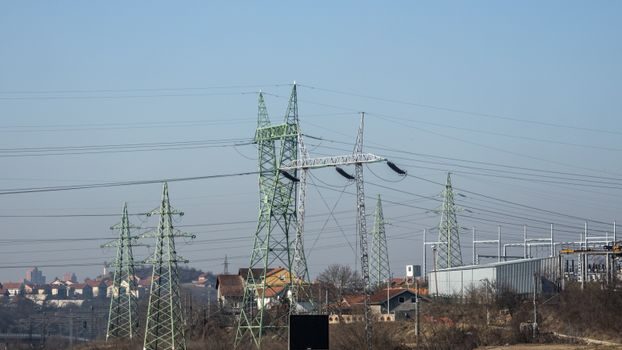
Beyond the heavy mechanicals, the 18–30 month tail of every nuclear new-build Gantt is instrumentation and controls (I&C), qualified cabling, and safety-grade switchgear [S2].
Safety-classified systems (Class 1E in US/IAEA terminology) require 1E-qualified hardware, environmental and seismic qualification (EQ), and traceable qualification dossiers that are typically vendor-led 12–18 month exercises before a single cable is pulled. The same dc power supply train feeding safety-bus inverters and battery banks is specified to IEEE 308 / IEC 62040-3 class expectations, with seismic and aging-margin testing that commercial-grade units do not carry. Buyers frequently get squeezed when they assume 1E-class switching power supply modules can be drop-in equivalents to industrial units — they cannot, and the qualification delta shows up as a 9–15 month schedule slip when first articles fail seismic or EMI testing.
TWI's nuclear-sector service page frames the operational side: weld-procedure qualification, in-service inspection, and failure-mode work for the existing fleet sit on the same vendor pool as new-build QA, which is why outage-season and construction-season pull on the same human resources (Level III NDE examiners, qualified nuclear welding inspectors) [S2].
Construction-Phase Logistics: Heavy Haul, Lay-Down and Embedded Systems
On the EPC side, the construction-phase supply chain looks more like a mega-project conveyor than a nuclear-purity problem — until it hits the open-top module lifts [S3].
Polar crane rail erection, containment liner plate rolling, and SG/pressuriser module delivery require a sequenced heavy-haul plan, with barge / SPMT moves often booked 18–24 months in advance for port-of-entry slots at the few sites that can accept 600+ tonne lifts. Material flow inside the protected area runs on a controlled-access chain conveyor and qualified conveyor chain / roller chain paths for scaffolding and small-component moves, with silent chain drives increasingly specified for low-noise, low-vibration safety-class actuation. The same nuclear chain conveyor logic used in fuel-pool handling is now showing up in the new generation of SMR assembly halls, where the assembly-cell drives are themselves safety-related items.
Embedded software and digital I&C have their own bottleneck: FPGA / safety-class PLC firmware verification runs on a 12–24 month independent V&V cycle, and IEC 61508 SIL-3 (or IEEE 603 for US Class 1E) conformance must be re-demonstrated whenever a firmware baseline changes [S2][S3].
Comparison: Light-Water Reactor Forging vs SMR Modular Build
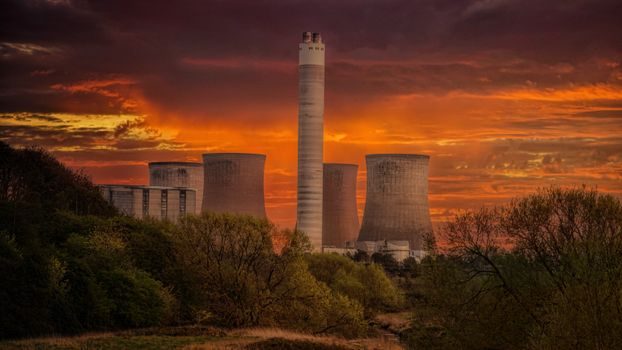
Buyers choosing between a conventional Gen III+ LWR and an SMR-first deployment see the schedule bottleneck move. [S1]
On a (1) schedule, (2) forging-pool depth, (3) fuel-cycle exposure, and (4) QA-credentialing intensity comparison, the conventional AP1000/EPR/APR1400 path scores 7–10 years first concrete-to-grid, single-digit qualified mills, mid-exposure to HALEU/LEU demand, and high 1E QA load. The SMR path (NuScale VOYGR, Holtec SMR-160, GE-Hitachi BWRX-300) scores 3–4 years from first module to grid (vendor targets), broader fabrication pool (small-module pressure vessel work fits more ASME-stamp shops), lower per-unit fuel demand but harder HALEU exposure for some designs, and a 1E QA load that drops per-module but compounds across the multi-module fleet. The real-world differentiator is forging pool: SMRs still need 200–400 tonne heads/shells, so they consume the same RPV-forge mill calendar — which is why Holtec, NuScale, and X-energy are all running parallel forging-qualification programmes rather than serial ones [S2][S3].
Standards, Sourcing Signals and Trackable 2026 Nodes
Across the international set, the binding procurement codes for nuclear components are ASME Section III (US), RCC-M (France / export-EPR), KEPIC-MN (Korea), and GOST/PNAE (Russia); fuel is handled under IAEA safeguards and, for export, NRC Part 810 / 10 CFR 110 / EURATOM supply-side review [S3].
Operators running mixed-fleet load-following need to verify that any retrofitted switching power supply bank on a safety bus is qualified to the same IEEE 308 / IEC 62040-3 expectation as the original Class 1E dc power supply architecture — a recurring spec gap in mid-life refurbishments [S2].
South Africa's school-level nuclear curriculum restating the basic fission-to-steam cycle is a useful reminder that the workforce-pipeline signal — 10+ years from secondary syllabus to licensed reactor operator — is the slowest node in the chain, and one no procurement spec can fix in the current cycle [S1].
For a wider view of how the nuclear front end interacts with adjacent energy supply chains, the Nuclear Power Upstream and Downstream Industry Chain: 2026 Spec Snapshot maps the same forging and fuel bottlenecks against the LNG, offshore wind, and solar builds competing for the same Tier-1 mill and qualified-welder capacity; the LNG Supply 2026: Super-Cycle Wave Hits the Market, Yet Tight-Window Risk Persists piece is the natural counterweight on cryogenic/forging overlap, and the Server Hardware Upstream & Downstream 2026: CPU, Power and Workload Map article covers the load side that any new nuclear unit will eventually feed.