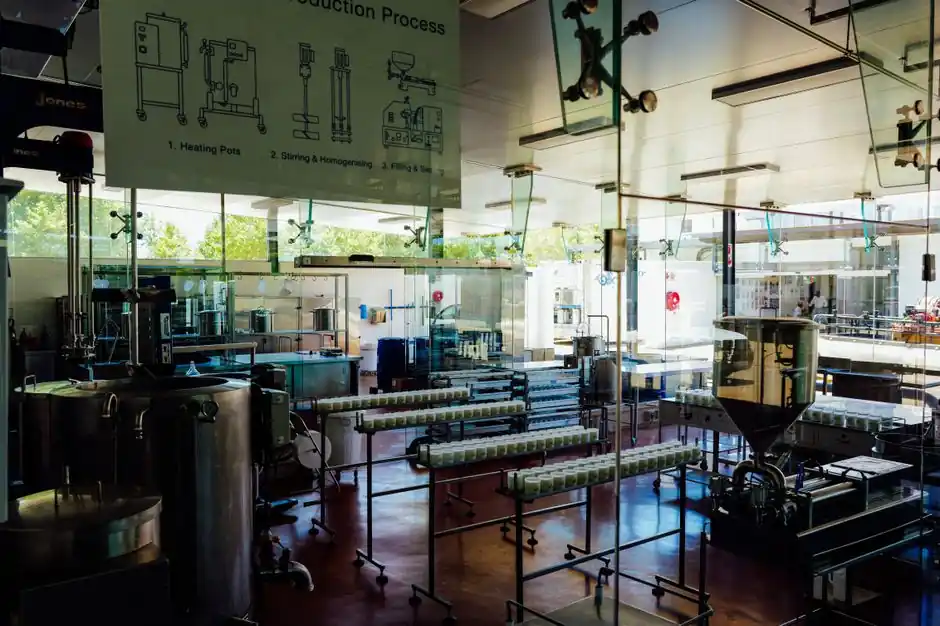
Food processing plants overwhelmingly select from four gearbox families, helical, bevel-helical, worm, and stainless washdown units, with each suited to a specific duty profile on conveyors, mixers, packaging, and bottling lines [S1]. The hardest filter is not torque or ratio, it is the combination of food-grade H1 lubricant compatibility, IP66 or higher sealing against high-pressure washdown, and a housing material that tolerates caustic cleaning chemistries.
Spur gears (parallel-shaft, involute, 95%–99% per-mesh efficiency) remain the right call in dry, low-noise-tolerance auxiliary zones and where SUS303 or SUS316 stainless blanks are specified for corrosion resistance and hygienic cleanability [S2]. Picking the wrong family is the most common reason food-plant gearboxes fail inside the first 18 months.
Hard Selection Criteria for Food-Grade Gearboxes
Food-grade gearbox selection is governed by five non-negotiable criteria, and skipping any one of them costs the line [S1]. The list: (1) corrosion-resistant housing, typically 304 or 316 stainless or food-safe coated cast iron; (2) food-safe (incidental food contact) H1 lubricant, the NSF H1 category is the industry shorthand; (3) sealed housing rated to IP66 or IP69K to keep wash water and CIP chemicals out; (4) torque and ratio sized for continuous-duty operation rather than intermittent S2 duty; (5) smooth external surfaces, no crevices, no painted labels, that survive daily high-pressure cleaning.
Because the gearbox sits at the intersection of mechanical duty and hygienic design, plant engineers should also confirm that the selected unit accepts standard radial shaft seals and that the breather/vent is filtered, since unvented or improperly vented housings are the number-one ingress path for wash water in field failure reports [S1].
Comparing the Four Main Gearbox Families
Gearboxes used in food processing plants must provide reliable torque transmission for continuous operation in equipment such as conveyor systems, mixers, and packaging lines [S1]. Bevel-helical units add a right-angle drive configuration in a compact envelope, which is the preferred solution where shaft orientation must rotate 90° without adding a separate coupling stage [S1].
Worm gearboxes deliver high single-stage reduction ratios (commonly 5:1 up to 100:1) in a compact package and are self-locking in many configurations, useful on bakery equipment, small conveyors, and packaging machinery where back-driving is undesirable [S1]. Stainless washdown gearboxes (often helical or worm internals in a polished 304/316 housing) are specified wherever the unit lives in the washdown zone, with sealed smooth housings designed to prevent bacteria buildup under daily high-pressure spray [S1].
Spur gears sit alongside these as a component rather than a housed reducer, with straight involute teeth parallel to the shaft axis, 95%–99% per-mesh efficiency under proper lubrication, no axial thrust, and a noise penalty at high speed that rules them out of quiet automotive-style transmissions but keeps them competitive in dry food-zone auxiliaries where SUS303 or SUS316 stainless blanks are called out [S2].
Application Match Across the Plant

Conveyor systems (intake, transfer, takeaway) are almost universally paired with helical or bevel-helical units because of continuous duty, high duty cycle, and the need for low-vibration operation around packaging [S1]. Mixers and agitators, particularly dough and high-viscosity product mixers, benefit from helical units for high torque density and from worm units where the self-locking feature prevents back-rotation when the drive is de-energized [S1].
Packaging machines, bottle fillers, and grain processing equipment are the strongest use cases for bevel-helical gearboxes, where the right-angle drive lets designers tuck the motor into the machine frame without a separate transfer stage [S1]. Cutting and slicing equipment for baked goods, protein portions, and formed foods runs at relentless speeds, and here the choice of food-grade lubricant and a sealed housing is the make-or-break, since lubricant leakage into the product stream is a direct recall trigger [S3].
Materials, Lubricants, and Hygiene Detail
Housing material for direct-washdown zones is 304 or 316 stainless, polished to a smooth finish that prevents bacteria harboring and survives daily caustic and acidic CIP chemicals [S1][S2]. Spur gears specified into food and medical auxiliaries are typically machined from SUS303 (free-machining austenitic) or SUS316 (molybdenum-bearing, superior chloride resistance) stainless blanks, the latter preferred wherever chloride-based sanitizers are in use [S2].
Lubrication must be NSF H1 registered, meaning the lubricant is approved for incidental food contact, and grease points should be sealed or relocated outside the product zone. Internal gear geometry choices follow from this: spur gears run simple two-axis cutting with involute teeth, helical and bevel-helical units need controlled lead and helix angle corrections, and worm gears require bronze or aluminum-bronze worm wheels paired with hardened steel worms to keep efficiency and wear in spec [S2].
Who Should and Should Not Specify Each Type
Engineers specifying a helical or bevel-helical unit are buying efficiency and quiet continuous duty, and should be ready to handle the axial thrust that helical teeth generate (typically requiring tapered-roller or angular-contact bearings on the shaft). Engineers specifying a worm unit are buying high ratio in a small box plus self-locking, but they must accept lower efficiency, which translates directly into heat that has to be shed from the housing in washdown zones. Engineers specifying stainless washdown gearboxes are buying cleanability and audit-passing documentation, and they should expect a unit cost premium over the painted cast-iron equivalent. [S1]
Spur gears are the right call for parallel-shaft, moderate-speed, dry-zone auxiliaries where the no-axial-thrust characteristic simplifies mounting and lets the designer use standard ball bearings [S2]. They are the wrong call for high-speed conveyors where the abrupt full-width tooth engagement drives noise above acceptable limits, and for any duty where quiet operation is a regulatory or ergonomic requirement [S2].
Failure Modes and Field Constraints
The most common food-plant gearbox failure is lubricant contamination followed by water ingress through an improper breather or failed seal, which is why sealed IP66/IP69K housings with filtered vents are now baseline rather than an option [S1]. Worm gear units in particular need their thermal envelope checked at the installed ratio, because efficiency drops as ratio rises, and an undersized worm box in a high-ratio duty will thermal-trip within hours of start-up.
Spur gears fail in food service mainly through abrasive wear on the tooth flank when lubricant is washed away or replaced with a non-food-grade product; specifying the right H1 grease at the right service interval is the single most cost-effective reliability action a maintenance team can take [S2]. For a broader reliability view on heavy-duty helical, bevel, and planetary units, the mining gearbox spec map covers similar sizing logic under harsher ambient loads, and the cement plant gearbox selection piece translates the same family comparison into a different duty cycle.
Reference Standards and Sourcing Notes

Food-grade lubricant acceptability traces to NSF International's H1 registration, with USDA incidental contact language historically used and now superseded in most procurement specs. Hygienic design of equipment surfaces generally follows EHEDG (European Hygienic Engineering and Design Group) Doc. 2 and Doc. 8 principles for cleanability, with 3-A Sanitary Standards commonly referenced for North American dairy and processed-food equipment, and IP66/IP69K ratings follow IEC 60529 for ingress protection. The underlying industrial gear encyclopedia entry consolidates the family definitions, while industrial ceramic selection is the cross-reference for ceramic-coated bearings and wear surfaces in low-lube duties. Spur gear geometry parameters (module, pressure angle, face width, helix lead) are defined in ISO 6336 for load capacity, ISO 1328 for accuracy grade, and AGMA 2001 for US-spec fundamental rating, with material selection in stainless gear blanks typically referenced against ASTM A276 for SUS303 and SUS316 condition. [S2]
Track the move toward higher IP ratings (IP69K becoming standard on new washdown-zone builds) and the gradual shift from 304 to 316 stainless in chloride-heavy washdown chemistries; both signals will reshape supplier catalogs through the rest of 2026.
Component reference pages worth checking: industrial adhesive.