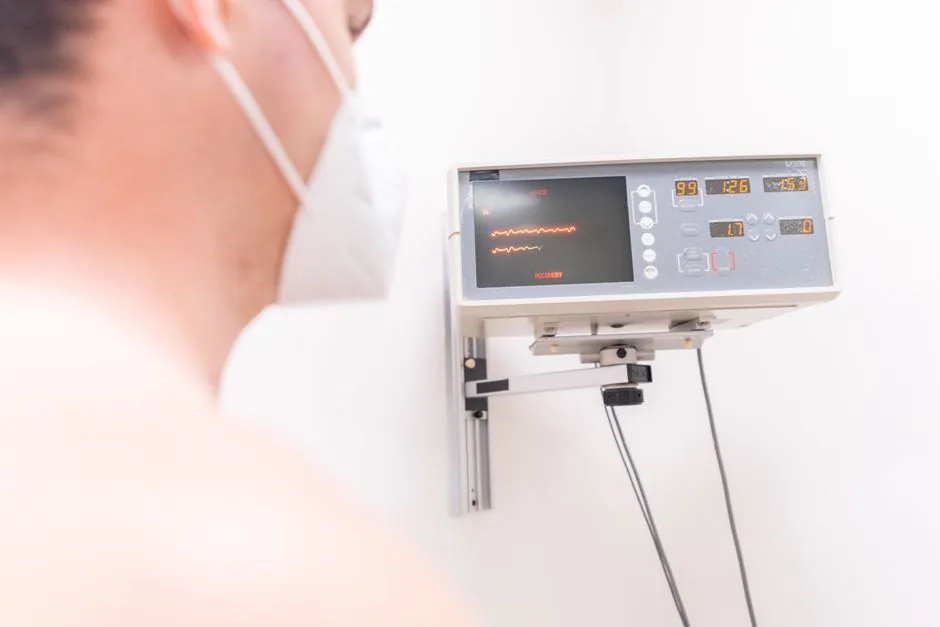
An industrial oxygen detector is specified by sensing principle (electrochemical, ultrasonic, or zirconia), measuring range (commonly 0-30% VOL or 0-100% VOL), output signal (4-20mA and/or RS485 Modbus), explosion-proof rating (typically Exd II CT6), and ingress protection (IP65) for fixed units in hazardous areas [S3][S4][S5].
For 2026 procurement, the dominant fixed-instrument pattern pairs an electrochemical cell with a 1.7-inch color display, 12-36V DC supply, ≤±3% F.S. accuracy, T90 response ≤10 s, and either 2-year or 6-year sensor life, with 0-25% VOL and 0-30% VOL as the default ranges for life-safety applications [S4][S5]. Confined-space work triggers a different spec branch: pump-suction portables with extended sampling tubes, ≤0.7% VOL resolution, and ≤60 s response per national occupational health technical requirements [S3].
Oxygen Hazard Thresholds That Drive the Spec
Normal atmospheric oxygen sits at 20.9% VOL, and the safe working band for human entry is 19.5% to 23.5% VOL, with hypoxia risk below 19.5% VOL and combustion/explosion risk above 23.5% VOL in flammable atmospheres [S3]. This 19.5%-23.5% VOL window is the spec that fixed underground-mine and confined-space detectors must alarm around, per the GBZ/T 223-2009 national occupational health standard cited in the manufacturer's technical brief [S3].
Buying logic: the instrument's range and alarm setpoints have to bracket the entire danger band, not just the lower limit. A 0-30% VOL range covers both the deficient and enriched cases; a 0-100% VOL unit is needed only when process oxygen purity is the variable (medical O2 lines, oxygen concentrators, cryogenic air-separation). For life-safety work, default to 0-30% VOL with resolution ≤0.01% VOL and at least two adjustable alarm thresholds [S3][S4][S5].
Sensing Technology: Electrochemical vs Ultrasonic vs Zirconia
Electrochemical oxygen cells dominate fixed industrial detectors because of their accuracy, low power, and modest cost, and they can be specified as 2-year or 6-year service-life variants for the same housing [S3][S4]. Their main weaknesses are limited service life, periodic sensor replacement, and sensitivity to temperature and humidity, which mandates temperature-compensated calibration and, in damp sites, optional sintered filters above 90% RH [S3][S5].
Ultrasonic oxygen sensors, which compute concentration from forward/reverse transit time with temperature compensation, deliver over 6 years life, calibration-free operation, and dual concentration-plus-flow output; they are the recommended choice for medical and industrial oxygen production [S3]. Zirconia and optical-fluorescence cells are listed as optional alternatives for high-stability continuous monitoring on units such as the GTYQ-MIC-500S-O2, where the OEM publishes them as selectable sensing methods alongside the default electrochemical cell [S4]. Thermomagnetic (paramagnetic) sensors stay in narrow high-O2 industrial niches because of bulk and power draw [S3].
Selection Criteria and a Side-by-Side Comparison
Selection starts with three questions: Is the unit fixed or portable? What is the measured range? What hazardous-area certification is mandatory? From there, evaluate sensor principle, output protocol, response time, and mechanical integration. For a related cross-reference on dust detection, the dust detector 2026 selection guide follows the same hazardous-area logic and is useful when a plant specifies both O2 and particulate on the same skid. [S5]
A practical comparison of three realistic 2026 options:
Fixed electrochemical (e.g. PN-2000-O2 / GTYQ-MIC-500S-O2 class): 0-30% VOL or 0-100% VOL range, 0.01% VOL resolution, ≤±3% F.S. accuracy, T90 ≤10 s, 4-20mA + RS485 Modbus, Exd II CT6, IP65, 24 VDC, -40 to +70 °C operating, die-cast aluminium housing, wall/pipe/flow-through/pump-suction mounting; best fit for continuous plant monitoring in chemical, mining, and pharmaceutical lines [S4][S5].
Fixed ultrasonic: 0-100% VOL customizable range, 0.1% resolution, 6+ year life, no periodic calibration, dual concentration + flow output; best fit for medical oxygen generators and industrial O2 production where long calibration intervals outweigh the higher unit cost [S3].
Portable pump-suction confined-space unit: 0-30% VOL range, ≤0.7% VOL resolution, ≤0.7% VOL error, ≤60 s response, extended sampling probe; best fit for tank, pipeline, ship-cabin, and basement entry per GBZ/T 223-2009 [S3]. A compact electrochem option (pulse-oximeter form factor) belongs to consumer/medical use, not industrial safety, and is covered separately in [S1].
Outputs, Wiring, and System Integration
Standard 2026 fixed oxygen detectors carry a 4-20mA analog output (3-wire default, 2-wire custom) and an RS485 digital output using the national-standard Modbus protocol, with maximum transmission distance of about 2,000 m on 1 mm² shielded single-core cable [S5]. Alarm signaling is typically one or two dry-contact relays plus an on-site sound/light alarm under 90 dB, and an optional active DC24V output for remote horns or beacons [S4][S5].
Integration targets are PLC, DCS, and SCADA; an RS485 Modbus channel is the right pick when the device is one of many on a multi-drop bus, while a 4-20mA loop is the right pick for a single point feeding a legacy analog input card [S5]. The oxygen unit complements, rather than overlaps with, broader personal protective measures; for the respiratory side of the same safety programme, the 2026 respirator hazard-fit-filter buying guide lines up PPE selection against the same confined-space hazards.
Hazardous-Area Certification, IP Rating, and Mechanical Build
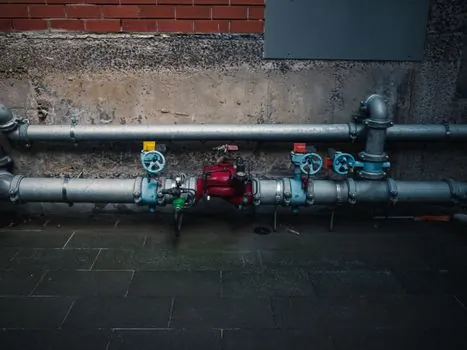
For Zone 1 chemical, petrochemical, and underground-mine applications, the dominant certification is Exd II CT6 flameproof enclosure, with CNEx-type certificates accepted across Chinese hazardous areas [S4][S5]. Housing is die-cast aluminium, corrosion- and oxidation-resistant, with either 3/4" NPT internal thread cable entries or M40x1.5 mm process connections, and a typical mass of 1.5-1.6 kg with light fitting [S4][S5].
IP65 is the standard ingress rating on current fixed units, sufficient for outdoor and wash-down areas; for non-condensing operation up to 95% RH, no extra heater is needed, but at >90% RH a filter is recommended to protect the electrochemical cell [S4][S5]. Operating temperature is published as -40 °C to +70 °C, with the high end verified for power-station, metallurgical, and desert sites; working pressure is rated to ≤200 kPa for in-line duct mounting [S4][S5].
Sensor Life, Calibration, and Maintenance
Electrochemical oxygen cells are consumable, and the published service intervals on 2026 fixed units are 2 years (standard) or 6 years (long-life), with T90 response ≤10 s and ≤±3% F.S. accuracy maintained across the cell's life [S4]. Manufacturers publish multi-level calibration support, automatic zero tracking, and drift prevention, and an infrared remote controller is offered for safe adjustment within 15 m in hazardous zones [S4].
Zero drift is specified at ≤±1% F.S. per year on the PN-2000-O2-class design, and repeatability at ≤±1% F.S., giving a typical two-point calibration interval of 6-12 months in clean service [S5]. Cross-interference is a real number on these cells: CO, CO2, and propane are listed as zero, while H2S 0.01%, SO2 0.01%, benzene 0.02%, H2 0.02%, and NO 0.005% are the published coefficients; sites with sustained H2 or VOC background should re-check selectivity before purchase [S5].
Who Should Not Buy the Mainstream Fixed Electrochemical Unit

Buyers in three situations should route around the default 0-30% VOL fixed-electrochemical build. First, medical oxygen production lines, where ultrasonic's >6-year life and calibration-free operation pay back the higher first cost [S3]. Second, very-high-purity O2 loops (≥90% O2), where a zirconia or paramagnetic cell maps the working range better than an electrochemical cell optimised for 0-30% VOL [S3][S4].
Third, short-duration confined-space entries, where a portable pump-suction unit with extension probe, 19.5%/23.5% VOL pre-entry check, and continuous personal monitoring is the right instrument class, not a wall-mounted diffusion unit [S3]. For Zone 0/1 only, an intrinsically safe Exi variant should be requested rather than a flameproof Exd unit, because the wrong protection concept can fail a hazardous-area audit outright.
2026 Sourcing Signals and Shortlist Logic
Trackable 2026 signals include the spread of 6-year long-life electrochemical cells, the publication of multi-gas (O2 + CO + H2S + LEL) four-in-one fixed detectors on the same Modbus trunk, and the gradual replacement of 4-20mA-only units by dual-output 4-20mA + RS485 designs that drop straight into brownfield DCS retrofits [S3][S4][S5]. A shortlist should include at least one fixed-electrochemical, one ultrasonic or zirconia, and one confined-space portable, each with the matching hazardous-area certificate on the nameplate rather than as a custom order.
Track, on the next spec review, whether ultrasonic oxygen sensors cross below the price band of long-life electrochemical cells, and whether GBZ/T 223-2009 updates add explicit calibration intervals for 19.5%-23.5% VOL alarm verification [S3]. Cross-reference: dust detector 2026 selection guide, respirator buying guide 2026.
For component-level specifications, see oxygen detector, linear guide, and crossed roller guide.