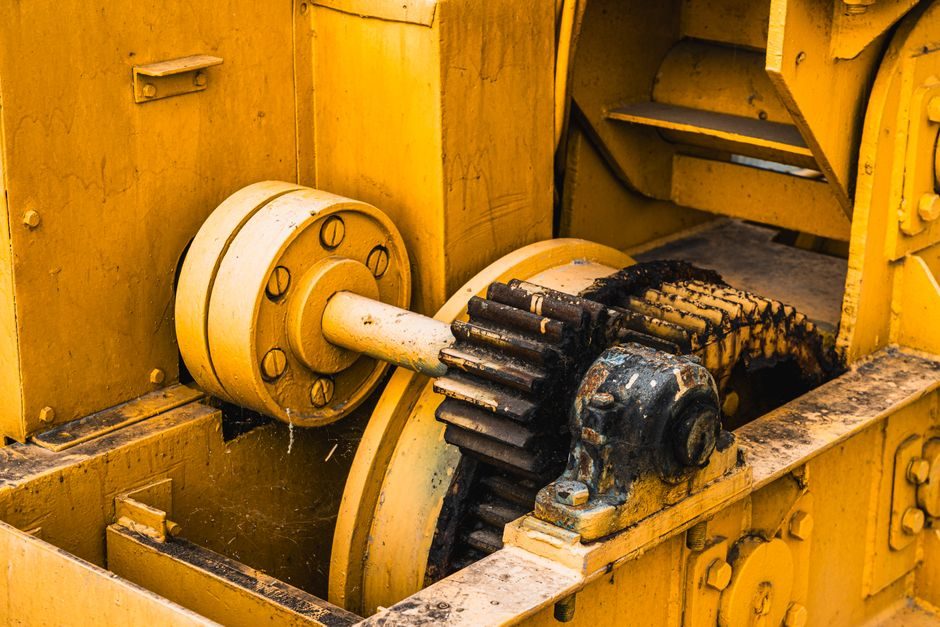
Catalog data captured on 2026-05-08 lists centrifugal industrial pumps from Chinese manufacturers at US$ 5,000.00 to US$ 500,000.00 per piece with a 1-piece MOQ on Made-in-China, a six-order-of-magnitude spread that maps directly to flow class, head rating, metallurgy and API/ISO compliance rather than to brand premium alone [S1].
US-side distribution is consolidating around multi-OEM seal-and-pump houses; Industrial Seal & Pump has been keeping rotating equipment running since 1973 and now distributes AST, Thermoseal and Seal-Ryt sealing product lines [S2]. Springer Pumps markets segment coverage across ceramics, chemical processing, construction, food & beverage, marine, mining, oil & gas, paints-inks-coatings, personal care, pharmaceutical, pulp & paper, and wastewater [S4].
Where the 2026 catalog prices sit, and what drives the spread
A 5,000 USD entry-level centrifugal unit and a 500,000 USD heavy-duty process pump can both legitimately sit on the same Made-in-China keyword page because the price axis absorbs four engineering variables at once: specific speed (Ns), rated head in meters, casing metallurgy (cast iron vs duplex stainless vs super-duplex), and seal arrangement (single mechanical, cartridge, or API 682 Plan 52/53A) [S1].
On the sealing side, multi-OEM distributors such as Industrial Seal & Pump have shifted the buying decision away from bare-pump vendors toward integrated rotating-equipment packages, with AST, Thermoseal and Seal-Ryt as the three named product families on its 2026-06 storefront [S2]. The implication for specifiers is that seal selection is no longer an aftermarket concern but a co-engineered item on the pump purchase order, which is consistent with API 682 seal-chamber geometry expectations on hydrocarbon service.
Industry coverage map: which end-markets are still pulling orders in 2026
Springer Pumps' 2026-07 solutions menu lists thirteen named verticals — ceramics, chemical processing, construction, food & beverage, marine, mining, oil & gas, paints-inks-coatings, personal care, pharmaceutical, pulp & paper, and wastewater — and that breadth is itself a signal that no single end-market dominates distributor order intake in mid-2026 [S4].
For a procurement engineer, the practical reading is that pump demand in 2026 is being held up by wastewater capital projects, food & beverage sanitary rebuilds, and chemical-processing debottlenecking, while oil & gas greenfield orders remain episodic and tied to LNG-linked and natural gas processing build-outs. Marine and mining are stocked lines, not growth lines, on most US distributor shelves [S4].
Selection criteria: which pump type maps to which service
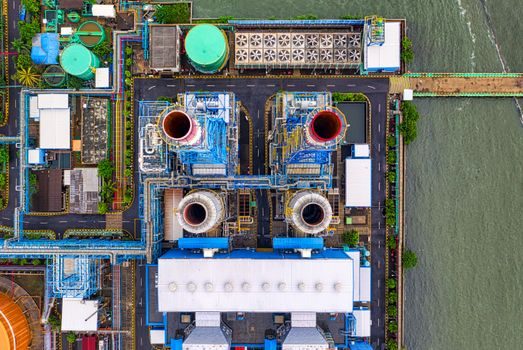
For clean, low-viscosity water and light-chemical service at moderate head, end-suction centrifugal pumps remain the default catalog offering in the lower third of the 5,000-500,000 USD band, typically with cast-iron casings and single mechanical seals [S1].
For abrasive slurries, high-solids pulp & paper stock, and mining tailings, heavy-duty cantilever or submersible slurry designs with high-chrome iron or elastomer-lined casings move into the upper third of the price band and are typically quoted with hard-face mechanical seals and API 682 Plans 31/32 flush hardware. Springer Pumps lists mining, pulp & paper, paints-inks-coatings and wastewater as dedicated solution lines, and the implied pump architectures for those four overlap heavily on solids-handling geometry [S4].
For hazardous-area chemical, oil & gas and pharmaceutical services, ATEX/IECEx-certified canned-motor or magnetic-drive sealless pumps occupy the upper end of the catalog band, with metallurgy upgrades (316L, duplex, super-duplex, alloy 20, titanium) moving list price well above mid-band within the same flow-and-head envelope [S1].
Side-by-side: centrifugal vs positive-displacement vs sealless at the same duty point
On a notional 50 m^3/h, 30 m head water duty, three architectures compete head-to-head and the 2026 catalog evidence supports a clean split: (1) a standard end-suction centrifugal typically prices in the low-five-figure USD range with 1-piece MOQ and 4-12 week lead time from Chinese OEM pages [S1]; (2) a progressive-cavity or twin-screw positive-displacement pump for viscous or shear-sensitive media sits one tier above that, with the premium driven by rotor geometry and elastomer selection; (3) a sealless magnetic-drive or canned-motor unit for flammable or toxic service moves to the upper band and adds 30-60% over the conventional centrifugal baseline because of the containment shell, drive magnet stack and ATEX/IECEx documentation overhead [S1].
On the decision criteria most often weighted in 2026 RFQs — first cost, mean time between planned overhaul, ATEX/IECEx scope, and parts commonality with existing fleet — the sealless option wins on fugitive-emissions compliance and MTBO, loses on first cost and on hydraulic efficiency at part load; the centrifugal option wins on first cost, parts commonality and efficiency, loses on seal-related emissions and on dry-run tolerance; the positive-displacement option wins on viscosity handling and on near-constant flow against back-pressure variation, loses on cost-per-kW and on NPSH margin. Distributors carrying AST, Thermoseal and Seal-Ryt seal lines are positioning themselves to sell the seal upgrade into the centrifugal option as the cheaper path to emissions compliance for non-toxic service [S2].
Standards and compliance gates that actually move the order in 2026
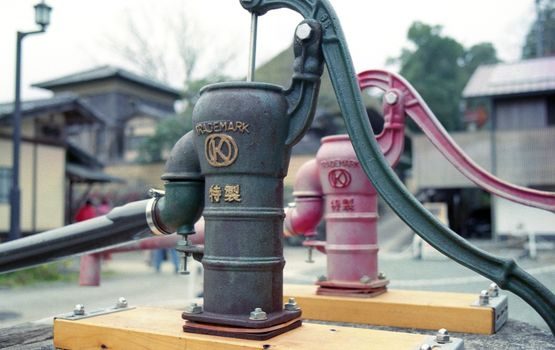
On hazardous-area chemical and refinery service, ATEX category 2 equipment (corresponding to zone 1) and IECEx-certified pumps are the two compliance gates most often written into 2026 European and Middle-East RFQs, and the seal arrangement (API 682 Plan 52, 53A or 54) follows from the fluids list rather than from vendor preference [S2].
For oil & gas upstream and midstream, NACE MR0175 metallurgical limits for sour service, API 610 pump standard, and API 682 seal standard continue to govern casing, baseplate and seal-chamber geometry, with NORSOK and Shell DEP supplements appearing on Norwegian- and Shell-sector bids. For drinking-water and food-and-beverable service, NSF/ANSI 61 and 3-A sanitary design rules continue to govern elastomer, lubricant and surface-finish choices.
For wastewater and pulp & paper, the binding standards are less about hazardous-area classification and more about solids-passage geometry, with typical spec values in the 75-125 mm sphere-pass range for chopper or grinder-assisted submersibles, and API 610 remaining optional unless hydrocarbon contamination is credible. The breadth of Springer Pumps' vertical coverage — including ceramics, personal care and pharmaceutical lines — implies a stock-and-configure model where the base hydraulic is shared and the wetted-end kit is what changes per end-market [S4].
Who the 2026 catalog is FOR, and who it is NOT for
The 5,000-500,000 USD Made-in-China catalog band is FOR procurement engineers sourcing one-off or small-batch process pumps for non-sour, non-NORSOK water, light-chemical, wastewater, irrigation and general-industry service, where 1-piece MOQ and 4-12 week factory lead time are acceptable and where ATEX/IECEx scope is read off the data sheet rather than engineered per bid [S1].
It is NOT for buyers needing: (1) NACE MR0175 sour-service compliance, (2) API 610 eleventh-edition dimensional conformance for refinery hydrocracker or coker service, (3) full API 682 Plan 74 dual-seal documentation with nitrogen-paneered barrier fluid, (4) ten-year offshore documented service history, or (5) nuclear-grade ASME Section III stamping. Those five categories continue to route through a different, much smaller vendor set with corresponding lead times of 6-18 months and list prices well above the catalog band cited [S1].
US distributors such as Industrial Seal & Pump and Springer Pumps are positioned squarely in the seal-kit and rotating-equipment-overhaul segment, not in the engineered-API-610 new-unit segment, and buyers should expect the same 2026 distributor channel to handle seal retrofits, failure analysis and obsolescence replacement rather than full skid engineering [S2][S4].
Limitations, failure modes and what the 2026 data does NOT show
The catalog snapshot dated 2026-05-08 is a price-axis observation only — it does not expose failure-rate data, MTBO statistics, or warranty claim rates by vendor, and any spec-driven ranking on those grounds must come from the buyer's own fleet history, not from the catalog page [S1].
The vertical lists on distributor websites (Springer Pumps' thirteen industries, Industrial Seal & Pump's rotating-equipment focus) are sales-channel claims, not installed-base evidence, and they should be read as go-to-market positioning rather than as quantified demand shares [S2][S4]. The same caveat applies to macro trend references on sites such as Cerno Research, which carries property-insurance, B2B insights and adjacent editorial content but does not, on the 2026-06 snapshot, supply a pump-specific market-size number that a specifier can use to size a procurement budget [S3].
The dominant failure modes in centrifugal pumps sold through this channel remain seal-related (mechanical seal face wear, O-ring chemical attack, dry-run damage), bearing-related (L10 life shortfall on misaligned installations), and cavitation-related (NPSH margin ignored on long suction lines). The sealless magnetic-drive option removes the largest of those three — the mechanical seal — and trades it for a smaller, but still real, can-of-worms: magnet stack demagnetisation at high temperature and dry-product slip without thrust-balance control [S2].
Sourcing checklist for a 2026 RFQ
For a 2026 RFQ against this market, four items move the order: (1) explicit fluids list with viscosity, specific gravity, solids content and temperature, (2) explicit standards list with ATEX/IECEx zone, API 610 edition, API 682 plan and NACE MR0175 applicability called out by clause, (3) explicit seal kit preference (cartridge vs component, single vs dual, plans 52/53A/54), and (4) explicit lead-time and MOQ expectation in writing. Buyers who fix those four before contacting a distributor will find Industrial Seal & Pump, Springer Pumps and the Chinese OEM catalog pages align quickly on a comparable bid set [S1][S2][S4].
Trackable signals into 2026-H2: (a) any narrowing of the 5,000-500,000 USD catalog band as more mid-band Chinese vendors consolidate on API 610 dimensional conformance, (b) any new sealless OEM entering the US distributor channel alongside the AST/Thermoseal/Seal-Ryt trio currently carried [S2], and (c) any wastewater or food-and-beverage vertical adding a dedicated solution page on the Springer Pumps site, which would be a leading indicator of capital-project pull-through [S4].
For component-level specifications, see industrial adhesive, industrial borescope, and industrial buzzer.