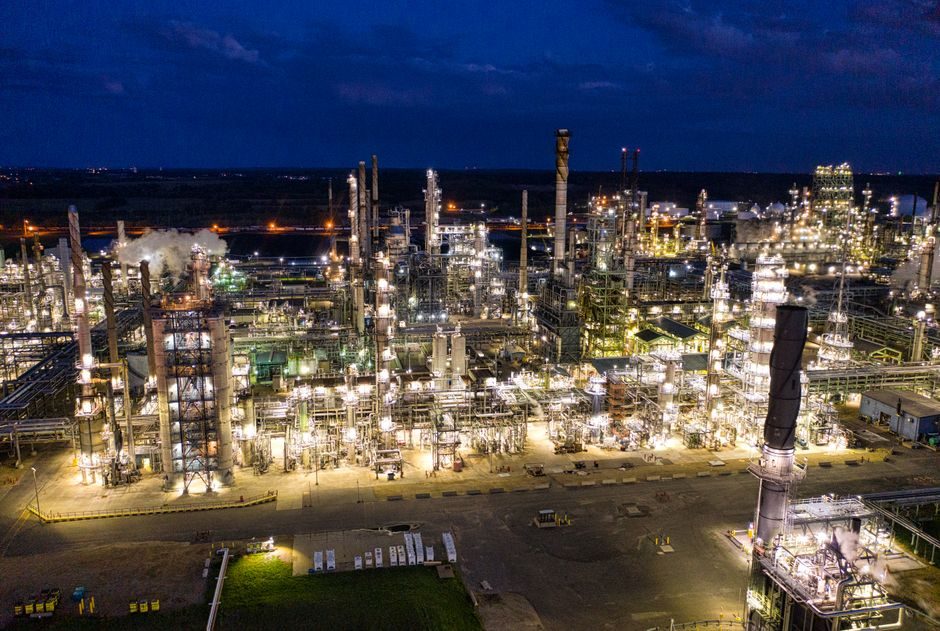
U.S. dry natural gas production averages 105.0 Bcf/d in 2026 and 107.2 Bcf/d in 2027 in the EIA Short-Term Energy Outlook, with dry shale gas contributing 38.0 Bcf/d and 39.3 Bcf/d respectively [S1]. Marketed production tables in the EIA Natural Gas Monthly now extend through 2026 and break out the Federal Gulf of America alongside state-level gross withdrawals, replacing the prior Gulf of Mexico label [S1].
On the demand side, The Business Research Company's global natural gas report frames 2026 sizing by type (transport, industrial, electric power, other), by source (associated, non-associated, unconventional), and by end user across light-, medium- and heavy-duty vehicle segments, with a forecast horizon to 2035 [S5]. India's industry voice NGS India published its April–June 2026 issue on 2026-07-01, with a special feature on Indraprastha Gas Limited's clean-energy transition, signalling that city-gas distribution in South Asia remains a live specification target in 2026 [S2].
Production Mix and the Shale Band That Drives Detector Sizing
U.S. dry shale gas in 2026 sits at 38.0 Bcf/d (2026) and 39.3 Bcf/d (2027) in the EIA reference case, with associated Gulf of America volumes now reported separately from onshore state totals [S1]. For spec-writing engineers, that throughput band is the load profile a gas detector on a compressor station or gas-processing train must be qualified against: sensor response time, LEL coverage on methane, and poisoning resistance to H2S, glycol and amine carry-over. EIA Table 6 now lists gross withdrawals per state and the Federal Gulf of America from 2021 through 2026, which is the dataset procurement teams use to rank high-throughput versus marginal basins when budgeting new analyser and detector nodes [S1].
Industrial-grade sensors on these streams must hold calibration across the wet, dirty upstream end (compressor suction scrubbers, dehydrator still columns) and the clean downstream end (pipeline-quality, Wobbe-controlled sales gas). Procurement language in 2026 typically references methane LEL (≈5% vol in air), H2S TLV ranges, and IR versus catalytic-bead sensing for LEL methane — a coverage matrix a fixed gas detector datasheet should meet before sign-off.
Demand Stack: Power Generation, Industrial Burners, City Gas
Global demand in the Business Research Company framework is split across transport, industrial, electric power and "other" types, with supply split into associated, non-associated, and unconventional sources [S5]. Electric power remains the swing segment in 2026: as grids absorb more intermittent renewables, natural gas peakers and combined-cycle units absorb the ramping load, which translates directly into more gas-turbine instrumentation per MW installed — turbine inlets, combustor sections, and exhaust stacks all need gas analyzer channels for NOx, CO, O2 and unburned hydrocarbons.
City-gas distribution in India is the parallel story. The NGS India April–June 2026 GSR issue covers IGL's CNG and PNG network expansion and its role in India's clean-energy transition, framed as an "Annual Snapshot 2025" reference [S2]. For CGD safety instrumented systems this means more underground PE pipeline networks, more district regulating stations, and a steady baseline demand for ATEX/IECEx-rated detectors and chromatographs on receiving terminals and city gates.
Pipeline, LNG and the Conference Calendar
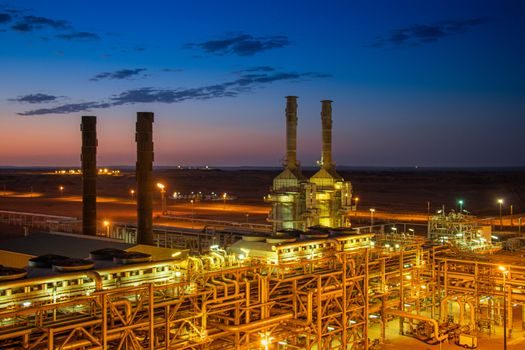
LDC Gas Forums' 2026 schedule covers Southeast, Northeast, Rockies & West, Mid-Continent, Gulf Coast NatGas to Power and a digital offerings track, with the next Southeast edition listed for 13–15 April 2027 [S3]. For sourcing and specification work, those dates are useful proxy signals: Gulf Coast LNG export build-out and the gas-to-power track map directly to where 2026 capex is concentrated.
U.S. LNG export capacity additions in 2026 underpin the dry-shale demand pull. As new trains come online, custody-transfer gas chromatograph racks at the export terminal and on inbound supply pipelines need C9+ extended analysis, H2S, CO2, mercaptan, and calorific value streams running to fiscal-quality tolerance — a calibration regime that does not relax across train ramps. At the wellhead and gathering-system end, the spec language is shifting toward multi-point sampling on combustible gas detector arrays rather than single-point catalytic-bead units, driven by the wider operating window the 2026 throughput band imposes on the gathering network.
Sensing Architecture: Where the 2026 Spend Lands
IR (NDIR) sensors now dominate LEL-methane detection on unattended gas-turbine enclosures and compressor skids because they survive silicone, H2S and glycol contamination that knocks out catalytic-bead pellistors. For high-pressure gas chromatography at the city gate and the LNG send-out, multi-stream micro-GCs with C9+ hydrocarbon backflush and TCD/FID detection are the workhorse. For industrial end-users, a typical 2026 spec stack reads: an NDIR or laser-methane combustible-gas detector, an electrochemical H2S cell, a separate O2 cell, and one free channel for an expansion gas — wired to a SIL-rated controller per IEC 61511. [S1]
For the procurement side, the cost of ownership question is no longer "which sensor is cheapest" but "which sensor survives glycol-amine and hydrate-inhibitor carry-over without a quarterly swap." Plant engineers reading 2026 vendor data should weight MTBF on the sensing element, drift per month on electrochemical cells, and calibration interval on NDIR optics — not headline unit price. For more on adjacent industrial automation spending this year, see the hydraulic system market 2026: pump TAM, fracturing pull and turbine demand and Pneumatic System Market 2026: Conveying, Actuator and Cylinder Sizing Through 2030 coverage, both of which move on the same oil-and-gas capex cycles.
Standards Discipline: What Engineers Get Wrong in 2026
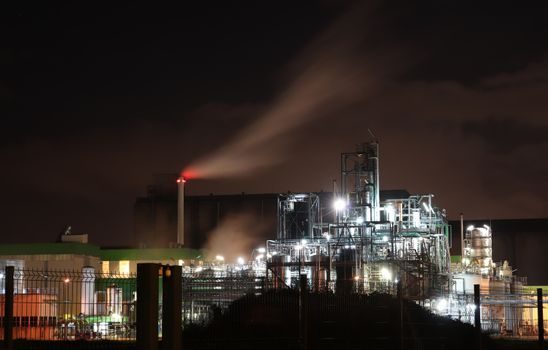
Three rules repeat themselves in 2026 spec drift. First, "methane LEL ≈ 5% vol in air" is a property of methane, not a standard-mandated trip point; the actual trip is set by the safety instrumented function in IEC 61511 terms and the site hazardous-area classification under ATEX 2014/34/EU or IEC 60079-0 — never copy-paste one vendor's trip setpoint as a universal rule. Second, ATEX 2014/34/EU is the EU equipment directive; the IECEx scheme is its international parallel. Equipment certified to one is not automatically accepted in jurisdictions running the other, and datasheet claims of "ATEX/IECEx" must be backed by the Ex certificate numbers, not a logo. [S2]
Third, hazardous-area zoning is a site responsibility, not an equipment rating. A fixed gas detector may be Ex d IIB T4 rated and still be the wrong instrument because the zone classification in your plant pushes you to Ex d IIC or to a different temperature class. Cross-check the Ex marking string against your area-classification drawing before any 2026 procurement order is released.
Selection Criteria: Matching Detector Type to Service
Use the table below as a 2026 selection baseline; cross-check against your site classification and the gas mixture actually present, not just the headline target gas. Always read the Ex certificate scope — group IIB versus IIC, T-class, and ambient range — before sign-off. [S3]
Limits, Failure Modes and What the Datasheet Won't Say
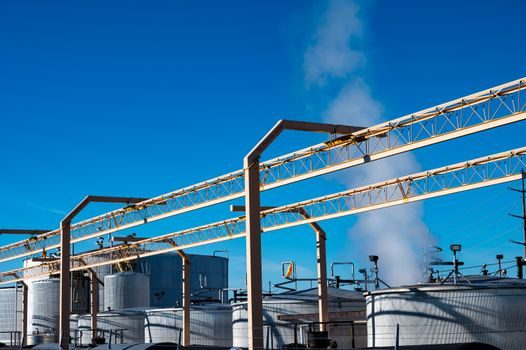
Every common 2026 sensor has a known failure mode that a spec review should call out. Catalytic-bead pellistors are poisoned by silicone, lead, H2S above their rated range, and halogenated compounds — fine for clean air, wrong for compressor enclosures. NDIR optics drift in condensing humidity unless the cell is heated and pressure-stabilised; lifetime is set by the IR source, not the detector. Electrochemical H2S cells consume reagent, have a defined months-of-life curve, and cross-react with NO2 and SO2; a redundant H2S measurement is common in 2026 designs because of that single-point-of-failure. [S4]
Process gas chromatographs at the city gate and at LNG custody transfer are calibrated against a certified reference gas blend. The real failure mode in 2026 is sample-system integrity: a stuck sample probe, a contaminated coalescing filter, or a leaking purge gas line will bias the calorific value and quietly push a fiscal settlement out of tolerance. Loop integrity checks belong in the maintenance plan, not just the install spec. Side-channel context on industrial instrument supply for 2026 is covered in Pneumatic Systems 2026: Conveying Growth, Valve Architecture Shift, Sourcing Spec Gates.
Sourcing, Trade Press and Research Channels
The 2026 trade-press channels that matter for natural-gas industrial procurement are narrow and well-defined. The U.S. Energy Information Administration's monthly natural gas report is the headline dataset, with 2026 rows now live in Tables 1–7 covering supply, disposition, consumption, prices, imports, exports, and state-level gross withdrawals including the Federal Gulf of America [S1]. Globally, The Business Research Company publishes its 2026 natural gas report covering transport, industrial, electric power, and end-user vehicle segments, with a forecast horizon to 2035 [S5].
For peer-reviewed research, Natural Gas Industry B (Elsevier, ISSN 2352-8540) is the active English-language journal: 2025 ran four issues (February, April, June, August) on a continuous pagination through page 526, with a 2025 impact factor of 4.2 and a 5-year impact factor of 5.3 per LetPub's JCR pull [S4][S6]. The companion Chinese-language Tianranqi Gongye (ISSN 1000-0976) is tracked separately in JCR with its own citation indicators. Industry voice NGS India remains the regional CGD reference, and LDC Gas Forums' regional cycle (Southeast, Northeast, Rockies & West, Mid-Continent, Gulf Coast NatGas to Power) is the in-person sourcing touchpoint, with the next Southeast edition 13–15 April 2027 [S2][S3].
The next trackable signals for natural gas industrial buyers are: the EIA STEO update cycle for the 2026 production band, the LDC Southeast forum 13–15 April 2027 sourcing window, and the next Natural Gas Industry B issue release schedule. A spec writer watching the throughput band and the Ex-certification scope in tandem will keep 2026 detector and analyzer spend aligned with the dry-shale and LNG build-out that the EIA tables now record.