Industrial routers are documented for a -40°C to +85°C operating window with IP67 sealing and IEC 60068-2-6 vibration certification, while signal repeaters have no equivalent industrial temperature publication and effectively re-use the host access point's 10–40°C commercial envelope [S3][S5][S9].
That gap — 125°C of thermal headroom on the upper end, 50°C on the lower — is the single largest delta between the two device classes and it drives every other environmental decision (ingress, shock, EMC, redundant power) on a process plant floor [S1][S2][S9].
Operating-temperature envelope separates the two device classes
Industrial routers are engineered to a documented -40°C to +85°C operating window, with at least one vendor platform — the USR-G809s — logged for three years of continuous service cycling between -30°C and +70°C on an offshore drilling deck [S1]. Civilian / home routers, by contrast, are characterized for a 10–40°C indoor envelope and "fail to start in winter" once ambient air drops below the lower spec limit [S1][S3]. A signal repeater (also marketed as extender or booster) is not a standalone thermal category: it contains two radio chains that rebroadcast the parent access point's frame, and its components inherit the same commercial-grade thermal budget as the access point it extends [S5][S7]. In practice that puts a repeater's safe operating range in the 10–40°C band unless the OEM publishes a wider spec, which almost no consumer-grade repeater vendor does.
Ingress, shock and EMC: why the router wins the harsh-site comparison
Industrial routers pair the -40°C to +85°C thermal window with an IP67 enclosure (resistant to oilfield rainstorms and port salt spray) and IEC 60068-2-6 5G vibration certification so engineering vehicles and mining equipment stay online, while home-grade access points and repeaters ship at IP20 with no published vibration spec [S9]. Redundant DC power inputs — commonly 24 V across a 9–48 VDC window — are standard, so a single PSU failure does not black out the PLC uplink [S2]. Repeaters and range extenders, because they are designed for office dead-zone patching, are almost never published with an IP or vibration figure; they sit in conditioned space, on a shelf, between two radios [S4][S7]. The thermal gap therefore doubles as a mechanical-and-electrical gap, and the temperature decision effectively pre-selects the EMC and ingress spec at the same time.
Range, throughput and the repeater's narrow job
A Wi-Fi repeater "effectively contains two wireless routers" — one picks up the existing network, the other transmits the boosted signal — so the device's job is coverage extension, not connectivity hardening [S5]. Range extenders do the same job on a different wireless channel, which solves co-channel interference but introduces the placement problem: sit the unit too far from the upstream router and the rebroadcast link is weaker than the original signal [S4]. Wi-Fi 7 range, in particular, depends on the upstream infrastructure: "outdated routers, old access points, and cheap cables won't do you any favors" [S6]. Humidity and temperature further attenuate the link: "Wi-Fi signals can get weaker in very humid or hot conditions, which might impact range in places like warehouses or outdoor setups" [S6]. For a process control loop carrying pressure transmitter telemetry, that rebroadcast is also a latency and jitter penalty the engineering budget may not tolerate.
Decision matrix: when to specify which
The gap between the two device classes is measurable on at least four engineering criteria, with the operating-temperature window being the single largest delta [S1][S3][S9]. <strong>Operating temperature:</strong> industrial router -40°C to +85°C, repeater inherits the host AP's 10–40°C commercial envelope [S3][S5][S9]. <strong>Ingress protection:</strong> industrial router IP67, repeater typically not published and treated as IP20 office-grade [S9]. <strong>Vibration and shock:</strong> industrial router tested to IEC 60068-2-6, repeater carries no published certification [S9]. <strong>Function and latency:</strong> the router is the network edge, routing boundary and security perimeter; the repeater is a coverage patch that adds measurable per-hop throughput loss and jitter because the single-radio backhaul must service both sides of the link [S5]. If the field site is unconditioned, the matrix collapses to one answer: industrial router only, repeater not in the BOM.
Real deployments that prove the envelope
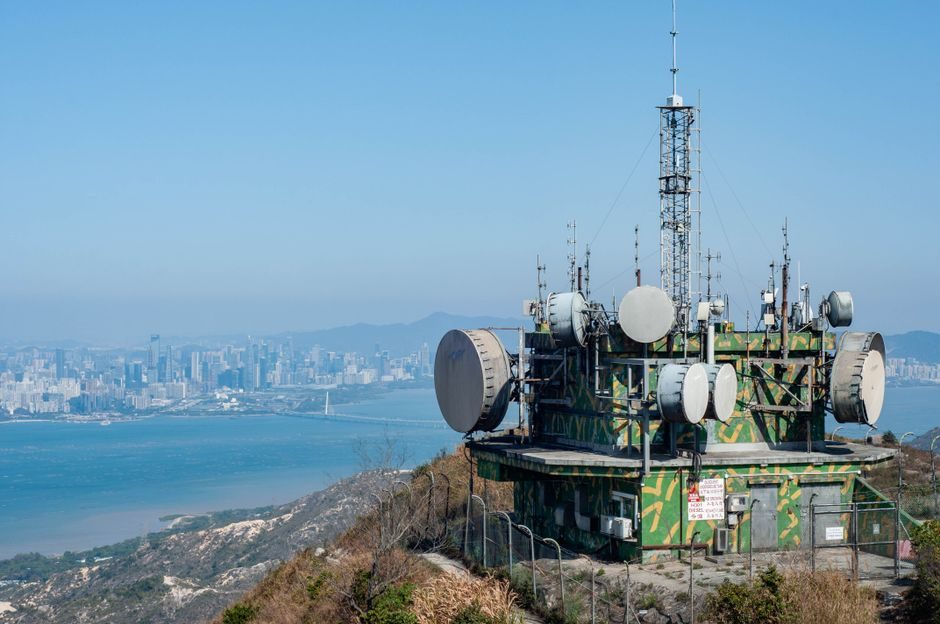
An offshore drilling platform's USR-G809s logged three years of -30°C/+70°C cycling "without failure", with the same source recording that "similar commercial equipment failed to start in winter due to low temperatures" [S1]. The reference list published by PUSR, Antaira, Waveteliot and Teltonika all converges on the same three sites — offshore platforms, Arctic research stations, and steel mills — as the canonical temperature-extreme deployments [S1][S3][S8][S9]. Teltonika explicitly notes that the same industrial hardware also fits retail, construction and event venues, but the engineering origin is the steel mill and the polar station, not the café [S8]. The deployment pattern is consistent: a temperature-hardened industrial router carries the SCADA and flow meter uplink back to the control room, and any repeater in the chain lives in a cabinet or control house where ambient already sits inside the 10–40°C commercial band.
Failure modes and constraints to plan for
Three constraints compound the thermal gap once the spec is read, and the first is documented humidity-driven range loss on Wi-Fi 6/7 hardware even before any repeater enters the chain [S6]. The second is repeater placement: "incorrect placement means a range extender can actually degrade rather than improve the wireless network" [S4]. The third is electrical noise: an industrial valve actuator's MOV surge or a servo motor drive's PWM switching is electrically noisier than an office wall, so an office-grade repeater will fail an EMC test that an IP67 industrial router is built to pass. Add to that the repeater's single-radio backhaul penalty — about half the airtime is consumed on the second hop — and the temperature decision is revealed as a proxy for the broader environmental decision.
Selection checklist for 2026 specification
A four-point engineering gate decides which device class is specified, with the first gate being whether the cabinet is climate-controlled to 0–40°C year-round [S2][S9]. (1) If the cabinet is unconditioned, specify an industrial router rated -40°C to +85°C with IP67 and IEC 60068-2-6 documentation, and remove every repeater from the BOM [S9]. (2) If the device sees salt spray, dust, oil mist or vehicle vibration, the router is mandatory and the repeater is disqualified regardless of climate control [S9]. (3) If the uplink carries time-sensitive process data (pressure, flow, valve position, servo torque), a repeater's single-radio backhaul will burn half the airtime on the second hop and should not sit on the critical path [S5]. (4) If 24 VDC redundant power is available, the Antaira industrial portfolio assumes 9–48 VDC redundant input and the router you pick should match that envelope [S2]. Pass all four gates and the temperature limit has been engineered out of the question.
Closing: as of 2026-06-11 the cleanest trackable signal is the IEC 60068-2-6 vibration test certificate that ships with IP67 industrial routers [S9]; the cleanest counter-signal is the absence of any equivalent industrial-grade publication on the consumer repeater datasheet, which means the operating-temperature decision is being made on the repeater OEM's silence, not on a published number.