Industrial rubber installation in 2026 splits into four field disciplines — tank/vessel lining, conveyor belting, sheet matting, and rolled rubber flooring — with service hubs such as US Rubber's 75,000 sq ft Louisiana shop, Catawba Industrial Rubber's Charlotte branch at 4629 Dwight Evans Rd, and conveyor-belt stockists like Task Engineers in Vasai operating parallel workflows [S1][S3][S2].
Spec bands reported on active 2026 trade listings include tensile strength 600–1200 N, thickness 2–25 mm, and width 100–2000 mm for general-purpose rubber conveyor belts, while lining-grade cured and uncured rubber is selected against temperature, chemical and abrasion exposure rather than published tensile data [S1][S2].
Site Conditions and Substrate Prep Before Any Rubber Lay-Up
Rolled rubber flooring installations must wait until all other trades have finished the area, and the finished surface is protected with kraft paper or plastic if post-install trade work is scheduled, per Rubber Flooring Direct's published installation guide [S4]. The same "all trades finished" gate applies in tank-lining work: blast profile, residual moisture and ambient dew point are checked before primer is applied, otherwise steam-cure blistering follows within weeks [S1].
Tooling for a rolled-rubber floor is intentionally low-tech — tape measure, utility knife, chalk line, metal straight edge or drywall T-square, rubber mallet, broom or vacuum — because geometry is corrected by trimming, not by adhesive adjustment [S4]. For lining work, the substrate-prep toolchain is heavier: shot-blast or sand-blast to a near-white metal finish, dew-point meter, profile comparator, and a calibrated holiday detector set to the rubber manufacturer's voltage (typically 5 kV per mm of dry film thickness for non-conductive linings) [S1].
Tank and Vessel Lining: Cure Method Drives Schedule
US Rubber's Louisiana facility runs an autoclave and boiler system that cures rubber in-house under controlled ramp/soak cycles, supporting both shop and field rubber lining of tanks, vessels, agitators and pipe spools, and the same contractor notes that rubber lining is preferred over plastic once service temperatures climb above plastic limits or when acids and corrosive chemicals are present [S1]. The autoclave cure is what lets the shop pre-build pipe and fitting spools to ASME weld codes and API dimensional requirements before the lining step [S1].
For repair work, US Rubber dispatches 24/7 field crews; the economics only work when the rubber can be ambient-cured or steam-cured in place against a vessel that cannot be moved, and the contractor explicitly targets petrochemical, pulp and paper, railcar, nuclear, water treatment, utility/power, mining, steel mill and battery-plant assets [S1]. A 2021 Savannah River Site contract on the same facility's project list shows that nuclear-adjacent specifications are routine, not exceptional, and that traceability from blast profile through final holiday test is documented per lot [S1].
Conveyor Belt Installation and Splicing
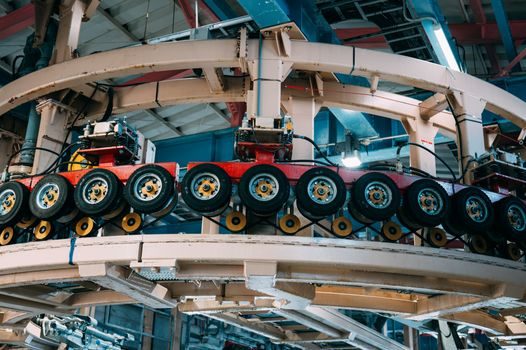
Catawba Industrial Rubber's Charlotte service list explicitly covers conveyor belt installation and splicing alongside custom hose assembly, gasket fabrication, die cutting and waterjet cutting, with on-site surveys and emergency support offered to minimize downtime in food processing, marine and construction operations [S3]. Splices are typically mechanical (laced or bolted) for quick field replacement, or vulcanized hot/cold for higher-load and food-grade service where contamination from mechanical fasteners is unacceptable [S3].
Conveyor-belt selection on 2026 stock lines is driven by the published bands: 600–1200 N tensile, 2–25 mm thickness, 100–2000 mm width, with the Task Engineers range at Vasai priced from roughly 2,000 INR per roll and an authorised-vendor sourcing chain back to nylon and polyester carcass weavers [S2]. For buyers looking at wider conveyor system components spec coverage, the same listing pages now bundle lightweight belting, heavyweight belting and accessories as separate categories so the splice and belt-edge geometry match on a given drive [S2][S3].
Sheet Rubber, Matting and Gasket Fabrication
Catawba's Charlotte branch stocks sheet rubber, matting, gaskets, hose, couplings, valves and expansion joints in parallel so a single PO can cover a fluid-seal retrofit, with die cutting and waterjet cutting used when gasket geometry is non-standard [S3]. The fabrication step matters because flat-stock sheet rubber is cut to dimension before any lamination, and waterjet leaves a cleaner edge than die cutting on parts over about 12 mm thick [S3].
Matting installations differ from flooring only in fixings: loose-laid matting is weighed down or edge-taped, while permanent matting is full-spread adhesive with the same surface-prep rules as rolled rubber flooring [S4]. For sites weighing rubber against polymer or metal alternatives, an engineering plastic advantages and disadvantages comparison is the right cross-reference because the two material families overlap in chemical-tank and chute-lining duty.
Rolled Rubber Flooring: Acceptance Test Sequence

Acceptance on a rolled rubber floor runs tape measure → chalk line → dry lay → trim to fit → adhesive spread → roll/bond → edge scribe, with a rubber mallet used to settle seams and a broom or vacuum pass to clear subfloor fines before each step [S4]. The standard failure modes — peaking at seams, telegraphing of subfloor joints, and adhesive squeeze-out along chalk lines — all trace back to skipping the dry-lay or to adhesive open-time violations, and a re-do means pulling cured roll and re-prepping the subfloor, not spot-patching [S4].
A rolled-rubber spec is a fit-for-purpose check on three numbers: roll width, total thickness and durometer (Shore A), all of which the installer verifies against the submittal before adhesive is opened; mismatched durometer between adjacent rolls is the silent failure mode because harder rubber next to softer rubber telegraphs through traffic and creates a ridge within months [S4]. When the floor is in a loading-dock or vehicle-path area, self-priming pump selection adjacent to the floor is governed by vibration isolation rules that interact with the rubber's compressibility, not just pump curve.
Comparison: Four Installation Families on Five Decision Criteria
Across the four families served by current industrial-rubber contractors, the selection grid is roughly: tank/vessel lining wins on chemical and temperature resistance above plastic limits; conveyor belting wins on continuous mechanical load and replaceable splice economics; sheet rubber and matting win on gasket and seal geometry flexibility; rolled rubber flooring wins on foot-traffic comfort and impact-noise reduction but loses on point-load capacity [S1][S2][S3][S4].
On cure method, only tank and vessel lining uses autoclave/steam cure as standard; conveyor splicing is hot or cold vulcanize for permanent joints and mechanical lace for field swap; sheet rubber and matting are adhesive or mechanical-fix; rolled rubber flooring is contact adhesive with mallet-set seams [S1][S3][S4]. On field-vs-shop work, tank lining splits roughly 50/50 depending on asset mobility, conveyor work is overwhelmingly field, sheet and matting are shop-cut then field-installed, and rolled rubber flooring is almost entirely field [S1][S3][S4]. On lead-time drivers, tank lining is governed by cure cycle, conveyor work by belt width and splice kit, sheet/matting by waterjet queue, and flooring by roll-stock availability from the same industrial rubber distribution network [S1][S2][S3][S4].
When to Repair, When to Replace, When to Escalate
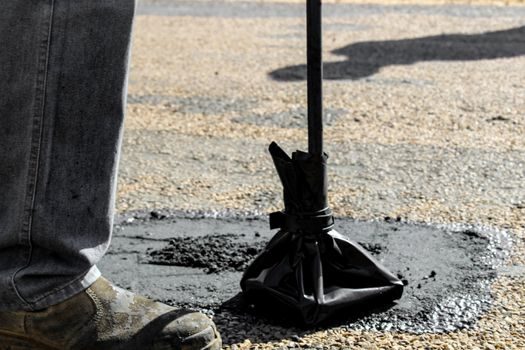
Repair is justified when holiday count after a pull-test is below the manufacturer's published threshold (commonly under 3–5 per square metre for lining work) and the substrate is still within blast-profile spec; above that, the contractor's economic call is full re-lining rather than spot patch, because patch edges become the new failure initiation site [S1]. For conveyor belts, a longitudinal tear under 5% of belt width is splice-repairable; above that the belt carcass is fatigued and the call is replacement, especially on food-grade lines where a fabric-broken belt contaminates product [S3].
Escalation to a specialist contractor is mandatory when the service temperature climbs past the rubber compound's published limit, when the chemical mix is not on the compound's resistance chart, or when the asset is in a nuclear, railcar or high-pressure gas service where weld-procedure and ASME/API traceability must accompany the lining step [S1]. For non-specialist sheet and flooring work, escalation is a judgment call: chronic seam peaking, recurring adhesive failure, or visible subfloor moisture all point to substrate problems the rubber cannot fix, and the right next step is a concrete or steel survey before any new rubber is laid [S4].
Trackable signals for the next 6–12 months: rubber compound price movements on the Trade India conveyor-belt listings (Task Engineers' Vasai stock band has been a useful proxy), any update to the Catawba Charlotte branch product categories, and whether US Rubber's autoclave capacity gets re-rated against the Savannah River Site follow-on work [S1][S2][S3].
Spec-level background on the components involved: linear guide, and crossed roller guide.