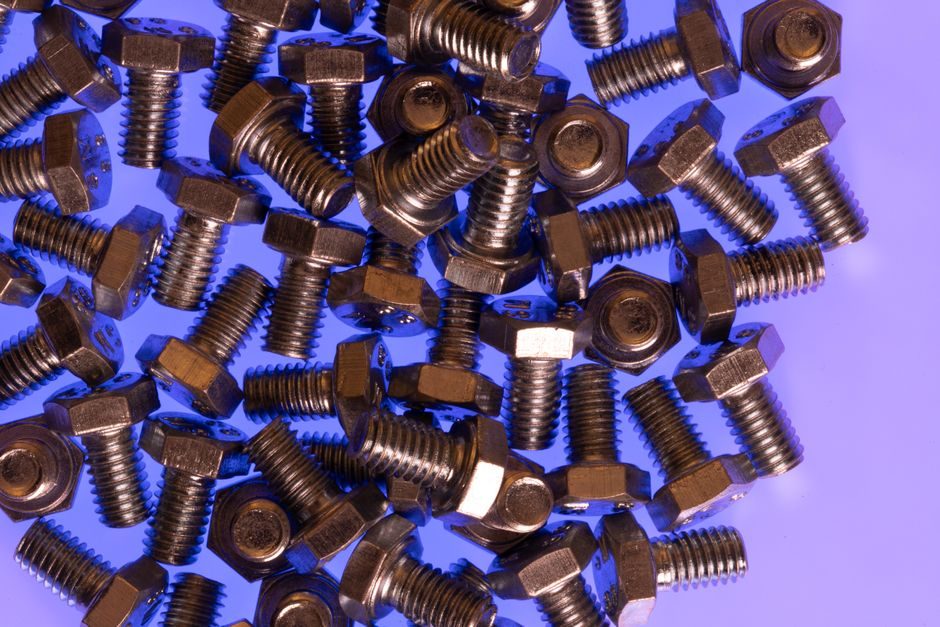
Nickel alloys are classified into four functional families based on the dominant alloying addition — copper, iron-chromium, molybdenum-chromium, or nickel itself — each tied to a specific corrosion or temperature regime [S3]. Trade names (Inconel, Monel, Hastelloy, Incoloy, Nimonic) are brand labels layered on top of these metallurgical families, not separate classes [S1][S3].
For procurement and engineering, the useful first cut is the alloying system, because that determines which corrosion mechanism (reducing acid, oxidizing acid, chloride pitting, sulfidation) the grade can survive, and the upper use temperature before creep or oxidation takes over [S3][S4].
The Four Working Families and What Each One Solves
Commercially pure nickel (Nickel 200/201) carries ≥99% Ni and is specified for caustic soda, alkaline salt, and molten alkali service where stainless steel would suffer stress-corrosion cracking; Nickel 201 is the low-carbon variant for service above ~315 °C to avoid graphitization [S3].
Nickel-copper alloys (Monel 400, Monel K-500) hold roughly 30–35% Cu and resist hydrofluoric acid, seawater, and dilute sulfuric acid; K-500 adds Al + Ti for age-hardening, lifting tensile strength into the 1100 MPa range while keeping Monel-grade corrosion resistance [S3][S4].
Nickel-iron-chromium alloys (Inconel 600/625/718, Incoloy 800/825, Incoloy 20) are the workhorses for oxidizing media and high-temperature strength; Inconel 625 with ~22% Cr and 9% Mo is a common seawater/aerospace pick, while Incoloy 825 (~42% Ni, 21% Cr, 3% Mo, 2% Cu) targets sulfuric and phosphoric acid service [S3][S4].
Selection Criteria: Corrosion Mode Drives the Grade, Not the Brand
For oxidizing acids (HNO₃, H₂SO₄ with oxidizers, wet chlorine) the Cr-bearing grades win — Inconel 625, Hastelloy C-22/C-276, or Incoloy 20 depending on chloride content [S3][S4].
For high-temperature service above ~600 °C the nickel-iron-chromium superalloys (Inconel 718, Nimonic 80A/90/263, Waspaloy) are mandatory; the γ' (Ni₃(Al,Ti)) precipitate is what gives these grades their creep strength — dislocation pairs must shear γ' together to preserve the ordered L1₂ lattice, which is why a single dislocation cannot cut through [S2].
For chloride pitting / crevice in seawater, Mo content is the lever — Inconel 625 (9% Mo), Hastelloy C-276 (~16% Mo), and Incoloy 825 (3% Mo) are typical picks, with PREN (Pitting Resistance Equivalent Number) rising roughly with Mo + ½·W + ½·N [S3].
Comparison Matrix: Inconel 625 vs Monel 400 vs Hastelloy C-276 vs Incoloy 825
On a four-criterion comparison: Inconel 625 leads on temperature (continuous service to ~980 °C) and on oxidizing-acid resistance (Cr 22%, Mo 9%); Monel 400 leads on HF and seawater (Ni 67%, Cu 31%) but is the weakest of the four above ~480 °C; Hastelloy C-276 has the highest Mo (~16%) and the broadest mixed-acid tolerance, at the cost of higher unit price and more demanding weld procedure (low heat input to avoid grain-boundary precipitation in the HAZ); Incoloy 825 sits between stainless and high-Ni — cheaper than C-276, weaker than 625 at temperature, but adequate for H₂SO₄ and H₃PO₄ up to moderate concentrations [S3][S4].
Decision rule: if the fluid is HF or seawater and temperature is below 200 °C, default to Monel 400; if it is hot H₂SO₄ with chlorides, default to C-276; if it is 600–950 °C gas path, default to Inconel 625/718; if it is generic chemical-tank piping on a budget and temperatures are mild, Incoloy 825 covers most cases [S3][S4].
Standards, Specs, and How Suppliers Actually Stock Them
Manufacturers catalog these grades in the same product forms — sheet/plate, bar/rod, pipe/tube, flange, fitting, wire, fastener — across Inconel, Incoloy, Monel, Hastelloy, Nimonic, and Incoloy 20/028/31 families, all cut to ASTM/ASME/EN dimensional standards [S1][S3][S4].
Analytical reference is BS ISO 7530-1:2015 for flame atomic absorption spectrometric determination of Co, Cr, Cu, Fe and Mn in nickel alloys — the working test method for incoming-laboratory verification of nominal composition [S8]. Welding consumables are typically supplied to AWS/ASME SFA classifications matching the parent grade (ERNiCrMo-3 for 625, ERNiCu-7 for Monel, ERNiCrMo-4 for C-276) [S3].
For additive-manufactured nickel powders (Inconel 718, 625, Hastelloy X) EOS lists process parameters and chemistry windows specifically tuned for laser powder-bed fusion, separate from wrought spec sheets — meaning the same trade name does not guarantee the same allowable impurities in AM versus bar stock [S9].
Where Each Family Fits — and Where It Should Not Be Used
Nickel-copper (Monel) is wrong for oxidizing conditions (HNO₃, ferric salts, aerated ammonia) because Cu is attacked; nickel-molybdenum (Hastelloy B) is wrong for oxidizing impurities because Mo is attacked; pure nickel 200 is wrong above ~315 °C in carbon-bearing atmospheres due to graphitization — switch to Nickel 201 [S3].
Superalloys like Inconel 718 and Nimonic 263 are a poor fit for reducing-acid chemical service — they are designed for creep at 600–980 °C, not corrosion; specifying 718 to fight HCl is wasted money [S2][S3].
For an industrial buyer cross-referencing trade names against titanium alloy or stainless steel options, the rule of thumb is: stainless up to ~400 °C and mild corrosion, nickel alloys beyond, titanium only when weight or extreme chloride resistance matters more than cost. Comparison against aluminum alloy grades is almost never meaningful — aluminum has no overlap with nickel on temperature or acid resistance.
Real-Use Case Snapshot: From Combustion Liner to HF Alkylation
Nimonic 263 (the commercial C263 alloy) is used for gas-turbine combustion chambers — heat-treated at 800 °C for 8 h with a starting γ' size of ~22 nm and γ' volume fraction of 0.1, then creep-tested at 800 °C / 160 MPa, recording ~0.7% creep strain in about 2.5 days; the dislocation micrograph shows superdislocation pairs looping the γ' precipitates, which is the direct visual evidence of the strengthening mechanism [S2].
Monel 400 remains the default for HF service in alkylation units and for marine pump shafts / valve trim in seawater — the same grade appears in both chemical and offshore catalogues [S3][S4].
Hastelloy C-276 is the default weld-overlay or solid construction for spent-acid sections in metal-finishing and for wet-FGD absorbers where HCl, HF, and chlorides co-exist — the 16% Mo content and low Si / low C specification are what prevent grain-boundary attack in the welded condition [S3].
Failure Modes Engineers Should Watch On-Spec
Stress-corrosion cracking in pure nickel and Ni-Cu above ~200 °C in caustic concentrates — must derate or switch to Ni-Cr-Fe (Inconel 600) or to low-carbon Ni 201 [S3].
Weld HAZ sensitization in Hastelloy C-276 — requires low heat input, interpass temperature control, and usually a post-weld solution anneal to dissolve grain-boundary carbide networks; ignoring this is the most common field failure mode reported on C-276 weldments [S3].
γ' coarsening and rafting in long-term service of Inconel 718 / Nimonic 80A above ~700 °C — the strengthening precipitate grows, volume fraction drops, and creep life shortens; this is a service-life prediction input, not a one-time test [S2].
Zinc-nickel plating (SAE AMS 2417J) is a separate surface-engineering class — a 65Sn-35Ni electrodeposit under gold, or a Zn-Ni alloy coating for corrosion protection — not a structural nickel alloy, and should not be confused with bulk grades when reviewing certifications [S7][S10].
Track the next three signals: (1) BS ISO 7530 series updates and the equivalent ASTM/EN nickel-alloy analytical standards revisions; (2) OEM-specific additive-manufacturing parameter sheets for Inconel 718/625/Hastelloy X, which diverge from wrought spec windows [S9]; (3) supply availability of Incoloy 028/31 and Hastelloy C-2000 versus legacy C-276, since several stockists list these newer grades alongside the established four families [S3][S4].
See also our earlier report, Air Impact Wrench Installation: Spec-Matched Setup, Air Prep, and First-Bolt Commissioning.