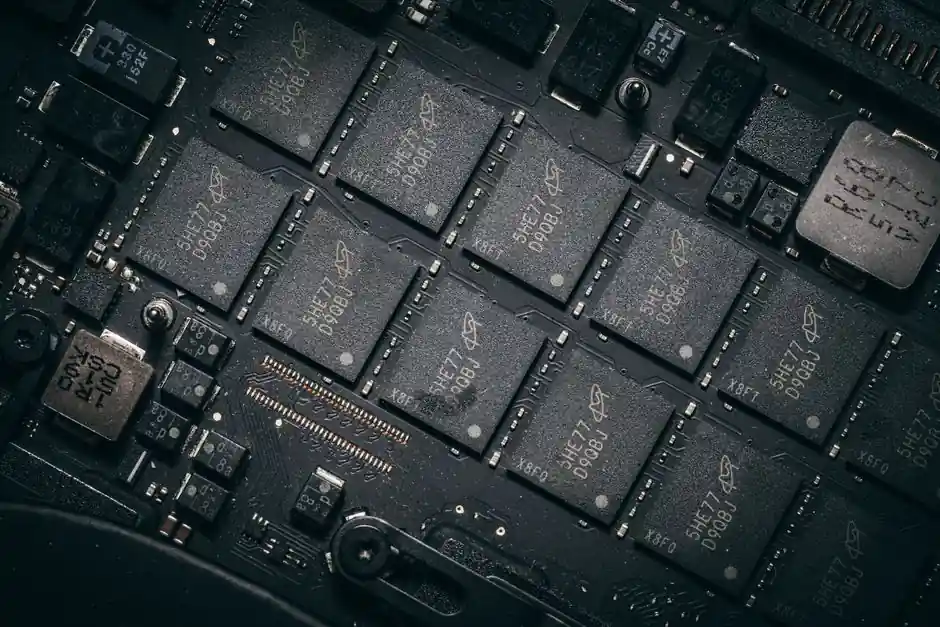
Silicone (VMQ/LSR), EPDM, nitrile (NBR), fluorocarbon (FKM), and neoprene (CR) are the five elastomers that cover the bulk of molded and extruded rubber components used inside modern electronic assemblies, with each family tied to one of four jobs: insulate, seal, shield EMI, or damp vibration [S5].
The right pick is rarely "rubber" in the abstract; it is a specific compound, at a defined hardness, validated against a test method such as IEC 60243 (dielectric strength), IEC 60529 (IP rating), or UL 94 (flammability), all of which recur in vendor datasheets and OEM drawings in 2026 [S5]. A 9-part function table used by one component supplier maps every common part family to a primary job, a typical elastomer, and a dominant failure mode, and that matrix is the cleanest shortcut for new specifiers [S5]. For a broader primer on how these elastomers sit inside the wider industrial rubber category, the industrial rubber encyclopedia entry is a useful starting point.
Why a Dedicated Insulating Rubber Family Exists for Electronics
Insulating rubber is defined as an elastic polymer that resists current flow under normal operating conditions while maintaining stability in heat, humidity, dust, and vibration, and it is used in electronics manufacturing for sealing gaskets, technical pads, and wire coverings that must survive years of thermal cycling [S1].
Electronics assemblies are tighter, hotter, and more mechanically abused than the equipment used in the electrical power industry: component density is high, gaps are narrow, and ambient exposure includes grease, oil, and continuous vibration, so the rubber part has to insulate, seal, and damp at the same time [S1][S6]. That multi-function demand is why the bill of materials rarely lists plain "rubber" and instead calls out a specific grade, hardness, and test method.
The Five Workhorse Elastomers: Properties and Limits
Silicone (VMQ/LSR) is the dominant dielectric choice, with a published dielectric strength of about 24-32 kV/mm, volume resistivity of roughly 10^14 to 10^15 ohm-m, and a service temperature window of -60 C to +230 C that fits under-hood and high-heat electronics environments [S5].
Nitrile (NBR) holds the -40 C to +120 C window and is the default for oil-exposed sealing: O-rings, oil seals, hoses, and printer-roller covers where resistance to fuels, lubricants, and greases matters more than high-temperature endurance [S4]. EPDM and neoprene (CR) share the same general -40 C to +120 C band as NBR and are widely used for cable grommets, strain reliefs, and boots, with EPDM favored for outdoor weathering and neoprene for flame resistance and moderate oil contact [S5][S3]. Fluorocarbon (FKM) and fluorosilicone (FVMQ) extend the upper end for solvent- and heat-exposed connector seals where NBR would swell or harden [S5]. The full elastomer property stack sits in the industrial rubber reference; the published limits above come directly from supplier test data aggregated in 2026 [S5][S4].
Selection Criteria: Dielectric, Temperature, Fluid, and Standards
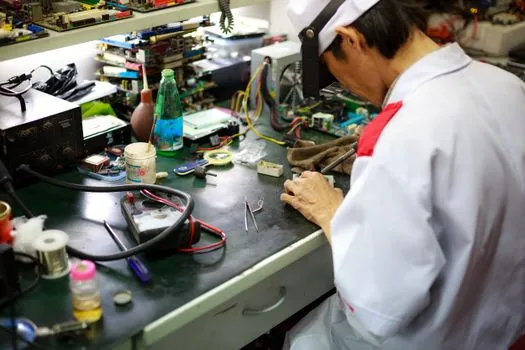
Four criteria drive most electronics rubber selections in 2026: dielectric strength, service-temperature window, fluid/chemical compatibility, and compliance with a test standard that the OEM can cite in a datasheet [S5][S1].
For dielectric, silicone and EPDM are the common picks; the silicone 24-32 kV/mm figure is the upper bound among commodity elastomers and is the value most often quoted in connector-boots and high-voltage cable termination data [S5]. For continuous heat, silicone at 230 C beats NBR, EPDM, and CR, all of which top out around 120 C and force a material change the moment an LED driver or power-converter runs hot [S5][S4]. For oil and fuel exposure, NBR is the default, while FKM is specified when both heat and aggressive chemicals are present [S4]. For standards, the recurring stack is IEC 60243 or ASTM D3755 (dielectric), IEC 60529 (IP rating), UL 94 (flammability), and ASTM D2240 (hardness), with RoHS and REACH compliance as baseline regulatory filters in 2026 [S5].
Component Family Map: Which Elastomer Goes Where
Connector boots and bellows are dominated by silicone and neoprene because they need both flex life and insulation in the same geometry, and their dominant failure mode is flex fatigue cracking at the bend [S5][S8].
EMI gaskets use a different track: conductive silicone loaded with silver, nickel, or carbon fillers, typically delivering 60-120 dB of shielding, and the dominant failure mode there is galvanic corrosion at the metal-to-elastomer interface rather than dielectric breakdown [S5]. Cable grommets and strain reliefs default to EPDM, NBR, or silicone depending on whether the cable is outdoor-exposed, oil-exposed, or heat-exposed, with edge abrasion and tear as the typical end-of-life signal [S5]. Vibration mounts used to isolate PCBs and driver boards still rely on natural rubber (NR) and neoprene for damping, while silicone keypads use a conductive pill inside an insulating silicone body to deliver both tactile input and a sealed top surface [S2][S5]. The full matrix lines part family against job, material, and failure mode in a single 9-row table, which is the form most procurement teams now copy into their internal drawing notes [S5].
Comparison: Silicone vs EPDM vs NBR vs FKM vs Neoprene
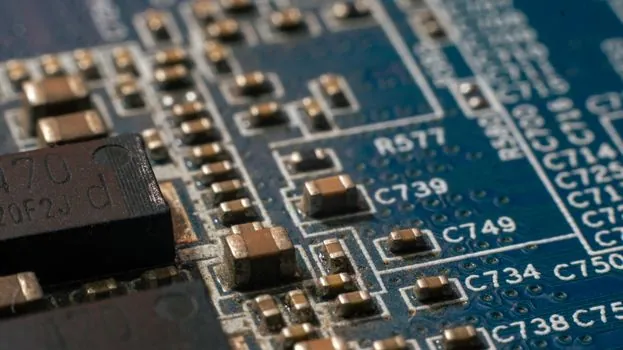
Sized against four decision criteria, the elastomer shortlist sorts cleanly: dielectric strength peaks at silicone (24-32 kV/mm), temperature window is widest on silicone (-60 to +230 C) and narrowest on NBR/EPDM/CR (-40 to +120 C), oil/fuel resistance is best on NBR and FKM, and weathering/UV resistance is best on EPDM, with silicone and FKM carrying a price premium and NBR and CR sitting at the low-cost end of the table [S5][S4][S3].
The trade-off in plain English: silicone wins every thermal and dielectric column but loses on tear strength and cost, EPDM wins outdoor weathering but loses on oil resistance, NBR wins oil resistance but loses on heat and weathering, FKM wins the combination of heat and chemical exposure at the highest cost, and neoprene (CR) is the balanced middle option for flame resistance and moderate oil contact [S5][S3][S4]. For most 2026 electronics builds, the drawing specifies silicone for any part that touches a heatsink or runs above 120 C, NBR for under-hood seals exposed to oil, EPDM for outdoor enclosures and cable jackets, FKM for under-bonnet connector seals near the engine, and neoprene for vibration mounts where flame retardance is a requirement [S5][S2][S6].
Manufacturing Notes: Molding, Tolerance, and Tooling
Compression, transfer, and injection molding cover most electronic rubber parts, with profile and tubing extrusion handling gaskets, seals, H-strips, D-strips, U-channels, and custom weather-seal geometries [S2].
For R&D and low-volume electronics, latex dip molding and cut extrusion are still used for boots, bellows, and thin-wall sleeves where injection tooling cost would dominate the part price, and most suppliers list prototype-to-production in-house tooling as standard capability in 2026 [S2]. When tolerance is tight, custom molded parts are common: connector seals and EMI gaskets typically need tighter control than cable grommets because they sit inside a grounded enclosure and a dimensional drift directly degrades the IP or shielding number on the box [S2][S5]. The general guidance for engineers new to elastomer selection is to start from a published material-selection guide, not from a part number, because the wrong compound at the design stage is what causes field failures and EMC retests late in the program [S9][S5].
Where This Is Heading: Spec Discipline and Material Choices in 2026
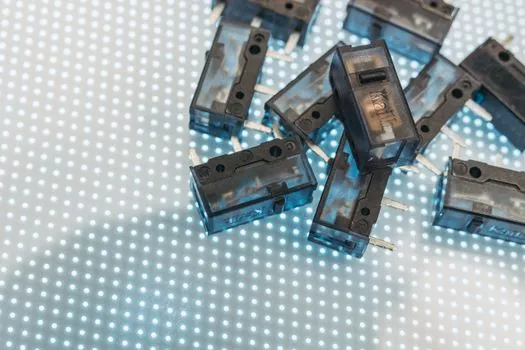
Two signals are worth tracking through the rest of 2026: first, supplier-published dielectric and shielding data is becoming standardized around IEC 60243 and ASTM D3755, with most 2026 datasheets now citing both numbers in the same table [S5].
Second, the dominant failure modes catalogued in 2026 supplier guides (flex fatigue on silicone boots, compression set on EPDM seals, galvanic corrosion on conductive EMI gaskets, chemical swell on NBR O-rings) are the same ones that showed up in 2024-2025 selection guides, which suggests the elastomer families are stable and the spec conversation is moving toward tighter test-method discipline rather than new materials [S5][S4][S7]. Engineers who need a wider polymer comparison (plastics, UHMWPE, PEEK) for adjacent parts of an electronics enclosure can cross-reference the engineering plastics selection map and the PEEK grades reference for higher-temperature structural parts, while this article remains the working spec map for the elastomer side of the BOM.
Component reference pages worth checking: industrial adhesive, and industrial borescope.