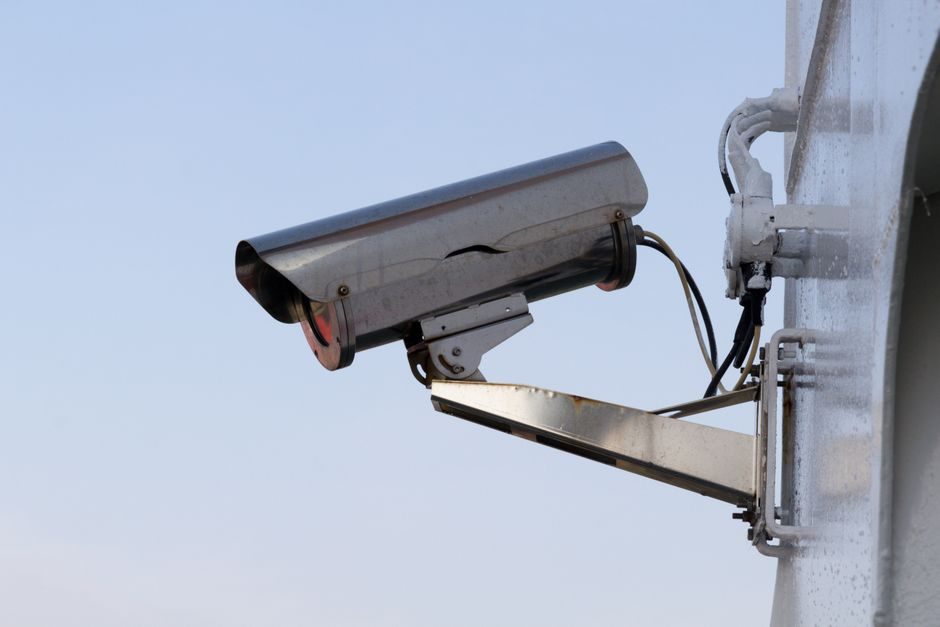
An industrial-grade PTZ or fixed-bullet surveillance camera typically represents only 18–30% of a 10-year site TCO; the remainder is installation labour, structured cabling, NVR/VMS licensing, storage media, monitoring contracts, and periodic hardware refresh.
This article maps the cost drivers behind commercial and industrial CCTV deployments, lines the four main camera classes against decision criteria, and gives process engineers a concrete way to budget a multi-site rollout against the industrial surveillance camera spec trade-off reference.
What Actually Moves the Price: Hardware, Labour, Software, Storage
Four cost blocks account for nearly all the spend variance between a $400 and a $4,000 per-camera project: camera + housing hardware, low-voltage installation labour, VMS/analytics software licensing, and retention storage [S1]. Industrial integrators routinely package these into a turnkey bid where the camera SKU is the most visible line item but the smallest dollar line [S1].
Hardware cost is driven by sensor size (1/3" vs 1/1.8" vs 1/1.2"), lens type (fixed, varifocal, motorized zoom with autofocus), IR illumination range, and ingress rating — IP66 is the de-facto industrial floor, with IP67 and IK10 adders for washdown or vandal-prone zones [S1]. The enclosure and mount hardware alone can add 8–15% to the unit price versus a comparable commercial SKU.
Installation labour — conduit, Cat6/Cat6A runs, PoE+ switch ports, lift rental, and commissioning — is the single largest line on a typical greenfield industrial project, often running 1.5–2.5× the hardware subtotal [S1]. Sites with hazardous-area requirements pull that ratio higher because of explosion-proof conduit, sealed junction boxes, and certified glanding.
Lifecycle Cost Stack: Purchase vs Operating Over 10 Years
Across a 10-year lifecycle, recurring operating costs — VMS seat licences, storage retention, 24/7 central-station monitoring, firmware updates, and one full mid-life camera refresh — typically add 40–70% on top of the initial CAPEX [S1][S2]. Ellram's foundational TCO framework (1995) holds that acquisition price alone understates the supplier cost by a factor that depends on maintenance, administration, and support intensity [S3].
Storage is the silent line item. Continuous 24/7 recording at 4MP / 15 fps with H.265 encoding consumes roughly 12–20 GB per camera per day; a 30-day retention policy across a 64-camera plant therefore requires 23–38 TB of usable storage plus RAID overhead, with a 3–5 year media-replacement cycle [S1]. Halving the frame rate or motion-only recording with analytics cuts that figure by 60–80% on low-traffic zones.
Monitoring contracts are the second silent line. UL-listed 24/7 central-station alarm monitoring — including the intrusion-detection and cellular back-up channel that most industrial bids bundle with CCTV [S1] — is a fixed monthly fee per signal; the cellular back-up alone adds redundancy that affects TCO because of the SLA-driven availability requirement [S2].
Camera Class Comparison: Bullet, Dome, PTZ, and Thermal
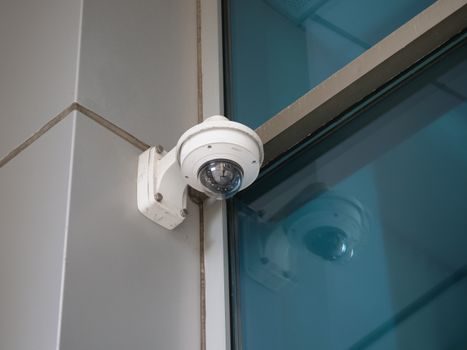
For an industrial perimeter or process-area deployment, the four viable classes are: fixed bullet, fixed/varifocal dome, PTZ, and thermal/thermal-radiometric. Each maps to a different TCO profile because the hardware ratio, installation complexity, and analytics load differ. [S1]
Fixed bullet cameras are the lowest CAPEX and the lowest installation cost per unit, but they offer no remote FOV adjustment after commissioning — re-aiming means a truck roll. Fixed or varifocal domes cost 10–20% more than equivalent bullets, hide the lens orientation from operators, and accept IK10 vandal ratings for low-mount zones; they are the workhorse for indoor plant and warehouse aisles [S1].
PTZ cameras cost 3–8× a fixed camera and command a higher licence tier on most VMS platforms, but one PTZ can replace 3–6 fixed cameras in long-perimeter or yard applications, compressing the labour and switch-port subtotals. Thermal cameras eliminate the need for area lighting and see through smoke, dust, and light fog, but they sit at the top of the unit-price band and need analytics-tuned edge processing to avoid drowning the VMS in false alerts.
Total Cost of Ownership Drivers and What Tilts Them
Material cost drivers in rank order: sensor and image-pipeline electronics; IP-rated aluminium or stainless housing; motorized lens assembly (where fitted); PoE+ or PoE++ PD circuitry; edge-AI SoC and thermal dissipation design [S1]. On a stainless-housing 316L variant for food-grade washdown, the housing alone can double the unit price versus the equivalent IP66 aluminium SKU.
Certification cost varies by jurisdiction. Sites specifying NDAA-compliant (Section 889) components for North American federal or critical-infrastructure buyers pay a premium over the equivalent non-compliant SKU; EU sites operating under GDPR retention rules face a different cost vector — shorter retention windows cut storage spend but raise re-visit cost on incident review.
Volume tier and lead time are the levers a buyer actually controls. Distributor-tier pricing typically drops 12–25% at 25-unit packs and 20–35% at 100-unit packs versus single-unit list [S1]. Lead time on specialty housings (explosion-proof, marine-grade) is 8–16 weeks versus 1–3 weeks for catalogue IP66 domes, and that delay has a carrying cost on phased plant builds.
Who This Cost Profile Is For — and Where It Breaks
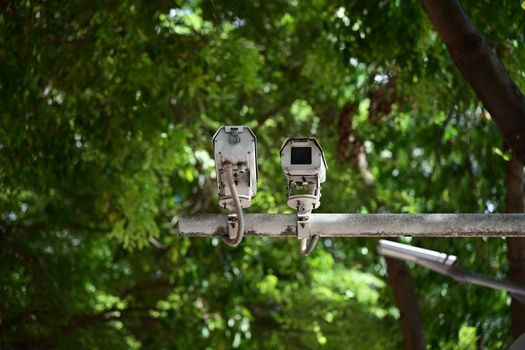
The TCO stack above is built for greenfield plant, multi-site warehouse, perimeter-fence, and process-area deployments where structured cabling, certified installers, and 24/7 monitoring are baseline expectations [S1]. It is not built for single-tenant retail, residential, or one-camera DIY rollouts where the integrator overhead and the 10-year refresh model do not apply.
It also under-fits mobile assets, in-vehicle recording, and body-worn deployments because the storage and SLA calculus differs. For those, the camera-head-to-TCO ratio shifts because the install is on a moving platform and the recording is local SSD rather than NVR-attached.
For an engineer evaluating adjacent TCO frameworks — forklift fleets, foundry core-shooting cells, ladder programmes — the same Ellram logic applies but the cost stack is dominated by energy, consumables, or downtime rather than cabling and storage. The TCO pattern used here for surveillance camera projects mirrors the lifecycle structure used in checkweigher TCO modelling, but with very different cost-line weights.
Selection Map: Spend Tiers, Cert Gates, and Re-Spec Triggers
Three spec gates that consistently move a project between spend tiers: ingress rating (IP66 → IP67/IK10), low-light imaging (IR vs starlight vs thermal), and edge analytics (motion-only vs AI-classified object detection). Upgrading any one of these moves the unit price 20–60%; upgrading all three is a 2–3× multiplier on the camera line [S1].
A practical budget: $450–$900 per point for IP66 fixed-bullet coverage with PoE+ and NVR, $900–$1,800 for varifocal dome with IR and edge analytics, $2,500–$6,000 for industrial PTZ with 25× zoom and auto-tracking, and $4,000–$12,000 for thermal perimeter cameras with radiometric analytics — figures consistent with the integrator pricing reported for commercial and industrial sites [S1]. Installation, cabling, and switch-port hardware typically add 80–150% on top.
Re-spec triggers that flip a project from one tier to the next: a new washdown zone that needs IP67, a high-theft yard that needs PTZ auto-tracking, or a process area that needs thermal hot-spot detection. Each trigger should be raised before the cabling plan is locked, because retrofit labour is the most expensive line in any TCO stack.
Sourcing, Standards, and Verifiable Next Steps
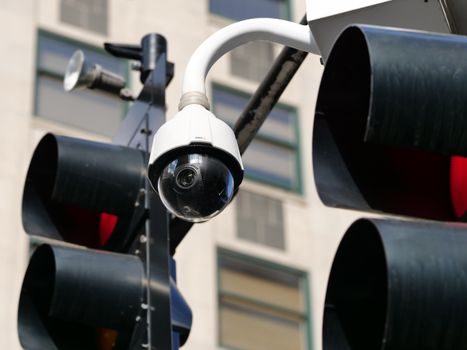
Industrial surveillance projects should anchor on three reference points: ONVIF Profile S/T conformance for VMS interoperability, NDAA Section 889 compliance for U.S. federal/critical-infrastructure buyers, and a written 10-year maintenance contract that covers firmware updates, storage media rotation, and one mid-life camera refresh [S1][S2].
Verifiable next node: lock a 5-camera pilot with one PTZ and four varifocal domes, run a 90-day retention window on H.265 at 15 fps, and benchmark the storage and VMS licence totals before scaling to 60+ points. The 90-day storage and licence data is the single most defensible input to a multi-site TCO model.
Trackable signals: 25-unit volume discount confirmation from a single distributor; PoE++ switch-port budget versus 60W per PTZ requirement; and any change in the integrator's cellular back-up SLA terms — each of which materially moves the operating-cost side of the lifecycle equation.
The underlying component specifications are covered under total station, and industrial camera.