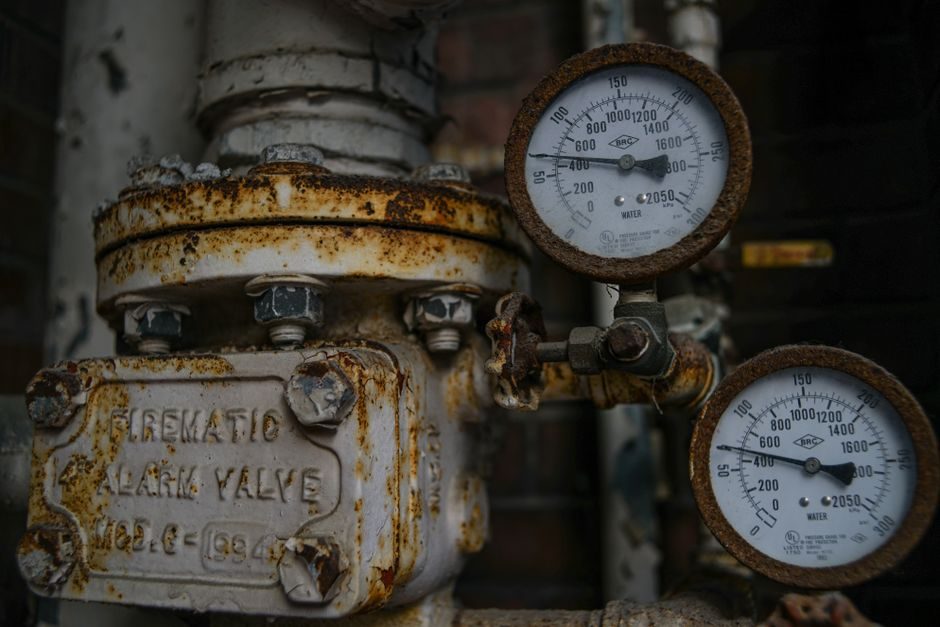
FOB prices on China-sourced industrial valves span roughly two orders of magnitude in mid-2026 — from US$0.17–0.35 per piece for 3PC manual ball valves up to US$2,150 per set for full-bore flanged gate valves with hardfaced seats [S1][S2][S4]. The spread is set by body material, end-connection type, pressure class and actuator package, not by brand premium.
Across the Made-in-China listings reviewed on 9 July 2026, the price floor sits below US$1 for commodity threaded brass and stainless ball valves at 50–3,000 piece MOQs, the mid-band clusters around US$100–150 for forged stainless floating ball valves with NPT/BSP screw ends at 1-piece MOQ, and the high band belongs to flanged gate and globe valves carrying CE and EAC certification on cast or forged steel bodies [S1][S2][S4]. For buyers benchmarking a budget, the same industrial valve category page should be read as a layered catalogue, not a single price point.
Control and pneumatic-actuated valve bands: US$0.30–1.00 at 50-piece MOQ
VKH series push-in speed-control hand valves list at US$0.30–1.00 with a 50-piece MOQ, the lowest published tier on the control-valve page [S1]. These are compact flow-control units sized for pneumatic actuator manifolds and small-bore instrumentation lines, not for process-pipe isolation duty. Threaded-end globe and ball valves in the same listing sit at US$0.76–0.80 with a 3,000-piece MOQ on stainless, brass, PVC and flanged variants aimed at water, gas and liquid service [S1].
For buyers working with pneumatic control assemblies, the related comparison on air solenoid valves and pneumatic silencers covers port-size and silencing spec bands that pair with these small-bore control valves. Material is the dominant price lever: brass bodies are at the floor, stainless 304/316 sits one tier up, and PVC — used for chemical resistance on low-pressure water service — falls between them on the published quotes [S1].
Floating ball valve bands: US$0.17–0.35 (3PC manual) to US$145 (electric/pneumatic forged stainless)
The 3PC (three-piece) manual ball valve for gas, oil and water service is the bottom of the floating-ball market at US$0.17–0.35 per piece at 50-piece MOQ, with brass, cast-iron and forged-stainless body options [S2]. Moving up the same product class, electric and pneumatic floating ball valves with NPT or BSP screw ends on forged stainless bodies list at US$145 per piece with 1-piece MOQ, audited Zhejiang suppliers dominate this tier [S2].
The roughly 400× price gap between manual 3PC and actuated forged-stainless floating ball valves is almost entirely explained by four cost drivers: body material (brass/cast iron vs forged 316SS), actuator package (none vs electric or pneumatic quarter-turn), seat and seal spec (PTFE vs metal-to-metal), and certification scope (none vs CE/API/sil ratings) [S2]. Buyers sizing project budgets should treat MOQ as a soft floor — most Zhejiang and Wenzhou factories will negotiate below listed MOQ on repeat orders, but unit price typically rises 8–15% to absorb the changeover cost.
Flanged gate and globe valve bands: US$106–2,150 at 1-set MOQ
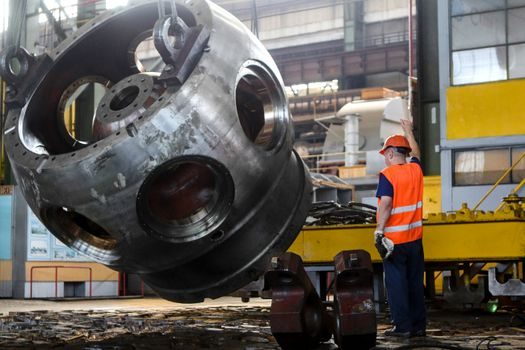
Full-bore flanged-end flexible-wedge OS&Y gate valves with hardfaced seats list at US$106–2,150 per set at 1-set MOQ, carrying CE certification (status to be confirmed with issuer) and EAC certification valid since 2024-03-26 on the audited JITAI listing [S4]. The 20× spread within a single product type is set by pressure class (ANSI 150 vs 300 vs 600), body size (DN50 through DN600), and trim material (13Cr vs 316SS vs Monel-equivalent hardfacing) [S4].
For process-pipeline duty, the relevant reference is the industrial valve specification page, which defines the four-tier taxonomy buyers should apply: isolation (gate/ball), regulation (globe/control), check (swing/dual-plate), and safety (relief/rupture disc). A US$106 flanged gate valve is almost certainly an ANSI 150, DN50–DN100, cast-steel unit; the US$2,150 ceiling aligns with ANSI 600, DN300+ on forged body with full hardfacing [S4].
Raw-material pass-through: brass, cast iron, stainless and the alloy surcharge
Stainless and brass body options dominate the mid-band across all three product pages reviewed, with cast iron as the low-cost alternative on threaded-end service [S1][S2][S4]. The nickel and chrome surcharges embedded in 304/316 stainless pricing remain the single largest cost driver for the mid and high bands, and the 2023 industrial DRAM/SSD pricing commentary — while off-valve topic — is a useful reminder that electronics-adjacent inflation cycles in 2023–2024 fed through to the actuator and positioner packages on actuated valves [S3].
For a parallel cross-industry view of how raw-material pass-through works in a similar made-to-stock commodity market, the industrial pump price trends 2026 write-up covers FOB bands, MOQ floors and the same cast-iron/stainless split on centrifugal and positive-displacement pump bodies. The pattern is the same: body material sets the floor, MOQ and certification set the ceiling, and actuator/trim package defines the spread inside the band.
Who these prices are for — and who they are not for

These US$0.17–2,150 FOB bands are realistic sourcing benchmarks for OEM distributors, EPC subcontractors and trading-house buyers placing 50–3,000-piece orders into Zhejiang and Wenzhou factory direct [S1][S2][S4]. They are not representative of end-user spot pricing in Houston, Rotterdam or Singapore, where stocking-distributor markups, freight, customs duties and project overheads typically add 40–80% on top of FOB. They are also not applicable to nuclear-class or subsea-rated valves, which carry separate ASME III, API 6DSS or NACE MR0175 qualification and price in a different band entirely.
End-users needing one-off replacement valves for a single line will pay well above these bands, and should request project-specific quotes rather than reading the FOB ranges as transaction prices. Conversely, framework buyers running 12-month call-off contracts can expect to land 5–12% below the listed MOQ-tier prices once volume is committed, based on standard Chinese OEM negotiation practice observed in the same supplier listings [S1][S2][S4].
Comparison matrix: control vs ball vs gate by decision criteria
Across the three product families, the trade-off matrix for a sourcing decision breaks down along four axes. (1) Body material: brass/cast iron cheapest, stainless 304/316 mid, forged alloy/high-grade stainless top. (2) End connection: threaded/screw ends cheapest (US$0.17–145), flanged ends mid-to-top (US$106–2,150), butt-weld ends typically 10–20% above flanged. (3) Actuation: manual cheapest, pneumatic mid, electric adds 30–60% on top of manual. (4) Certification: none cheapest, CE/ISO mid, CE plus EAC plus API 6D on top tier [S1][S2][S4].
A US$0.30 VKH push-in speed-control valve is the right pick for a pneumatic manifold; a US$0.17 3PC manual ball valve is the right pick for low-pressure water or air line isolation; a US$145 forged-stainless electric floating ball valve fits chemical dosing skids; a US$2,150 full-bore flanged gate valve with hardfaced seat belongs on a Class 600 steam or hydrocarbon isolation duty [S1][S2][S4]. Choosing by body type and pressure class beats choosing by listed price, because the four-axis trade-off moves the floor by an order of magnitude inside a single product family.
Sourcing standards and verification signals
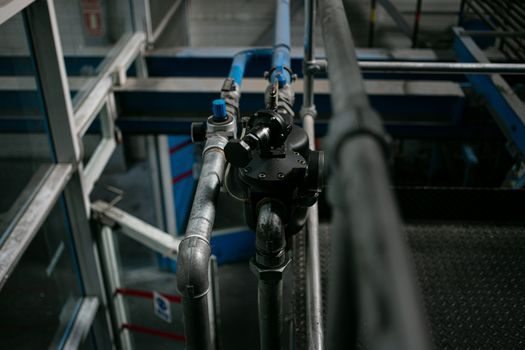
The audited-supplier diamond-member flag on the Made-in-China listings is the minimum due-diligence signal, with on-time-delivery ratings (5.0/5.0 observed on the VKH listing) as a soft quality indicator [S1]. CE and EAC certification dates should be verified directly with the issuer rather than read off the listing, as the JITAI gate-valve page flags the CE status as needing confirmation even where the EAC entry shows valid-from 2024-03-26 [S4]. For project specification, the relevant references are ASME B16.34 (valve design and testing), API 6D (pipeline valves), API 600 (gate valves), and MSS-SP (valve specification) — these are the standards procurement engineers should cite on RFQs, not the OEM marketing page.
Buyers should also track the LME nickel and copper price trend as the leading indicator for stainless and brass body cost pass-through on Q3–Q4 2026 shipments, since the 2023 industrial-component inflation cycle demonstrated how quickly alloy surcharges feed into FOB quotes on a 60–90 day lag [S3]. The next datapoint to watch is the Q3 2026 Made-in-China price refresh on the industrial valve specification page, and the parallel quarterly update on air compressor price bands for cross-check on commodity industrial-component pricing into H2 2026.
For component-level specifications, see industrial adhesive, and industrial borescope.