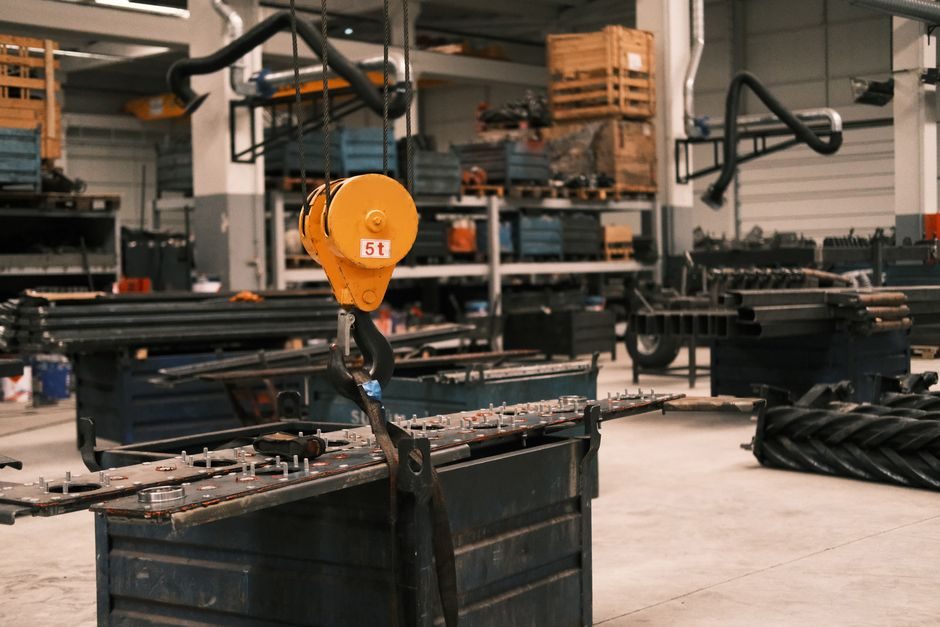
China, Japan, Germany, the United States, South Korea and Italy together account for the bulk of global machine tool output in 2026, with China holding the largest single-country production share by both volume and value across CNC turning, machining centres and general-purpose toolroom equipment [S6].
Demand-side pressure is rebuilding: the collaborative robot segment alone is projected to grow from USD 4.0 B in 2026 to USD 17.2 B by 2033 (CAGR 23.1%), and every collaborative robot cell is built around a machine tool, fixturing and core CNC control platform, which keeps upstream cutting-machine capacity tight [S3].
Country-level capacity ranking and output mix
China leads 2026 machine tool production by installed tonnage, with state-reported output weighted heavily toward mid-range CNC lathes, vertical machining centres and entry-level 3-axis mills feeding both domestic EV, battery and appliance supply chains and export lanes to ASEAN, Russia and Latin America [S6].
Japan remains the high-precision anchor: Yamazaki Mazak, Okuma, DMG Mori (Japan-Germany dual base), Makino and Jtekt dominate 5-axis simultaneous, gear-cutting and high-rigidity horizontal machining centre output, with the strongest share of units priced above USD 350,000 per machine [S6].
Germany concentrates on heavy-duty and high-rigidity segments: Union Chiron, EMAG, Index, Heller, Grob and Trumpf cover turn-mill, gear-hobbing, broaching and laser-cutting cells, with the bulk of European automotive tier-1 and aerospace sourcing flowing through this base [S6].
South Korea focuses on CNC lathes and high-speed machining centres for semiconductor FOU and EV battery lines (Doosan, DN Solutions, Hyundai Wia), while the United States holds share in large-format 5-axis aerospace machining via MAG, Cincinnati and Lincoln Electric–owned brands [S6]. Italy remains Europe's largest single-country producer of small-to-medium CNC machining centres for job shops.
Selection criteria: which country fits which buyer
For high-mix, low-volume job shops needing ±0.005 mm repeatability and 5-axis contouring, Japan and Germany are the default pick; machine tool prices in this band cluster at USD 280,000-650,000 FOB for a 5-axis VMC and USD 450,000-1,200,000 for a horizontal machining centre [S6].
For high-volume automotive, appliance and general metalwork, China's Jiangsu (Suzhou-Wuxi), Liaoning (Shenyang-Dalian), Shandong (Jinan-Zibo) and Guangdong (Dongguan-Foshan) clusters cover roughly 65-70% of the country's CNC output, with mid-range 3-axis VMCs landing at USD 38,000-95,000 FOB depending on ATC count and linear-guide configuration [S6].
For EV battery tray, motor housing and die-cast machining, South Korea's vertical lathes and HMCs pair with German turn-mill cells; for large aerospace structural parts (wing ribs, spars, long booms), the U.S. large-format 5-axis machines and German Zimmerman/Shwunz Horz remain the only credible tier, with quoted lead times of 14-22 months in mid-2026 [S6].
Side-by-side comparison of the four main producing countries
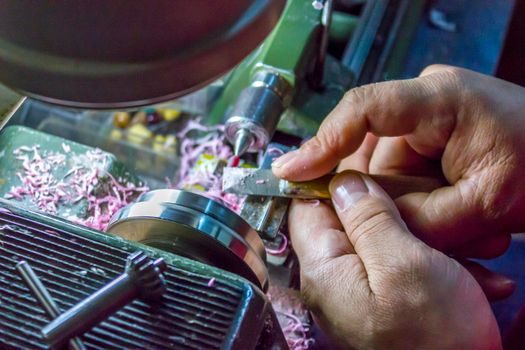
Across the four dominant producers, decision criteria split cleanly: China wins on price per spindle hour and 90-150 day lead time on standard 3-axis VMCs and CNC lathes; Japan and Germany win on accuracy retention, 5-axis capability and global service-network coverage; the U.S. and South Korea occupy a narrow but defensible aerospace/semiconductor niche where ±0.003 mm geometric accuracy and traceable calibration outweigh unit price [S6].
The trade-off is a hard floor: below roughly USD 100,000 FOB for a 3-axis VMC, Chinese supply is effectively the only option for new machines, and the same is true below USD 50,000 FOB for CNC cutting-machine classes such as wire EDM and surface grinders where Japan-domestic second-tier and Indian capacity remain thin [S6].
Tooling, control platforms and accessory floor that define real cost
Machine price is the headline, but the supporting stack drives the real landed cost: Siemens Sinumerik ONE, Fanuc Series 0i-MF/31i-MB5 and Mitsubishi M80/M800 control platforms dominate 2026 production lines, with Siemens selling subscription-based MACHINUM software through its industrial software store to machine tool builders [S1].
Subscription terms in the Siemens store auto-renew in 12-month cycles unless either party gives 60 days' notice before the current term expires, and price-change notifications are issued 90 days ahead, which directly affects how European OEMs amortise the per-machine control software line item [S1].
Tooling grades, tool and die steel blocks and the coding-and-marking integration bolted to a CNC cell typically add 18-35% to bare machine cost; a 5-axis cell with Siemens-controlled pallet automation and laser marking commonly lists at USD 520,000-780,000 ex-works in 2026 [S1].
Service network and downstream cell integration
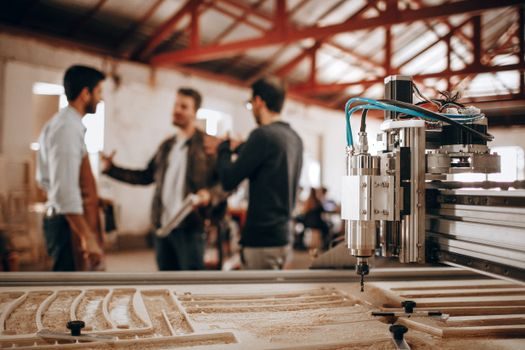
Buyers in North America and Western Europe still gravitate to Japanese and German brands for 24-72 hour field-service response, with on-the-ground calibration and probing-service providers such as Machine Tool Technology (Michigan) offering single-source calibration, maintenance, repair and probing support around the installed fleet [S4].
For buyers sourcing from China, distributor presence matters more than brand; many Chinese-built machines reach end-users through trading houses, with supplier directories listing OEM and ODM capability separately so the buyer can confirm whether the factory holds the design files or only assembles a private-label build [S2].
For filling, labeling and end-of-line packaging cells bolted onto a CNC cell, the same country-supply pattern holds: a machine tool supplier in Suzhou or Foshan is most often bundled with locally-built auxiliary equipment rather than German or Italian peripherals, which compresses total cell price 20-30% versus an all-Japanese or all-European build [S2].
Constraints, failure modes and sourcing signals
The dominant 2026 constraint is lead time, not unit price: Japanese 5-axis HMC slots at Mazak, Okuma and DMG Mori are running 10-14 months out for tier-1 buyers, German 5-axis gantry and rail machines at Union Chiron, Heller and EMAG are quoted 12-18 months, and Chinese standard 3-axis VMC lead time has stretched from 30-45 days pre-2024 to 90-150 days in 2026 [S6].
Buyer-side failure modes repeat across clusters: control-platform lock-in (Fanuc versus Siemens versus Mitsubishi) drives spare-parts cost over the 10-15 year machine life; tool-changer reliability below the 3-million-cycle mark on low-cost Chinese ATCs is the single most common warranty dispute; accuracy retention on linear-guide-only machines in cast-iron-intensive work is the most common accuracy-related return [S6].
Trackable 2026 signals: machine tool price floors and accessory floors are now documented in supplier surveys covering CNC bands, accessory floor items and sourcing signals across the major producing countries, which gives procurement teams a defensible benchmark when comparing offers side by side; industrial robot vendor-share data from the IFR 2025 release shows Fanuc, Yaskawa, ABB, KUKA and Kawasaki commanding the largest installed base that machines most machine tools, and their regional service networks double as a proxy for CNC service coverage [S3] [S6].
For related coverage, see Total Station Suppliers 2026: China OEM Clusters, Price Bands and Spec Levers.