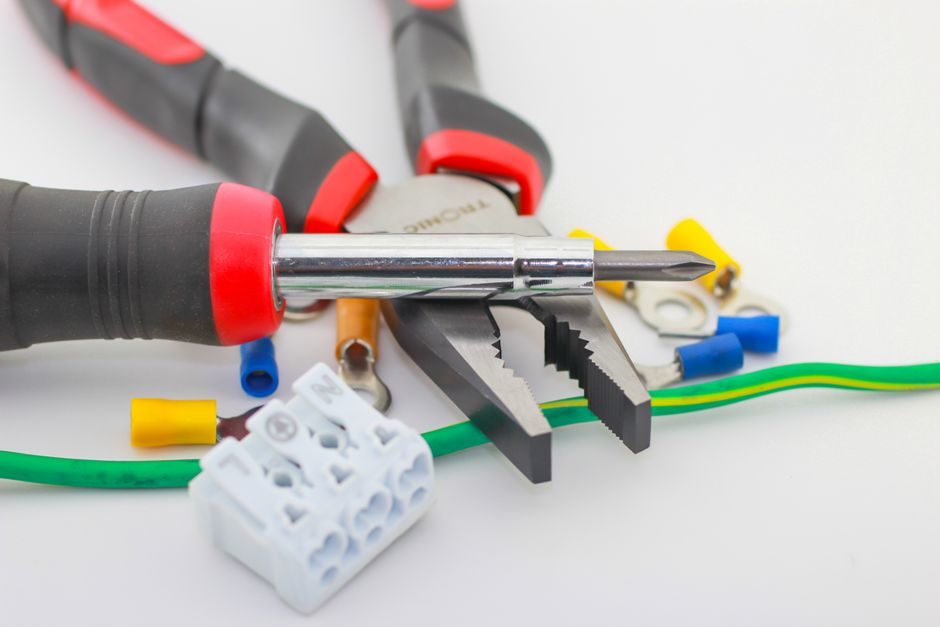
IEC 60900 governs insulated hand tools used on or near live parts up to 1000 V AC and 1500 V DC, with ASTM F1505 supplying the North American test method that mirrors the same dielectric and mechanical sequence [S3].
The 2026 manufacturing baseline from major Suzhou-based lines (TOLSEN VDELINE) lists six product families — insulated tool sets, pliers, screwdrivers, wrenches & sockets, special-spec tools, and accessories — all marked as dual-certified to IEC 60900 and ASTM F1505 [S3].
What "Insulated" Must Mean on the Label
A tool labelled "1000 V" is not a marketing line — it is the upper limit of the routine working voltage the dielectric layer has been type-tested to withstand, defined under IEC 60900 for live working at AC and corresponding DC levels [S3].
Each individual tool, not just the production lot, is submitted to a 10 kV dielectric test for 3 minutes plus an impact, indentation, and flame-retardancy check; non-conforming pieces must be shredded, not resold, because the insulation bond cannot be re-validated after the mould closes [S3].
The two-colour orange-over-yellow dual-layer geometry seen on VDE-style tools is not cosmetic: the inner colour is a deliberate wear indicator — if the orange shows through, the tool is dead and must leave site, a rule written into IEC 60900 §6 and copied into ASTM F1505 [S3].
Pre-Use Inspection: Five Gates Before the Tool Touches a Lug
Visual + tactile: run a gloved thumb along the insulation sleeve; any crack, peeling, swelling, or surface tackiness (often plasticiser bleed) is a fail — do not use, do not wrap with tape [S3].
Dimensional check: insulation must run the full length specified in IEC 60900, typically covering the gripping area plus a defined "safe zone" back from the working tip; the uninsulated shank must not protrude beyond the dimensioned guard [S3].
Marking check: every tool must carry the year of manufacture, the 1000 V / IEC 60900 marking, and the VDE/GS or ASTM F1505 mark — the date stamp is the legal evidence the insulation was tested, not just moulded [S3].
Mechanical: ratchets must still hold at the rated torque after the dielectric test, and screwdriver tips must not chip — a chipped tip is a punch risk on a live terminal [S3].
Storage: tools are stored dry between 10 °C and 30 °C, away from direct UV; UV-aged PVC insulation loses dielectric strength long before it loses colour, so sunlight in the open job-box is a slow fail [S3].
Installation Workflow on a Live-EV or Switchgear Job

Lockout/tagout first, then verify dead with a separate voltage tester — insulated tools are a second line of defence, not a substitute for proving dead, a position reinforced across the IEC 60900 family of live-working standards [S3].
Torque sequence on bolted busbars: with insulated wrenches & sockets sized to the fastener, click the torque wrench at the rated Nm value, then re-tension after 24 hours on aluminium because cold-flow relaxation can drop a joint by 5–8% — see this principle in our multistage pump maintenance access spec map for the same torque-then-recheck logic.
For EV pack work (TOLSEN markets its range specifically for EV maintenance), only insulated screwdrivers with a blade width matched to the terminal screw should be used; an undersized bit skips, an oversized bit bridges adjacent cells and shortens the pack [S3].
Selection Comparison: Which Insulated Tool for Which Job
Against four decision criteria, the six IEC 60900 / ASTM F1505 product families line up as follows. Insulated tool sets score highest on coverage and traceability (one VDE-rated kit per technician) but lose on cost-per-piece. Insulated pliers win on grip security and cut control for cable prep but are limited to soft conductors. Insulated screwdrivers dominate on terminal density work where torque is low but tip geometry is critical. Insulated wrenches & sockets carry the highest mechanical load but require matched square-drive sizes to avoid shanking out in a live cubicle. Special-spec tools (e.g. T-handles, torque-limiting bars) cover non-standard switchgear but carry longer lead times. Insulated accessories — sleeves, boots, caps — are the cheapest line and the one most often skipped, despite being the actual dielectric barrier on retrofitted non-insulated handles [S3].
Common Failure Modes and When to Replace, Not Repair

Symptom — visible orange showing through yellow sleeve on a 1000 V screwdriver. Root cause — mechanical abrasion has worn through the primary insulation to the indicator layer. Corrective action — remove from service immediately, no re-sleeving, no heat-shrink; IEC 60900 treats the dielectric system as a one-shot moulded assembly and field repair voids the certification [S3].
Symptom — tool passes a 500 V insulation tester but feels "soft" or spongy in the hand. Root cause — plasticiser migration, typically from prolonged storage above 40 °C or contact with oils; the surface reads dry on a Megger but the bulk dielectric strength has dropped. Corrective action — scrap, do not rely on the field tester; the type test is 10 kV for 3 minutes on the original moulding, not a 500 V spot check [S3].
Symptom — ratchet head on an insulated socket wrench slips under load below the rated torque. Root cause — wear of the pawl after the dielectric test cycle, common on budget tools. Corrective action — replace the head assembly; the insulation sleeve is still valid, the mechanical path is not — a sound argument for buying complete kits rather than mixing brands, similar to the brand-mixing caution we flag in our color mark sensor buying guide.
Standards, Testing Bodies, and Procurement Gates
VDE is the dominant third-party test house for IEC 60900, and the VDE-GS mark on insulated tools is the de facto procurement specification across EU switchgear builders; the equivalent North American line is ASTM F1505, with UL listing to ASTM F1505 accepted by most US utilities [S3].
Annual retest is not required by IEC 60900 itself — the standard treats each tool as a sealed unit with a service life governed by inspection, not by calendar — but most plant EHS procedures still impose a 6- or 12-month visual + dielectric recheck, a regime that catches plasticiser-migration failures that visual inspection alone will miss [S3].
Procurement gate: require the certificate number, the manufacturing year stamp, and a sample of three random pieces from each lot for an incoming 10 kV dielectric test before any tool is issued to a technician; this is the same logic behind the lot-traceability discipline covered in our magnetic particle tester buying guide.
Who Insulated Tools Are For — and Who They Are Not For
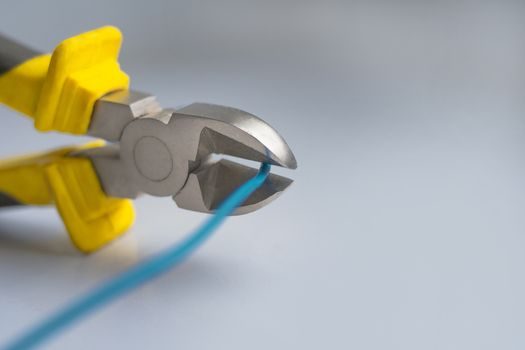
FOR: maintenance crews on 400 V / 690 V / 1000 V AC switchgear, EV high-voltage pack technicians working on 400 V and 800 V architectures, telecom 48 V DC battery rooms where a shorted ring can weld a technician to a busbar, and any site that has to satisfy IEC 60900 or ASTM F1505 audit clauses [S3].
NOT FOR: live-line work above 1000 V AC / 1500 V DC — that requires Class 0–4 hot sticks and live-line tools under IEC 60832, not insulated hand tools; nor for any application where the tool will be used as a hammer, chisel, or pry bar, because IEC 60900 §6 explicitly excludes impact-misuse from the type-test scope [S3].
Also NOT FOR: explosive atmospheres where the tool must additionally be non-sparking (Cu-Be / Al-Bronze) — these are two independent certifications and many "VDE" tools on the market are not ATEX-compliant; see our anti-static equipment spec map for the non-sparking line.
Track next: the 2026 IEC 60900 maintenance cycle and the publication status of any harmonised ASTM F1505 revision; a single revision in either will reset the incoming-inspection template across every EU and US utility buyer.
Detailed specification references: insulated tools, linear guide, and crossed roller guide.