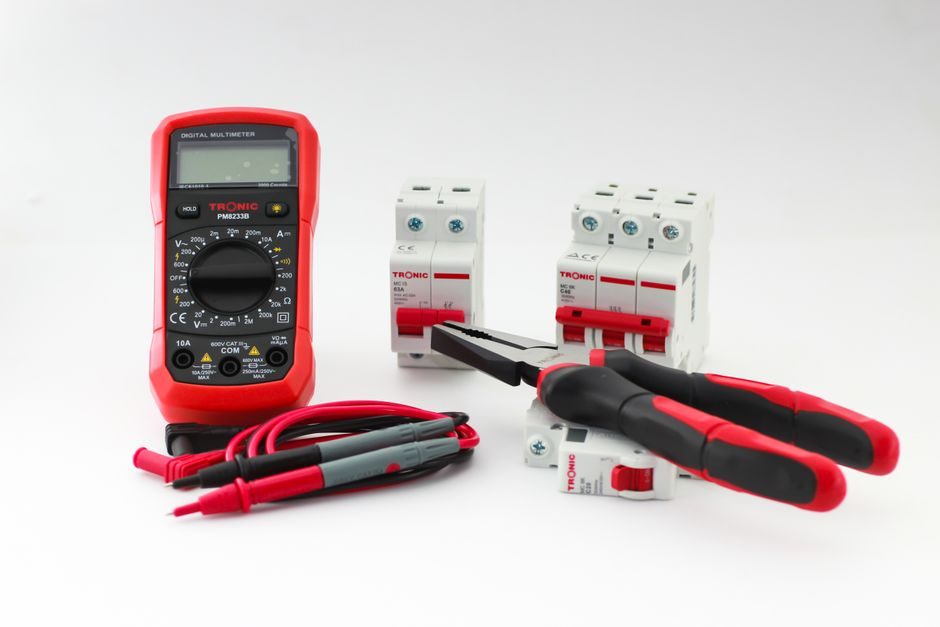
Insulated hand tools rated to 1000 V (IEC 60900 / DIN 7445:1998) and underground warning tape (APWA colour code, EN 12613 PE foil) belong to two different layers of electrical-site safety, and confusing the two is a procurement error that costs outages and lives [S6].
Insulated tools — screwdrivers, pliers, torque wrenches, spin-type socket wrenches — are specified for live or near-live work by electricians, utility workers, HVAC technicians and maintenance crews; warning tape is a passive, buried marker laid above power, gas, water, fibre and sewer assets before backfill [S1][S3].
Insulated tool ratings: voltage class, standard, body geometry
1000 V insulated hand tools are tested to IEC 60900, the international benchmark for live-working hand tools; the older DIN 7445:1998 document governs spin-type socket wrenches in that same class and is now withdrawn but still cited on regional drawings [S6]. A 30-piece master electrician insulated tool kit covering screwdrivers, pliers, cutters and sockets is sold by Jonard Tools under TK-591, indicating the typical SKU shape a maintenance buyer assembles.
Insulated torque wrenches appear as a standalone CENS-listed product line (model I-series family), giving controlled-bolting loads on energised busbar joints where ordinary calibrated torque tools would be unsafe [S3]. Insulated tools from UK-based ITL (Insulated Tools Ltd) cover insulated pliers, spanners, screwdrivers and insulated cut-off saws — a typical 1000 V tool bag for a substation fitter [S1].
Warning tape construction, colour code and detectability
Underground warning tape is a PE foil ribbon (commonly 0.05–0.10 mm thickness, 100–300 mm width, 100–1000 m roll length) laid 300–600 mm above the utility it flags; adhesive PE warning tape variants add a backing adhesive for pipe-wrapping use, not for trench burial [S2][S4].
Detectable (tracer-wire) tape embeds a stainless steel or aluminium foil layer so a cable locator can energise it and trace the route; non-detectable tape is colour-only and is used where locating the tape itself is not the goal [S2]. The APWA colour code is the practical shorthand used on warning sign products: red = electric, yellow = gas/oil, blue = potable water, green = sewer/drain, orange = telecom/CATV, purple = reclaimed water.
Layered safety logic: when each product earns its line item
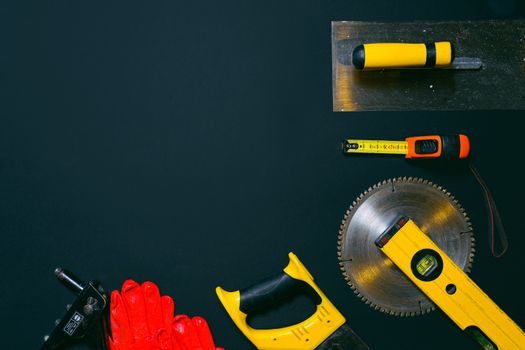
On a joint-utility trench the spec stack is: utility pipe/cable → bedding sand → detectable warning tape (service-specific colour) → 150 mm of fine fill → second warning tape (often non-detectable, repeat colour) → backfill. A Fluke survey reports 91% of electrical workers rate insulated hand tools as critical when working on electrical equipment, which is why the tool spec is non-negotiable inside the panel, not at the trench face. [S1]
The two products do not compete — they cover different exposure windows. Warning tape is the engineered, post-burial last line of defence before a backhoe tooth hits an energised cable; insulated tools are the last line of defence when a worker is already inside a panel and the cable has not yet been tripped. Procurement teams that treat the safety PPE line and the trench-marking line as one budget tend to under-spec both.
Decision criteria: pick the right product family per task
Pick an insulated tool when the worker is within arm's reach of a conductor that may be energised and the task is fastening, cutting, torquing or stripping. Pick warning tape when the asset is being buried and the future risk is mechanical strike by an excavator. The comparison is straightforward in table form. [S2]
Insulated hand tools (per IEC 60900 / DIN 7445:1998): 1000 V rating, dual-layer insulation + 1000 V flash-tested at production, mechanical duty matched to non-insulated equivalents, lifetime typically 5+ years with annual visual + dielectric re-test. Warning tape (per APWA colour code, EN 12613 for PE construction): 0–1000 V asset class is irrelevant, instead the function is marker-layer only, lifetime 20–50 years in soil if PE gauge is correct, no electrical test routine, but mandatory to be installed at correct depth (S6).
Failure modes, limits and inspection discipline
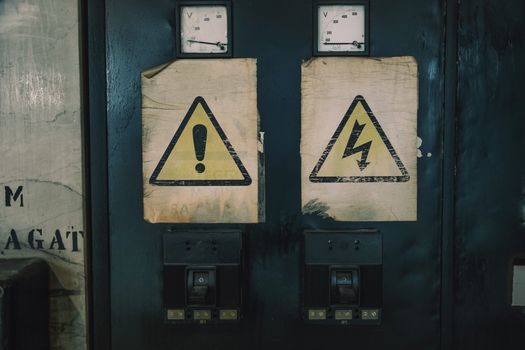
Insulated tools fail by insulation cuts, cracked dipping, UV embrittlement of the orange over-sleeve, and chemical attack from solvents; dielectric re-testing every 12 months is the standard refresh cadence called out by IEC 60900. Warning tape fails by insufficient burial depth (excavator still strikes the asset), wrong colour (trench crew ignores it), degradation of the metal tracer layer, and the trench being regraded years later by a third party with no record of the marker (S2, S6). [S3]
For more on safety product selection and related industrial-spec logic, see the safety product spec map for insulated tools and the companion trench and surface warning tape spec page. Where the work is mechanical rather than electrical, the pushbutton & pilot light vs emergency stop button spec bands piece follows the same layer-of-defence logic and is worth reading alongside.
Sourcing, MOQ and 2026 pricing bands
Underground warning tape wholesale pricing on Made-in-China runs US$0.43–US$10.00 per roll, with 500-piece to 1000-roll MOQs from Zhejiang, Jiangsu, Guangdong and Fujian suppliers; Hangzhou Sloan Safety, Suzhou Jerrytape New Materials, Fujian Youyi and Guangdong vendors dominate the Gold-Supplier tier. Insulated tool procurement is usually brand-driven (ITL, Knipex, Wera, Bahco, Jonard) rather than commodity-driven, with tool kit prices running 3× to 8× equivalent non-insulated SKUs (S1). [S4]
Three signals worth tracking in H2 2026: (1) tighter dielectric re-test documentation being demanded by EU utility buyers on insulated torque wrenches; (2) shift from non-detectable to detectable tape in municipal water/gas tenders as one-call systems tighten; (3) growth of EN 12613-compliant thicker-gauge (≥0.10 mm) PE tape on high-voltage cable trench specs, replacing the legacy 0.05 mm commodity foil (S2, S4).