
Pushbuttons, selector switches and pilot lights handle routine start/stop and machine-status indication in 22 mm or 30 mm panel cut-outs, typically rated 600 V AC and 10 A continuous with mechanical life in the 1–10 million operations band [S3]. Emergency-stop buttons are a different functional class: per ISO 13850 they must be a direct-opening, self-latching red mushroom-head device on a yellow background, with a positive mechanical link between actuator and contact block that forces the NC contacts open if the actuator is forced off or the contact block welds [S1][S3].
The two product families are stocked together by industrial distributors but live under different standards and different engineering reviews: a control-circuit pushbutton goes on the same drawing as a pilot light, while an E-stop is signed off inside the safety circuit and validated against the category/PL or SIL of the safety function (typically PL d / SIL 2 minimum under ISO 13849-1 and IEC 62061) [S1][S3].
Functional Scope and Actuation Differences
Pushbuttons exist as momentary (spring-return) and maintained (push-push, key-release, twist-release) variants in flush, extended, mushroom and selector form factors, with contact blocks configured as 1NO, 1NC, 2NO, 2NC, or 1NO/1NC, with PCB or screw terminations [S3][S5]. Pilot lights share the same 22 mm or 30 mm mounting footprint and use an LED or incandescent element at 24 V DC, 120 V AC or 240 V AC, with lens colours drawn from a fixed set defined by IEC 60073 (red = danger/emergency, amber = warning, green = safe/normal) [S3][S5].
An E-stop actuator is latching: once pressed, the head stays down and the NC contacts stay mechanically open until the operator performs a deliberate reset (twist, pull or key-release depending on the head type) [S3]. The 30 mm heavy-duty/oil-tight family is built to NEMA 12/13 and IP65/IP66 from the factory, while 22 mm pilot devices commonly reach IP66 with the correct sealing accessory [S3][S5].
Mounting Hole, Hole Count and Enclosure Layout
The two dominant panel cut-outs are 22.5 mm (7/8 in) and 30.5 mm (30 mm), and the chosen hole dictates the contact-block family, accessories and hole count per enclosure [S3][S5]. A typical desktop or pedestal pushbutton consolet, for example, is a 30 mm NEMA 12/13 carbon-steel enclosure measuring 13 x 16 x 10 in (HxWxD) and accepting up to 30 holes in the standard configuration [S2]. That same enclosure will commonly mix pushbuttons, selector switches, pilot lights and one or two E-stops, with E-stops placed on the top surface or a recessed palm guard.
Hole-count is a real cost driver on both families: each 22 mm hole costs roughly the same in cut-out machining time, but the contact-block price for a 30 mm heavy-duty E-stop is materially higher than a 22 mm indicator light, so the enclosure layout drives the bill of materials, not just the panel aesthetics [S2][S3].
Standards Governing Each Family

Pushbuttons and pilot lights are dimensionally constrained by IEC 60947-5-1 for the control-circuit switching elements and by IEC 60073 for indicator light colours and meanings, with enclosure ratings commonly tested to UL 50 / NEMA 250 and IEC 60529 for ingress [S3][S5]. The 22.5 mm pilot-device family from older Klockner Moeller lines, for instance, is now listed as obsolete for new designs and is kept in distribution for repair parts only, with the successor Titan series covering the same 22.5 mm cut-out [S5].
Emergency-stop buttons are designed to ISO 13850 (the harmonised "E-stop" rule, which mandates the red mushroom on yellow, the latching action, and the direct-opening positive-mode linkage between actuator and contact block) and to IEC 60947-5-5 for the electrical performance of the E-stop device itself, including the direct-opening contact test [S1][S3]. The pushbutton/pilot-light family, in contrast, does not have a positive-mode requirement and does not need to pass the direct-opening test.
Contact Blocks, Wiring and Safety Circuit Integration
Standard pushbutton contact blocks are typically rated 600 V AC, 10 A thermal continuous, with an electrical life in the 200,000–1,000,000 operation band depending on the AC/DC load and the inrush current (lighting, solenoid or motor loads derate the life sharply) [S3]. Pilot-light blocks are usually rated 1.5–2.5 W LED with integral or replaceable transformer modules for 120/240 V AC variants.
E-stop contact blocks are dual-channel by design: at minimum one NC contact must be direct-opening and positive-mode, and most safety designs wire two independent NC contacts in series (or two contacts into a dual-channel safety relay) to meet PL d / SIL 2 under ISO 13849-1 and IEC 62061, with a monitored NO contact for diagnostics [S1][S3]. A regular pushbutton's NC contact is allowed to have a gap, but it is not required to be direct-opening; if it welds closed, the safety function fails — which is why E-stops are never replaced by a standard stop pushbutton in a safety circuit, and why the emergency stop button is a separately certified SKU on every distributor's line card [S1].
Comparison Table: Pushbutton / Pilot Light vs Emergency Stop
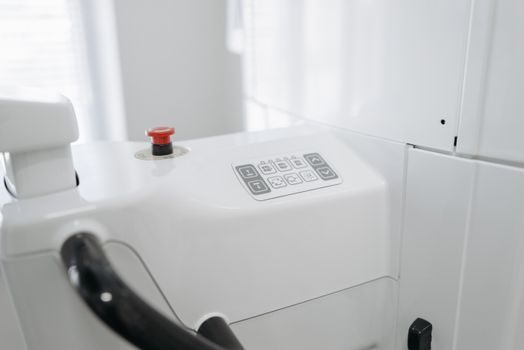
Side-by-side, the decision criteria that actually drive the line-card split are: (1) Standard — pushbutton/pilot light = IEC 60947-5-1, E-stop = ISO 13850 + IEC 60947-5-5; (2) Actuator — pushbutton = flush/extended/mushroom momentary, E-stop = red latching mushroom on yellow background with positive-mode linkage; (3) Contact block — pushbutton = 1NO/1NC standard, E-stop = 1NC direct-opening minimum, dual-channel recommended; (4) Use — pushbutton = start/stop/reset and indication, E-stop = category 0 or 1 stop of hazardous motion per IEC 60204-1 [S1][S3][S5].
The mounting hole and the enclosure rating are the only parameters that overlap cleanly: both families ship in 22.5 mm and 30.5 mm cut-outs, both reach IP65/66 with proper sealing, and both share the same pushbutton pilot light catalogue page on a typical industrial distributor [S1][S3].
Selection Logic: When to Specify Which
Use a pushbutton or pilot light for any routine operator interface that is not part of a safety function: start, stop (non-safety), jog, mode select, lamp test, run/ready/fault indication, with colour chosen from the IEC 60073 palette (red for emergency action, green for safe/normal) [S3][S5]. These are the devices that populate the 30 holes of a standard 13 x 16 x 10 in NEMA 12/13 consolet [S2].
Specify an emergency stop wherever ISO 13850 and IEC 60204-1 require a category 0 or category 1 stop, and wherever a risk assessment under ISO 13849-1 calls out a safety function with PL c or higher — typically guarded robots, conveyors, mixers, hydraulic presses, and any machine where an unexpected start would cause injury [S1][S3]. E-stops must remain reachable from the operator's normal working position and must be wired through a dual-channel safety relay or a safety PLC; a standard pushbutton wired into the same coil is not an acceptable substitute.
Failure Modes, Lead Time and Sourcing Signals
The most common specification error is using a red mushroom maintained pushbutton in place of a certified E-stop, which fails the positive-mode test and fails the ISO 13850 visual/actuator rule [S1][S3]. Obsolete pilot-device lines (e.g. legacy 22.5 mm Klockner Moeller series) remain in distribution channels for repair parts but are flagged as such on the manufacturer's page, with the recommended successor series named explicitly [S5]. For new builds, sourcing should default to current IEC 60947-5-1 / IEC 60947-5-5 SKUs and to a 22 mm or 30 mm family that ships with IP66 sealing and a published mechanical-life curve above 1 million operations for the operator head [S3][S5].
For hazardous-area builds, the discussion shifts again: an explosion proof button or explosion proof light replaces the standard pilot device inside an Ex d enclosure, and a dedicated E-stop in the same Ex rating covers the safety circuit — see the linked explosion proof button reference for the certification and grouping rules that apply. Verify the next revision of IEC 60947-5-1 and IEC 60947-5-5 from the IEC webstore and confirm ISO 13850:2015 is still the active edition before issuing a purchase order against a long-tail E-stop SKU.
For related coverage, see Cable Drag Chain vs Cable Gland: Scope, Selection and 2026 Sourcing Bands.