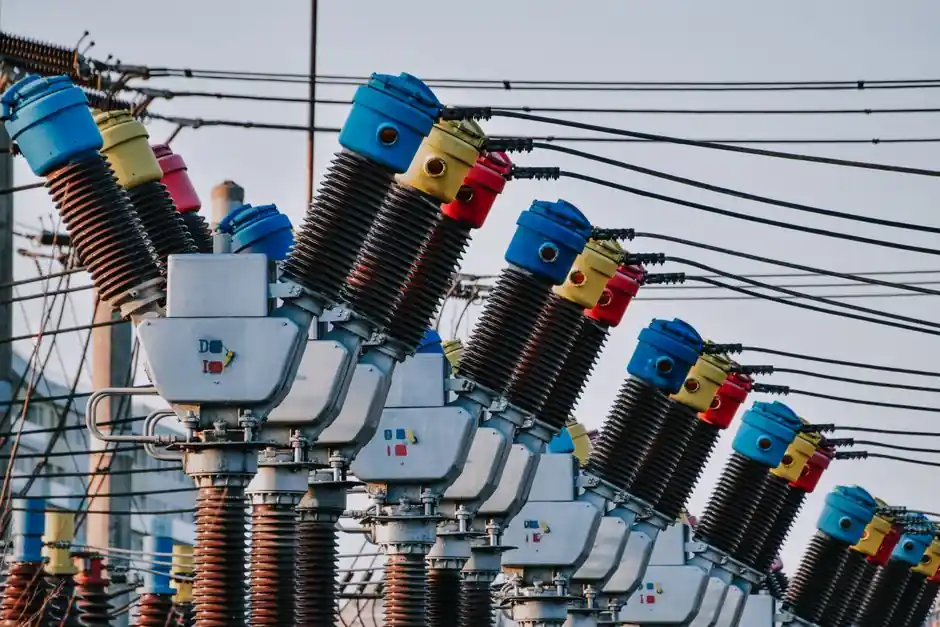
Test-voltage class and resistance range remain the two specs that decide which insulation resistance tester belongs on a given workbench; 2026 product lines span 1 kV handheld units up to 20 kV portable sets with 4 TΩ range, and matching the class to the asset is the single biggest guard against wrong readings [S4].
Across the 2026 catalogue, handhelds cluster around 500 V / 1000 V with 800 kΩ–500 GΩ autoranging and ±5% ±2 digit accuracy, while bench and portable HV units extend to 10 kV in 500 V steps and 20 kV at 5 kV increments, with resistance ceilings of 4 TΩ and dedicated guard terminals for surface-leakage rejection [S4]. Multi-channel production-line testers add programmable 1 V–1000 V sources, 2% resistance accuracy, 10 GΩ range and 30 readings/second throughput for EOL applications [S2].
Test-voltage class and what each tier actually covers
Entry-level 1 kV insulation testers are microprocessor-controlled, autoranging, with auto-discharge on all ranges, AC/DC safety voltmeter at start, and a 5 V DC open-circuit continuity source; the SEW0010 lists continuity short-circuit current above 220 mA and runs on 8 rechargeable or alkaline cells with a BS 16th-edition compliance footprint [S4]. The 90-4K class instruments from ELABO target electrical-appliance production with digital readout and USB data export for traceability in manual or automated cells [S1].
Mid-class 5 kV units such as the Megger BM5200 are battery-powered high-voltage instruments aimed at motors, switchgear and cable commissioning, with a model designation 1001-289 and a 5 kV ceiling suited to standard industrial insulation assessment [S3]. At 10 kV, the SEW0026 exposes 20 selectable test voltages from 500 V to 10 kV in 500 V steps, 1kV/2.5kV/5kV/10kV preset buttons, 800 kΩ–500 GΩ autoranging, ±5% ±2 digit accuracy, automatic DAR and PI calculation, and visual plus audible warning above 500 V AC or DC external voltage [S4].
Top-class 20 kV portables such as the MGA004-MI-20KVe deliver four switchable test voltages (5 kV / 10 kV / 15 kV / 20 kV), 4 TΩ resistance ceiling, guard terminal, rechargeable battery, analogue indicator with multiple scales and IP-54 ingress protection for field transformer and HV cable work [S4].
Resistance range, accuracy and the two indices that matter
Range ceilings in the 2026 commercial market sit at 500 GΩ for 10 kV autoranging units and 4 TΩ for 20 kV instruments, with stated accuracies of ±5% ±2 digits on the 10 kV class and 2% over 1 MΩ–10 GΩ on multi-channel bench testers; below 1 MΩ the multi-channel accuracy is typically relaxed, and the published 2% applies to the main insulation band [S2][S4]. Specifiers should read the accuracy band as a function of range, not as a single number across the full scale.
Two time-indexed ratios appear repeatedly in selection guides: the Dielectric Absorption Ratio (DAR), typically the 60 s/30 s resistance ratio, and the Polarization Index (PI), the 10 min/1 min ratio, both auto-calculated by mid- and high-voltage models such as the SEW0026 and MI-20KVe; the IEEE 43 recommendation commonly cited for motor windings is a PI floor of 2.0 as a pass criterion, and the DAR/PI auto-computation is therefore a functional must, not a marketing extra [S4]. Multi-channel AT6820x units add a 9999-count display and 30 readings/s throughput with built-in comparator and Handler output for line-side pass/fail gating [S2].
Automation interfaces and production-line integration
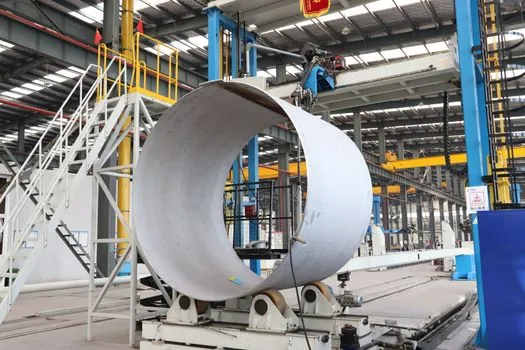
Production-line and laboratory instruments increasingly expose SCPI over USB-232, RS-232 and RS-485, with a Handler port for PLC or fixture integration; the AT6820x family lists all three serial options plus a HANDLER interface and accepts up to 10 internal plus 10 external USB-disk setup files for fast job changes [S2]. A 1 V resolution on a 1 V–1000 V programmable source allows the same instrument to step through a sequence of low-voltage diagnostic points without manual reconnection, which is useful for hybrid EV and battery-pack EOL where multiple isolation barriers must be checked under differing bias conditions.
For DC-power-system insulation monitoring, the szxrdt JYCL6.0 line covers 48 V / 110 V / 220 V bus systems with 600 expandable branch channels, ±0.2% bus voltage accuracy, ±2% branch insulation resistance accuracy, ≤3 s bus and ≤20 s branch alarm response, and CE-marked safety/EMC compliance; communication options include CAN, RS-232 and RS-485, with relay dry-contact output rated 220 V/3 A AC or 220 V/0.2 A DC for SCADA tie-in [S5]. This is a different duty class from portable testers: the unit stays online, watches leakage continuously and pages on threshold breach, rather than being applied for a one-shot measurement.
Selection matrix by duty and who should NOT buy the mainstream option
A pragmatic shortlist maps four duties to four tool classes: (1) appliance production or field service on LV circuits, 500 V / 1 kV handheld, 800 kΩ–500 GΩ range, USB or RS-232 export, BS 16th-edition safety baseline; (2) motor, generator and switchgear commissioning, 5 kV portable with PI/DAR, 1 TΩ-class range; (3) HV cable, transformer and large rotating-machine diagnosis, 10–20 kV portable with guard terminal, 4 TΩ range, IP-54; (4) DC-bus or PV/HVDC online monitoring, fixed insulation monitor with 48–220 V bus compatibility, CAN/RS-485 to SCADA [S2][S4][S5].
Buyers should NOT default to a general-purpose 5 kV analog megohmmeter for online DC-bus monitoring; the instrument class is wrong because online monitors need continuous leakage-current sensing, alarm thresholds and bus-voltage isolation, none of which a portable applies. Conversely, specifying a 20 kV field unit for a household-appliance line wastes money on voltage headroom the asset will never see, and exposes operators to unnecessary HV stress; a 1 kV digital bench unit such as the 90-4K with USB export is the correct class for that line [S1][S4]. See insulation resistance tester fundamentals for the underlying measurement principle and why test voltage must track the asset's dielectric rating.
Calibration, guard terminal use and known failure modes
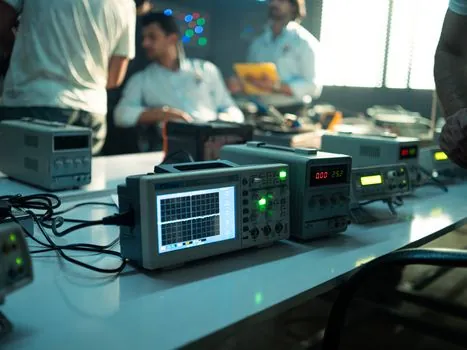
High-voltage insulation testers should be verified against a dedicated HV resistor calibration box; the SEW0011 RCB-3-1T and SEW0012 ITC8 are designed to proof any high-voltage insulation tester, analog or digital, and the manufacturer explicitly targets institutions and large industries that need their own in-house calibration capability rather than shipping instruments back [S4]. For applied technique, the guard terminal on the 20 kV MI-20KVe is the practical way to remove surface leakage from the measurement; omitting the guard on humid days can pull a 4 TΩ reading down by an order of magnitude and produce false-low PI results.
Common failure modes seen in field service: (a) handhelds left with discharged NiMH packs and no AC fallback, which kills mid-shift; the SEW0010's 8-cell battery tray plus auto-off and Ener-Save features is a direct mitigation [S4]; (b) range auto-zero drift on long cable runs, where the Leads Auto-Null key on the 1 kV class is required to null lead resistance before the high-voltage step; (c) missed external-voltage pre-check, addressed by the auto safety voltmeter at Start/Reset on the 1 kV class and by the 500 V AC/DC visual-audible warning on the 10 kV class [S4]. For related shop-floor metrology that often shares the same bench, the caliper vs micrometer selection guide provides a comparable decision framework.
Standards context and sourcing the right unit
Insulation-resistance measurement in motor and winding duty is typically referenced to IEEE 43, which sets recommended test voltages by winding rating and the PI floor already mentioned; substation and cable testing follows IEC 60060-3 / IEEE 400 series for HV test technique, while the safety baseline for handheld test instruments sits under IEC 61010-1 (low-voltage tester safety) and IEC 61557 (electrical safety in low-voltage distribution systems up to 1000 V AC / 1500 V DC) [S4]. Buyers should request the manufacturer's IEC 61010-1 / IEC 61557 declarations rather than relying on generic CE marks, because the insulation tester duties differ from a multimeter's.
For calibration, traceability through an accredited lab using an HV resistor standard such as the RCB-3-1T or ITC8 family at intervals keyed to usage hours is the practical floor; the calibration box approach lets a utility prove its fleet annually without removing instruments from service [S4]. For a wider view of the test-and-measurement bench, including dial indicator selection and laser tracker criteria, those selections share the same spec-first logic.
Close tracking items: (1) the IEEE 43 PI floor of 2.0 as a motor-winding pass criterion is the most often misquoted number in service reports; (2) the 4 TΩ ceiling on 20 kV class instruments is currently the published commercial maximum, and ranges above that remain metrology-lab territory; (3) guard-terminal usage is the single biggest unrecorded differentiator between field readings taken on humid days.
Spec-level background on the components involved: decade resistance box, and rtd pt100.