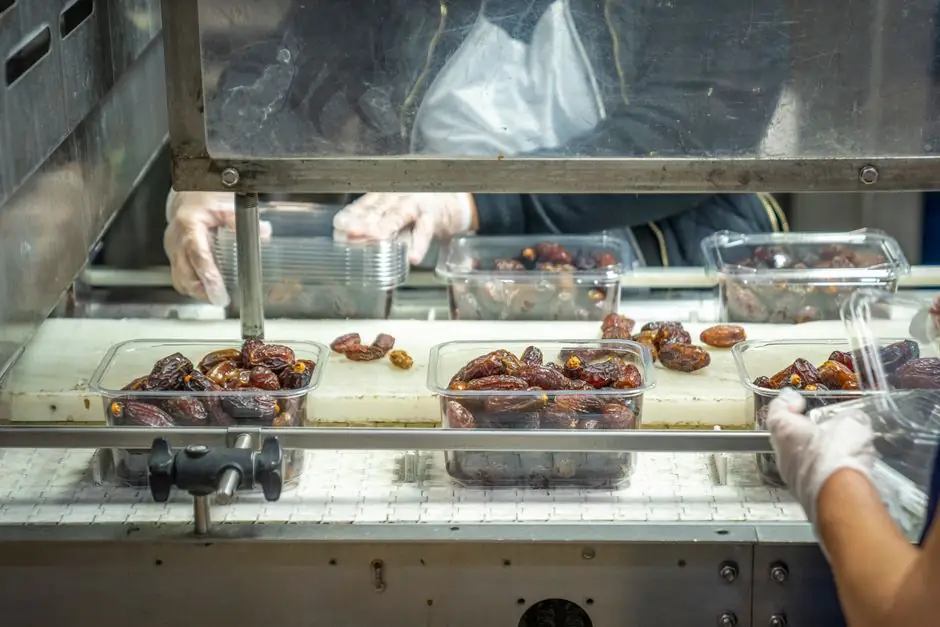
A case packing machine that applies variable date stamps must coordinate code content, print legibility, case flow, and production records within one controlled sequence [S7].
Case coding belongs downstream of case closure but upstream of palletizing and warehousing, with the coding method selected for corrugated substrate, required data, line speed, and readable-code performance [S1][S6].
Define the Coding Function at the Closed-Case Interface
Case coding applies product-identifying data directly to packaging, including barcodes, lot and batch numbers, production dates, and expiry dates [S7]. For an integrated case-packing line, the printer should mark the closed corrugated case after the final flap or tape closure, because coding before closure can put the mark on a flap, obscure it, or remove it during handling.
A dated case needs more than a clock and an ink head. Case coders can apply product information such as barcodes, lot and batch numbers, and production and expiry dates [S7]. Coding and labeling equipment integrated into vacuum-packaging machines can apply batch numbers, expiration dates, barcodes, and lot codes in real time during packaging [S2].
For line design, the coding machine should be treated as a controlled station within the packaging sequence rather than a printer added after commissioning. Successful vacuum-packaging integrations likewise place coding early in equipment design, allowing variable batch numbers, expiration dates, barcodes, and lot codes to be applied during the packaging process [S2].
Compare Coding Technologies by Marking Method
Continuous inkjet is among the inkjet printer categories listed for package date coding [S1]. For corrugated cases, the comparison must also cover print quality, line speed, contact distance, maintenance, and substrate compatibility rather than assuming that a technology suited to film will transfer directly to cases [S1][S2].
Continuous inkjet is listed as a small-character inkjet printing category [S1]. S1 lists hot-stamping coders, laser marking, and dot-peen marking equipment among the available package date-coding equipment [S1]. The available equipment families include continuous inkjet, drop-on-demand inkjet, high-resolution case coding, hot-stamping coders, laser marking, and dot-peen systems [S1].
S1 lists drop-on-demand large-character inkjet as an inkjet printer category [S1]. S1 lists high-resolution inkjet for case coding and hot-stamping coders for date coding among the available equipment [S1]. Proper setup, spacing, and material handling are supported as ways to reduce coding errors and maintain consistent, readable codes [S6].
Set Sequence, Controls, and Data Ownership
Automatic case-packer integration requires controls integration and factory and site acceptance testing as part of line planning, rather than adding a printer only after the packer is mechanically complete [S5]. A workable sequence is case erection, product loading, flap closure and sealing, case identification, verification or rejection, discharge, then palletizing.
Brenton's Mach-1 mechanical case packer combines case erecting, loading, and sealing in a compact footprint [S4]. Smooth case coding depends on proper setup, spacing, and material handling [S6].
Case coders may apply barcodes, lot and batch numbers, and production and expiry dates [S7].
Control Cardboard Movement and Print Clearance
Case coding performance depends on setup, code spacing, material handling, and the condition of the case as it moves from sealer to printer [S6]. Proper setup, spacing, and material handling are supported as ways to reduce coding errors and maintain consistent, readable codes [S6].
The date stamp should be placed on a flat panel where the case can be indexed by guides, rollers, or a registration stop.
For automated inspection, an encoder or case-detection sensor should establish print position.
Match the Printer to the Case-Packing Rate
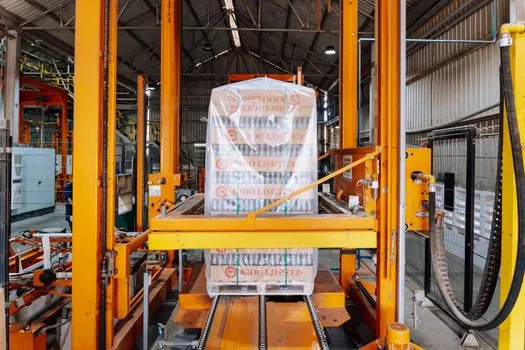
Case-packing equipment must handle the required output before a coder is considered, because a faster packer can create an uncontrolled queue between sealing and marking. Brenton's side-load case packer range runs from under 10 cases per minute to over 75 cases and trays per minute [S4]. The coding station must sustain the selected packer rate after accounting for stops, rejects, and cleaning intervals.
Throughput is not the same as effective marked throughput. For a line specified at 30 cases per minute, the coder must produce acceptable codes at that speed while the line also handles machine faults, label verification, and accumulation. Continuous inkjet is a general high-speed option for variable marking, but its consumable maintenance must fit the available operator time and contamination-control conditions [S2].
Cycle-rate planning must also distinguish top-load, side-load, mechanical, and robotic case packers. Brenton identifies top-load, side-load, and robotic automatic case packers, with add-ons such as a product settler, agitator, rotary accumulator, lane divider, and automatic magazine loader [S4]. Each architecture changes acceleration, indexing, accumulation, and the space available for inline coding.
Prove Traceability During FAT and SAT
Factory and site acceptance testing should verify the complete case-identification sequence, including the date value, lot data, barcode, printed position, and PLC handshake [S5]. At the factory, the line can be challenged with defined date changes and fault injections. At the site, the test must include the actual corrugated cases, products, closures, code formats, network path, and operating speed.
Traceability testing should prove that a coded case can be linked to its production record. Integrated coding supports time-stamped package information and supply-chain tracking, while reducing manual downstream marking and the risk of labeling errors [S2]. The acceptance record should preserve the code rule, date source, product or lot identifier, printer settings, and pass or fail result for each tested case.
Reject criteria should be objective. Examples include a missing character, an incorrect date, an unreadable barcode, a mark outside the approved panel, a code placed over a flap joint, or a PLC state that does not match the physical case. Operators need one defined stop or divert action for each condition, with recovery that prevents the defective case from rejoining the accepted stream.
Address Maintenance, Substrate, and Code Durability
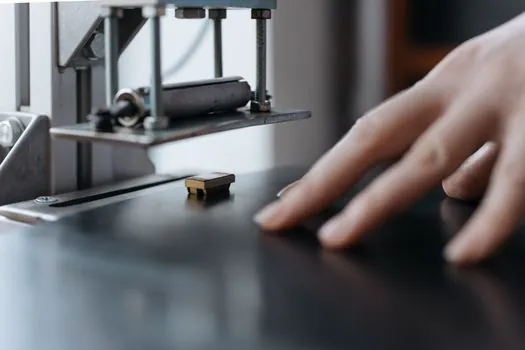
Marking consumables must be selected for the exact case material and expected storage environment. Durable Technologies lists inkjet fluids, hot-stamping equipment, laser marking, and dot-peen systems within its marking portfolio, confirming that marking method and consumable selection are part of the equipment specification rather than an afterthought [S1].
For date stamps, the acceptance test should include aging and handling conditions relevant to the shipment. Corrugated cases can flex, rub, and absorb moisture, so an initially readable mark may degrade if the ink, bonding method, or placement is unsuitable. Inkjet systems also require scheduled ink and solvent service, and those tasks must occur without introducing contamination into the product-handling area [S2].
Date-stamp content should remain legible on the closed case and be available for downstream scanning. If operational teams also need to compare manual and automated case formation, Carton Erector vs Manual Case Forming: Labor Economics provides a separate decision reference, but coding performance must still be accepted at the installed line speed.
Build a Measurable Commissioning Checklist
A production-ready integration needs four linked controls: a controlled case-flow interface after sealing, a synchronized code-data source, a print process qualified on the actual case stock, and a rejection path for missing or incorrect marks. These elements connect the capping and sealing machine interface or case-sealing operation to downstream traceability without treating either as a standalone printer project. [S2]
The final acceptance record should include cases per minute at the tested speed, the exact date and lot format, barcode or human-readable code results, print location, nozzle or print-head settings, reject behavior, sensor calibration, and maintenance intervals. During production, track coding rejects per 1,000 cases, unplanned printer stops, consumable changes per shift, and mismatches between the case code and production record.
The next engineering checkpoint is a witnessed FAT or SAT using production-representative cases. If the packer changes from under 10 cases per minute to over 75 cases per minute, the coding acceptance test must be repeated at the new operating point because print delay, accumulation, and reject handling can change with rate [S4].