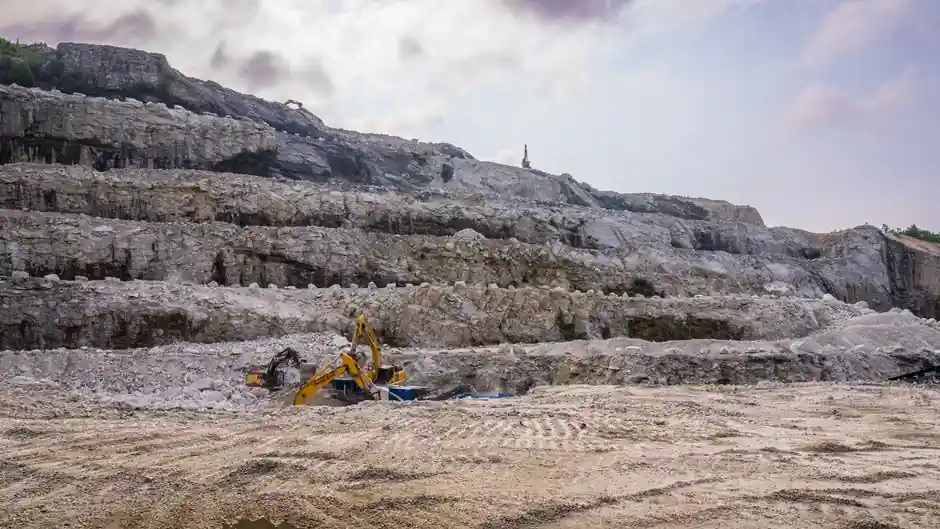
China's ionic clay resources provide a cheap, accessible source of heavy rare earth elements, including dysprosium, terbium and yttrium, making them strategically important to permanent-magnet manufacturing [S1][S6][S7].
The supply advantage comes with environmental costs: uncontrolled mining has caused substantial damage, while supply-chain impacts can persist after mines are decommissioned [S1][S4].
Why Ionic Clay Matters to Heavy Rare Earth Supply
Ionic clays are among the most important sources of heavy and critical light rare earth elements, with deposits concentrated predominantly in China [S8]. China's ionic clay rare earth resources are the cheapest and most accessible source of heavy rare earths, and they are also highly valuable [S1][S6].
Dysprosium, terbium and yttrium are disproportionately associated with ion-adsorption clay deposits [S7]. These elements matter to original-equipment manufacturers because they support the production of neodymium-iron-boron permanent magnets used in traction motors and other high-performance applications [S3].
Malaysia has published an industry model for ion-adsorption clay rare earths based on the observation that the elements occur in elemental form within the clay and can be extracted through leaching [S5]. This deposit characteristic is central to the economic appeal of ionic clays, but it also makes waste and water management inseparable from the extraction route.
Extraction Economics Are Not a Full Supply Cost
China's ionic clay rare earth resources are described as the cheapest and most accessible heavy rare earth source [S1][S6]. That comparison, however, covers extraction costs rather than the full environmental and compliance burden associated with regulated mining, leaching, separation, residue handling and site restoration.
For procurement teams, the relevant comparison is therefore not only clay grade against hard-rock grade. It must also include separation capability, reagent consumption, discharge quality, residue liability, permitting and the availability of qualified output. A deposit cannot replace an established ionic-clay supply chain until those process and environmental stages are financed and commissioned.
Water Impacts Arise Across the Mining Life Cycle
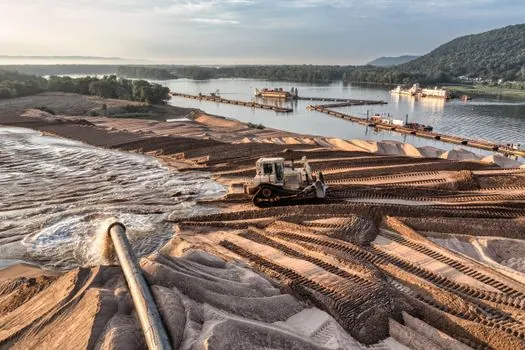
Unregulated ionic clay mining causes significant uncontrolled environmental damage, with water quality identified as a central legacy-impact issue [S1][S2]. Mining, leaching and waste storage can release contaminants where drainage, adsorption chemistry and site controls are inadequate.
Research on legacy ion-adsorption rare earth mining focuses on water-quality impacts at disturbed sites, demonstrating that abandoned or poorly controlled operations can remain an environmental liability after commercial production stops [S2]. The wider supply-chain assessment also identifies impacts across multiple stages, including effects that persist beyond mine decommissioning [S4].
The operational implication is straightforward: a new ionic-clay project cannot be judged only by ore extraction rate or leaching recovery. Each site needs a defensible water balance, treatment concept, discharge route and residue-management plan. Without those controls, low-cost feedstock can shift costs into remediation, permitting delay, community opposition and long-term liabilities.
Regulated and Uncontrolled Production Are Different Markets
Uncontrolled ionic clay mining in China has produced environmental damage significant enough to be examined as a distinct supply-chain problem [S1][S6]. This distinction matters because informal extraction can deliver material at low apparent cost while externalizing water treatment, tailings management and rehabilitation costs.
The comparison below sets the main sourcing pathways against feed availability, heavy rare earth relevance, processing burden and environmental exposure. It is a decision framework, not a universal ranking of individual deposits.
This comparison also explains why the label “heavy rare earth” does not itself constitute a supply qualification. Element content, recovery, product specification, environmental authorization and responsible separation must be verified as separate gates. Buyers can apply that sequence in How Magnet Buyers Qualify a Rare Earth Separation Source.
Diversification Needs More Than New Mining Capacity
Malaysia's 2025 industry document describes ion-adsorption clays as readily leachable because rare earth elements occur in elemental form in the clay [S5]. That technical advantage can support project development outside China, but it does not eliminate the need for downstream separation, responsible residue handling and a complete environmental baseline.
For operators, this translates into a need for long-term feedstock agreements, financing across the full process chain, clear product qualification and credible closure provisions.
The technology is not limited to permanent magnets. Rare earth elements also serve electrical and electronic equipment, catalysts, defense applications and pharmaceutical uses, while rare earth permanent magnets contribute to electric vehicles and wind generation [S3]. Demand diversification therefore does not guarantee immediate substitution for ionic-clay grades unless the required element mix and purity match the buyer’s process.
Environmental Requirements Are Commercial Requirements
Water treatment, waste containment and closure planning should be treated as core supply-chain assets rather than compliance work performed after commercial design is fixed. The evidence of legacy water-quality impacts shows that failure modes can persist after mining ends [S2], while the multi-stage environmental assessment confirms that impacts are not confined to the operating mine [S4].
Three design checkpoints provide a practical minimum. First, baseline work must characterize the water affected by mining, leaching and storage. Second, operational controls must prevent uncontrolled release of contaminated water and manage residues rather than treating them as inert waste. Third, closure provisions must define treatment, rehabilitation and monitoring obligations over the long term.
For buyers, these checkpoints should form part of supplier qualification. Ask for water-balance assumptions, discharge permits, residue destinations, monitoring data and closure funding rather than accepting a declaration that material is “environmentally friendly.” The same discipline applies to illegal or unregulated feedstock, where the absence of a conventional permit structure increases traceability and remediation risk [S1].
What Qualifies an Ionic-Clay Diversification Project
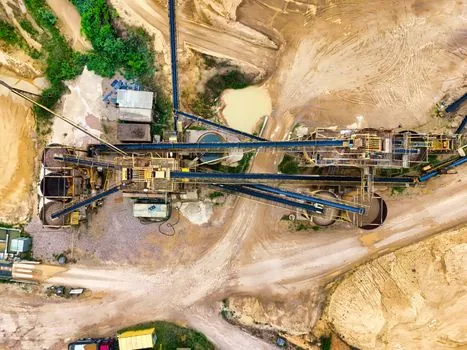
A credible project needs evidence across five gates: a drilled deposit with recoverable ion-adsorption clay, laboratory-backed leaching performance, a separation route for the targeted heavy rare earths, a funded water and residue system, and a product capable of meeting magnet or other industrial specifications. The Malaysian industry model highlights leachability as the starting technical advantage, not a complete feasibility demonstration [S5].
Supplier development should proceed in stages. Begin with resource and water-sampling data, then verify recovery through controlled tests, audit downstream separation options, and require closure provisions before awarding long-term offtake. The 13-constraint survey framework indicates that technology alone is insufficient because commercial uncertainty and geopolitical influence remain material barriers [S3].
The next trackable signals are bankable separation and residue plans, permitted discharge performance, qualified heavy rare earth output, and contracted supply outside the dominant Chinese production base. Those milestones will show whether ionic clay diversification is becoming an investable supply chain or remaining a collection of undeveloped deposits.