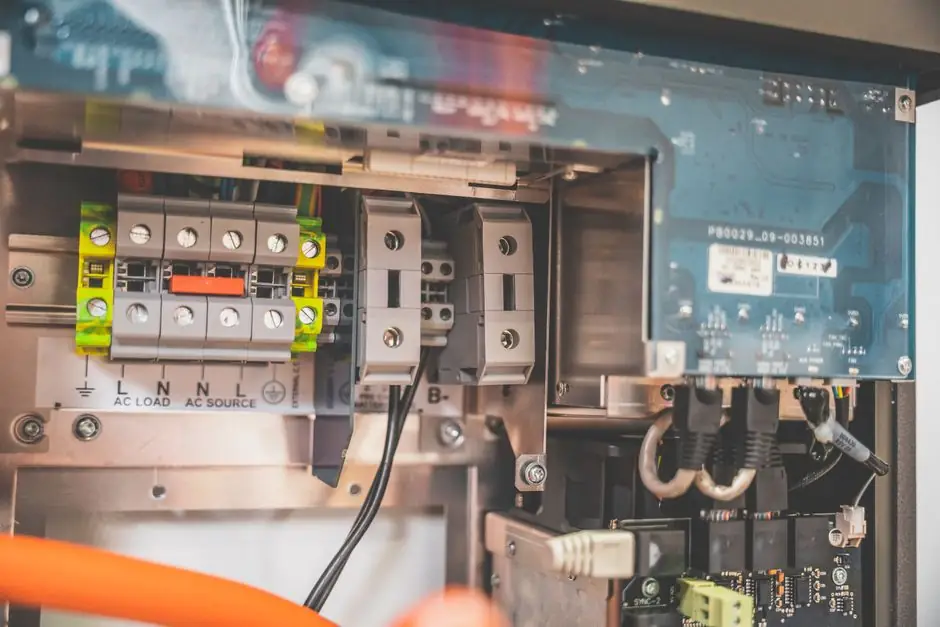
Ex d flameproof enclosures rated IP66 and NEMA 4X are the default build for Zone 1/Zone 21 field installations, delivering both internal-explosion containment and dust-tight plus high-pressure water-jet ingress protection on a single housing [S1][S2].
Copper-free aluminum, AISI 316L stainless, and GRP (glass-reinforced polyester) housings all appear on current ATEX/IECEx certified SKUs at IP66, with operating windows typically from -40 °C to +55 °C or +60 °C depending on the gasket compound and surface finish [S3][S5][S9].
What IP66 + Ex d Actually Means on a Nameplate
The "IP66" ingress code is defined under IEC 60529: the first "6" denotes dust-tight (no ingress of dust, vacuum test), and the second "6" denotes protection against powerful water jets (12.5 mm nozzle, 100 L/min, 100 kPa at 3 m) [S5]. On the same nameplate, "Ex d" is the IEC 60079-1 flameproof concept that requires the enclosure to contain an internal explosion of the declared gas group and cool escaping gases below the auto-ignition temperature of the surrounding atmosphere through a defined flame path [S1][S2]. The two ratings are independent but co-applied: IP66 addresses the environment, Ex d addresses the hazard, and the explosion-proof electrical enclosure must satisfy both to be specified for a Zone 1/2 or Zone 21/22 site.
Most 2026-vintage Class I Div 1 enclosures from established vendors carry NEMA 4X alongside IP66, with 4X adding corrosion-resistance verification (typically a 200-hour salt spray pass) on top of the IP66 dust/water baseline [S2][S3]. Sureall's published data card for its C1D1/C2D1 SKU family lists 250 A to 1200 A main bus ratings, ATEX/IECEx + UL/CSA group coverage (Group A, B, C, D plus IIB/IIC), and a -40 °C to +55 °C ambient window at IP66 / Type 4X [S3].
Material Trade-Offs at the Same IP66 + Ex Rating
Material is the first decision branch once IP66 + Ex d is fixed, because it sets weight, corrosion behavior, magnetic permeability, and tensile strength without changing the certification footprint [S4]. A direct comparison on the three most common builds:
Cast aluminum (often copper-free, ≤0.4% Cu for Group IIC safety): density ~2.7 g/cm³, tensile strength 90–600 MPa, melting point ~660 °C, non-magnetic, lower mass simplifies offshore and skid mounting. Limitation: lower tensile ceiling than steel and softer against mechanical impact [S4].
AISI 316L stainless steel: density 7.85 g/cm³, tensile 250–2000 MPa, melting point ~1370 °C, non-magnetic in the 316L annealed condition, best-in-class corrosion resistance for marine and chemical exposure. Limitation: ~3× the weight of aluminum on the same footprint, which affects lifting plan and bracket sizing [S4][S9].
GRP (glass-reinforced polyester): used in increased-safety Ex e housings and some Ex d variants, lower mass than aluminum, fully non-conductive, immune to galvanic corrosion. Limitation: lower mechanical impact tolerance and lower UV/chemical ceiling than 316L on offshore decks [S1][S5].
Certification Stack: ATEX, IECEx, and UL/CSA on One Box
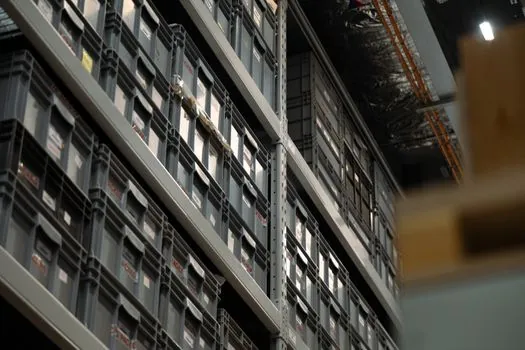
An IP66 + Ex d enclosure aimed at international projects typically carries three independent certifications: ATEX 2014/34/EU (EU), IECEx (IEC TC31 scheme), and UL/CSA (North America), and the test program must cover the same gas group, ambient window, and impact/IK rating under each scheme [S1][S2][S3]. Larson Electronics' C1D1/C2D1 copper-free aluminum terminal-block enclosure, for example, is published with both ATEX/IECEx and UL listings at IP66 on a single SKU, simplifying cross-region spec writing [S6].
Zoning translation is mechanical: Class I Div 1 ≈ Zone 1 (gas), Class I Div 2 ≈ Zone 2, Class II Div 1 ≈ Zone 21 (dust), and a single enclosure often lists both notations on its nameplate so the same asset can move between NEC/CEC jurisdictions and IEC-based jurisdictions without re-certification [S1][S2].
Selection Criteria Beyond the Nameplate
Five decision points typically govern an IP66 + Ex d spec after certification is locked: gas group (IIB vs IIC, where IIC covers hydrogen and acetylene and forces tighter flame-path machining), ambient temperature window (gasket compound sets the lower bound; surface finish and gasket set the upper), cable entry thread type and range (M20–M63 is standard, NPT adapters are common for North American projects), internal usable volume (drives max dissipated wattage and component count), and mounting configuration (wall, floor, or pole) [S3][S5].
Cable entry is the most overlooked failure point: an IP66 + Ex d enclosure is only as good as the explosion-proof junction box gland stack, and mismatched thread standards (metric on enclosure, NPT on conduit) are a recurring rejection cause at FAT. A peer article on Ex d cable gland sealing walks through the thread, compound, and torque layers that keep the IP66 rating intact at the entry.
Who Needs IP66 + Ex d, and Who Does Not
It is the right call for: Zone 1/21 oil and gas upstream and midstream skids, offshore platform junction and control cabinets, chemical plant marshalling rooms with outdoor exposure, and any location with simultaneous dust and powerful water-jet exposure (deck wash-down, mining dust, pharma clean-in-place) [S1][S2][S5]. It is overkill for: clean indoor Zone 2 control panels where Ex e or Ex nA suffices, Zone 0 locations where Ex ia (intrinsically safe) is the only accepted concept, and benign indoor MCC rooms where a NEMA 1 or IP54 cabinet meets the actual environmental load [S1][S3].
Choosing the wrong concept costs on three axes: certification cost (third-party retest if the wrong Ex protection type is specified), weight (GRP where stainless is needed, or steel where aluminum would survive), and lifetime (GRP in direct UV without a canopy degrades; mild steel without 316L in a salt-spray zone fails the 4X corrosion test inside 24 months) [S4].
Limits, Failure Modes, and What the Rating Does Not Cover
IP66 is an environmental rating, not an explosion rating: it says nothing about whether the enclosure can contain an internal gas ignition. That job is owned entirely by Ex d and its flame-path geometry, impact resistance (typically 7 J per IEC 60079-0 for Group II), and IP66 cable entry integrity [S1][S4]. Field failure modes reported across the 2024–2026 OEM literature cluster around four issues: degraded silicone gaskets after 5–7 years in UV-exposed offshore service, missing or under-torqued flame-path bolts after maintenance access, mixed thread standards at cable entries, and aluminum enclosures in Group IIC hydrogen service failing the ≤0.4% copper limit because of substitute alloy lots [S2][S3][S4].
Trackable signals worth watching: the IEC 60079-0 / 60079-1 revision cycle for ambient low-temperature limits (current published floors sit at -40 °C across most vendors but some -60 °C polar-rated SKUs are now appearing), the spread of 1000 A-class IP66 + Ex d enclosures on renewable-energy BESS sites, and any consolidation of NEMA 4X + IP66 + ATEX/IECEx onto single part numbers to cut spec writing for global EPCs [S3][S5].