
Three geographic clusters dominate the Made-in-China.com and HKTDC supplier listings for laser distance meters visible on 2026-07-09: Changzhou in Jiangsu for surveying-grade handhelds, Chengdu in Sichuan for OEM sensor modules, and Nantong in Jiangsu for trading-company export channels [S1][S3][S6]. Changzhou Liansheng Photoelectric Technology Co., Ltd — founded 2021, classified as a national high-tech enterprise — lists Laser Level, Laser Distance Meter, Rotary Laser, and Laser Rangefinder as its four main product lines from No.128 Hanjiang Road, Xinbei District, Changzhou [S4]. Changzhou Ruide Instrument Co., Ltd., a manufacturer/factory on No.11 Qinglong Road, Changzhou, is described in its company introduction as the largest equipment-manufacturing base in the national surveying-and-mapping equipment industry, with total-station production running in parallel to its laser distance meter line [S3].
Chengdu JRT Meter Technology Co., Ltd, founded in 2004, positions itself as the largest laser distance sensor manufacturer in China and lists a 2018 product milestone — the U81, marketed as the smallest phase-shift laser distance sensor — followed by a 2019 expansion into lidar sensors [S2]. Its Made-in-China.com showroom profile carries an unusually broad certification stack: ISO 9001, ISO 9000, ISO 14001, ISO 14000, ISO 20000, QC 080000, ISO 10012, and ISO 17025, with business scope covering Electrical & Electronics and Instruments & Meters [S6]. On the trading-company side, Nantong Gaide Machinery Co., Ltd (Donghuang Area, Lvsi) operates as a Trading Company established 2014-09-04 with 2 employees, packaging laser distance meters alongside airless paint sprayers and laser levels as combined export offerings [S1].
FOB Price Bands and MOQ Range on Made-in-China.com
Laser distance meter listings on Made-in-China.com's Rangefinder product index show a FOB price band of US$30.00–85.00 per piece across Chinese OEM offers, with MOQs commonly set at 1 piece on sample-tier listings from Chongqing Dontop Optics Co., Ltd. and other verified suppliers [S5]. The Digital Rangefinder multi-search page exposes a parallel pricing tier: Negotiable pricing on 1-piece MOQ for Full-Digital Gauss Meter / Tesla Meter RAY-1600CH from Raylabel Instrument Co., Ltd. (Shanghai), and 10-piece MOQ entries from Apresys (Shanghai) Precision Photoelectric Limited [S7]. Listings on the Laser Distance Measure Price index further confirm a 60 m laser distance meter with LCD display and retractable tape measure on the product-spec page, signalling that the 40–60 m range remains a default hand-tool specification in this sourcing channel [S8].
For spec-driven selection criteria, laser distance meter sizing logic covering range, accuracy, laser class, and interface bands maps the same supplier offering against engineering requirements rather than price alone. The current Made-in-China price corridor (US$30–85 FOB) sits firmly in the consumer/construction-hand-tool tier; industrial-grade phase-shift modules from JRT are not surfaced in that price index and are quoted through the laserrangesensor.com factory channel [S2][S5].
Certifications and Supplier Type Mix
The 2026-07-09 supplier snapshot shows three distinct supplier-type profiles that procurement teams should separate before issuing an inquiry: (1) pure manufacturers with in-house R&D (Changzhou Ruide, Changzhou Liansheng, Chengdu JRT), (2) manufacturer + trading-company hybrids (JRT, which also operates an export trading arm), and (3) pure trading-company export brokers (Nantong Gaide) [S1][S3][S4][S6]. Certification coverage is uneven: JRT's Made-in-China profile carries an eight-standard ISO stack, while Changzhou Liansheng's profile emphasises its national high-tech-enterprise status without enumerating ISO standards [S4][S6]. HKTDC's sourcing platform also lists laser distance meter offers — for example, the KJ Test-Meters (HK) Limited product detail indexed under part code 1X20VCPB — providing a Hong Kong channel parallel to the mainland B2B directories [S9].
Buyers comparing offerings against the how-to-choose reference covering range, accuracy, and laser class should weight certification depth against application risk: a CE-marked, ISO 9001-backed Chengdu JRT unit is the appropriate choice for OEM sensor integration, while a Made-in-China-verified trading-company offer from Nantong is a lower-friction path for branded hand-tool resale where the buyer carries the compliance burden [S1][S6].
Application Segments and Sensor Technology Split
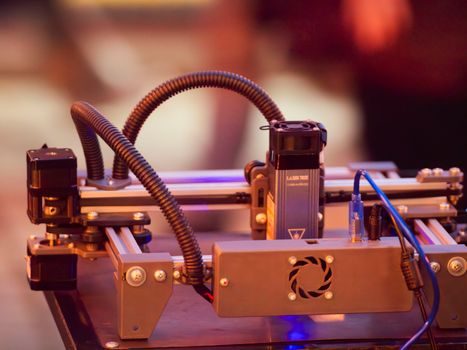
Chengdu JRT's product history — phase-shift distance sensors from 2004, the U81 phase-shift module in 2018, lidar sensor production from 2019 — anchors the OEM / industrial-automation end of the supplier map, where modules ship to integrators building proximity, level, and positioning subsystems [S2]. The Changzhou cluster (Ruide, Liansheng) is built around surveying-and-mapping heritage — total stations, rotary lasers, line lasers — which positions their laser distance meters for construction layout, interior fit-out, and civil-surveying channels rather than factory automation [S3][S4]. Chongqing Dontop Optics and the digital-rangefinder listings on Made-in-China.com cover the consumer-tier hunting and golf-rangefinder segment, where the US$30–85 FOB band is the rule [S5][S7].
For food-and-beverage plant buyers, the same Changzhou and Chengdu suppliers also surface, but the selection logic shifts: wash-down IP rating, stainless wetted parts, and laser class 2 (not class 3R) are the gating criteria, and very few of the standard Made-in-China.com hand-tool listings meet that bar without modification [S5][S8].
Comparison: Supplier Type vs Decision Criteria
Lining the three supplier types against four procurement criteria gives a clean read for sourcing managers: (1) Unit cost — trading-company Nantong Gaide and consumer-tier Changzhou / Chongqing offers cluster at US$30–85 FOB; JRT OEM modules sit above that band and are quoted per spec [S1][S2][S5]. (2) Certification depth — JRT carries the eight-standard ISO stack; Nantong Gaide does not enumerate ISO status on its profile [S1][S6]. (3) Lead time / MOQ flexibility — Made-in-China.com index pages show 1-piece MOQ on sample-tier offers and 10-piece MOQ on some Shanghai-tier entries, supporting small-batch trial orders [S5][S7]. (4) Technical support and R&D — Changzhou Liansheng (founded 2021, national high-tech enterprise) and JRT (founded 2004, in-house U81 and lidar development) both indicate active R&D, while Nantong Gaide, a 2-employee trading company, is a channel play, not an engineering partner [S1][S2][S4].
Standards, Compliance and Sourcing Levers

For European-bound shipments, ATEX 2014/34/EU and the IEC 60079 explosion-protection series are the gating compliance frame for any laser distance sensor deployed in hazardous-area process plants, while CE marking under the relevant directives remains the baseline for hand-tool imports [S1][S6]. For OEM sensor integration, the JRT profile's ISO 9001 + ISO 17025 combination is the most explicit calibration-and-test accreditation visible in the 2026-07-09 supplier snapshot [S6]. Trading-company channels (Nantong Gaide) consolidate mixed-brand containers but do not transfer CE/ATEX responsibility — the importer of record carries that load, which is a hard cost when the destination is the EU or UK [S1].
Engineering buyers should treat the Made-in-China.com price index as a starting point and pull the laserrangesensor.com factory channel for phase-shift and lidar modules, then validate certification scope (laser class, IP rating, EMC) against the IEC 60825-1 laser-product safety standard family before issuing a PO [S2][S5]. HKTDC's sourcing platform remains a useful parallel channel for buyers who prefer Hong Kong-issued paperwork over mainland-China-issued commercial invoices [S9].
Trackable signals to watch over the next sourcing cycle: Chengdu JRT's next post-2019 lidar generation (no public 2026 release date in current research), any new ATEX/IECEx-certified laser distance sensor listing from a Changzhou-based manufacturer, and shifts in the Made-in-China.com US$30–85 FOB corridor as RMB/USD moves through 2026 H2. Verifying these three nodes against the JRT factory channel and the consumer/industrial laser distance meter reference is the next concrete step.
For component-level specifications, see laser level.