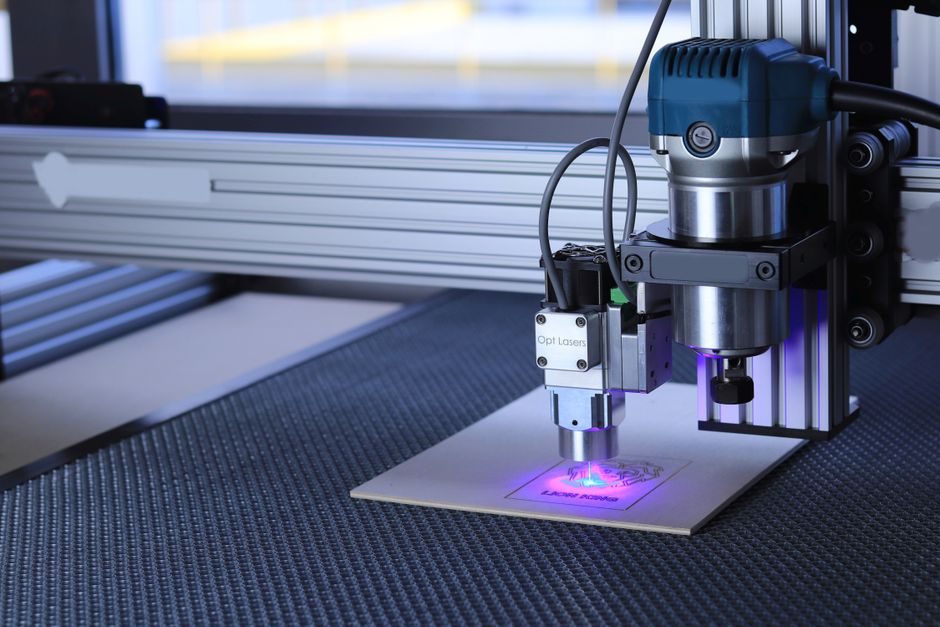
Industrial laser tracker list prices span roughly $20,000 for a Chinese-built interferometer unit like the Chotest GTS3300 up to $200,000+ USD for a Hexagon Absolute Tracker 9306 / FARO Vantage S6 class 6-DoF system, with most North American shops landing in a $40,000–$90,000 sweet spot for the head alone [S1][S2][S5].
What shifts a quote by a factor of 4–8 between two otherwise equivalent systems is rarely the laser head itself — it is the probe package, the metrology software license, annual calibration, and the warranty tier bolted onto the PO. PFTS-style alignment service providers in Canada and the US openly target hydro-generation and large-machine-tool users with a rental-plus-service model rather than a capital sale [S3]. For a buying engineer, the correct unit of comparison is total cost of ownership over a 5-year measurement campaign, not the number on the quote header. Related: see turbine flowmeter 2026 buying guide for a similar TCO framing on flow instruments, and infrared thermometer buying guide 2026 for the optics/calibration overlap.
What "price" actually means in a laser tracker quote
A vendor quote almost always unbundles four line items: the tracker head (laser, interferometer/ADM, encoders, integrated camera), the probe kit (1.5″ SMR, 7/24″ nest, break-resistant SMR, T-Mac or T-Probe), the software (SA, PolyWorks, SpatialAnalyzer, Verisurf, Rhinoceros plug-in), and the service plan (annual calibration, loaner, on-site response). [S1]
Hexagon, FARO and API Services publish a base head price and let dealers stack accessories, while Chinese vendors such as Chotest typically bundle interferometer + automatic target recognition + machine-tool macros into a single SKU, which is why a GTS3300-class system surfaces in the $20,000–$35,000 band on B2B catalogs [S1]. The 259-page IndustryArc market study (updated 2023-07) sizes the global laser tracker market on a 2021–2026 horizon and is the cleanest public source for installed-base and ASP band data [S2]. A typical FARO ION with target tooling kit surfaces on Korean B2B export portals as a refurbished/used offering, which is the practical floor for budget buyers who still need IFM or ADM absolute-distance performance [S5].
Hardware price bands by class
New 6-DoF absolute trackers (Hexagon AT930, AT960, FARO Vantage S6 / S7, API R-12 / R-20 with Active Target) generally quote $80,000–$200,000+ USD for the head, with the camera-assisted Vantage and the larger-measurement-volume AT960 sitting at the top of that band. [S2]
Pre-owned or refurbished 6-DoF units in good calibration usually land at $35,000–$70,000 USD and are the entry point for most independent alignment shops [S5]. Mid-range interferometer trackers with automatic target recognition — the Chotest GTS3300 family being the canonical example — list in a $20,000–$45,000 USD band and target machine-tool users who do not need 6-DoF probing [S1]. Service-only "rental with operator" models, where PFTS and similar firms bring the tracker to the site, are quoted per-shift in the $1,500–$4,000 USD range for hydro and heavy-industry jobs [S3]. The IndustryArc 2021–2026 outlook treats this segmentation as the dominant cost-axis — head ASP, not unit shipment count, drives revenue [S2].
The four line items that swing the total

Probe packages add $5,000–$25,000 USD depending on whether you need passive SMR spheres, break-resistant carbon SMRs, hand-held probes (T-Probe next-generation), or a T-Mac/T-Scan hybrid for 6-DoF dynamic measurement. [S3]
Software is the silent multiplier: a perpetual license with one seat runs $5,000–$20,000 USD, while a multi-seat, network-floating license with parametric GD&T and point-cloud alignment can climb past $40,000 USD over a 5-year maintenance window. Annual factory calibration is typically 5–8% of head list price ($2,500–$12,000 USD/yr) and is non-negotiable for ISO 9001 / AS9100 shops because beam-misalignment and ADM zero-drift are reportable in audit. Warranty uplifts from 1-year standard to 3-year with 48-hour loaner can add 10–20% to the PO but cut downtime risk dramatically. Budget buyers who skip these four line items almost always re-buy within 18 months, which is why a $40,000 used FARO ION can end up costing more than a $90,000 new FARO Vantage with full coverage [S5][S2].
New vs used vs service-rental — who each model is for
A new mid-range interferometer tracker is the right call for captive metrology rooms in CNC machine-builder plants, where the laser head is bolted to a fixed pillar, used weekly, and amortized over 7–10 years — the Chotest GTS3300 class fits this slot [S1].
A new top-tier 6-DoF system is the right call for aerospace tooling, large-dimension turbine alignment, and any shop running AS9100 audits where probe-traceability certificates and full OEM calibration history are contractual deliverables. A used / refurbished 6-DoF unit is the right call for independent alignment contractors whose revenue model is per-job, not per-shift, and who can absorb the calibration-cycle risk in exchange for half the capital cost [S5]. A service-rental model (PFTS-style) is the right call for one-off hydro-generator, large machine-tool rebuild, or forensic measurement campaigns where the truck-roll is acceptable and the measurement campaign is shorter than a typical lease [S3]. The IndustryArc 2021–2026 report sizes the service-rental subsegment as a growing share of total revenue, not a side note [S2].
Standards, calibration, and the audit trail
Factory calibration of an industrial laser tracker is normally traceable to national length standards through an interferometer-based beam-line and an ADM zero-point verification against a known baseline bar; vendors document this on the calibration certificate that ships with the unit. [S4]
AS9100, ISO 9001 and IATF 16949 audits do not name a specific laser-tracker standard but do require evidence of measurement-system calibration, which is why the annual calibration line item is non-optional in regulated industries. ASME B89.4.19 is the closest US standard governing laser-based spherical-pole measurement systems, and ISO 10360-style concepts apply to the linear-length performance verification. Buyers in aerospace and medical-device contexts should require the OEM certificate with NIST or NPL traceability on every annual calibration, and should budget the cost of sending the head back to a factory-calibrated baseline bar at 12-month intervals. The IndustryArc 2021–2026 outlook flags increasing customer demand for traceable, audit-ready calibration as a price-supporting trend [S2].
Decision matrix: pick the cost model that matches the workload
Use this as a quick filter before you collect quotes. Workload pattern (jobs per year) is the single biggest cost-driver, not measurement volume or accuracy class. [S5]
• Captive metrology room, 200+ jobs/yr, fixed setup → New mid-range interferometer tracker ($20k–$45k), bundle software perpetual, 3-yr warranty. Best fit: Chotest GTS3300-class [S1].
• Captive aerospace/tooling, 100+ jobs/yr, 6-DoF probing required → New top-tier 6-DoF ($80k–$200k+), full probe kit, network-floating software, 3-yr warranty with loaner. Best fit: Hexagon AT960, FARO Vantage S6/S7, API R-series.
• Independent alignment contractor, 20–60 jobs/yr, mixed workload → Refurbished 6-DoF ($35k–$70k), conservative probe kit, 1-yr warranty, self-insure the rest. Best fit: used FARO ION / Vantage [S5].
• One-off hydro / large-machine-tool campaign (< 5 jobs total) → Service-rental from a regional provider ($1.5k–$4k/shift, head + operator + report). Best fit: PFTS-style regional service [S3].
For an apples-to-apples 5-year TCO comparison, fold software maintenance (15–20% of license list/yr), annual factory calibration ($2.5k–$12k/yr), expected probe breakage (budget 5–10% of probe kit value/yr), and one warranty uplift into a single number before you compare quotes. The IndustryArc 2021–2026 segmentation supports this approach as the standard method vendors and large buyers use internally [S2].
Hidden costs and the failure modes that eat the budget

Probe damage is the single largest unplanned cost on a laser tracker fleet — a dropped 1.5″ SMR with its nest is a $1,500–$3,000 USD replacement, and a broken T-Mac arm runs $8,000–$15,000 USD, so shops that skip the break-resistant SMR upgrade usually lose that saving in the first year. [S6]
ADM (absolute distance meter) zero-drift is the second-largest budget line and is the dominant reason a 6-DoF head must be sent back for annual calibration; ignoring the warning signs (drift > a few µm/m across a 2 m baseline bar) voids AS9100-grade audit traceability. Environmental control matters: a tracker operated outside its 15–30 °C / 20–80% RH envelope without an environmental enclosure will fail ADM linearity checks within 6–12 months. Software-version lock-in is the third trap: a perpetual license on an unsupported major version often forces a re-license fee at the next audit, so always price the next major upgrade into the 5-year TCO.
Trackable signals over the next two quarters: (1) the IndustryArc 2026 update of its 2021–2026 forecast, which will reset the ASP bands cited above, and (2) any move by Hexagon or FARO to bundle T-Mac-class probes into base 6-DoF SKUs, which historically compresses the accessory line item by 10–15%. For a process engineer, the cleanest next step is to run a 5-year TCO worksheet using the line items above, then validate the calibration and warranty line items against the OEM certificate before signing the PO.
Related: laser tracker, laser level, laser marker.