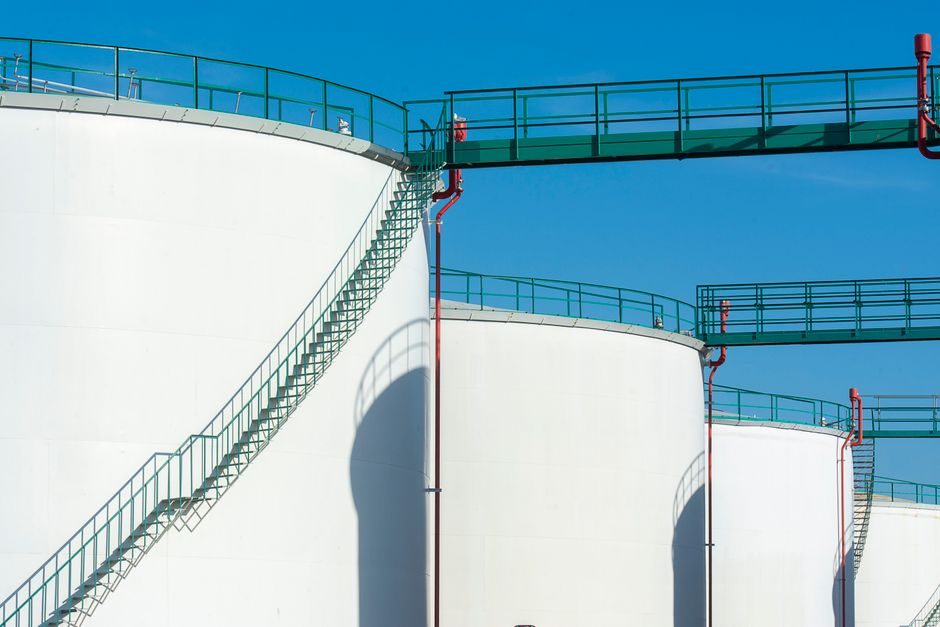
Level switch selection in 2026 is dominated by 6 working principles — float, conductive, capacitance, RF admittance, vibrating fork/tuning fork, and optical — each with a hard boundary on conductivity, coating tendency, viscosity, and process temperature that disqualifies it long before price is discussed [S1].
WIKA's 2026-05-28 product index groups level switches under one decision lens: liquid monitoring, interface detection, or solid/powder limit, then a media-property filter, and only then a certification filter (ATEX/IECEx zones, hygienic 3-A/EHEDG) [S1]. Towa Seiden's float switch product page (2026-05-13) confirms the float architecture is still the reference baseline for clean water and light oils in tank farms [S5].
Step 1 — Define the Measurement Function: Point Level vs Interface vs Continuous
Point-level detection (high alarm, low alarm, pump cut-off) is the default for a level switch; the switch trips at one setpoint and ignores everything between dead-bands [S1]. Interface detection — water under oil, foam under product, emulsion bands — needs a switch whose sensing field rejects the upper phase and reacts only to the lower conductive or denser phase, a function RF admittance and capacitance probes are tuned for, while float switches fail here because the float rides the top surface [S1].
A typical pump-protection high-level cut-off, sump-low alarm, and overflow alarm triplet in a chemical tank farm runs three float switches, one conductive probe, and one vibrating fork level switch on the same vessel — the fork handles the foam layer, the floats handle clean service, the probe handles the CIP rinse interface [S1].
Step 2 — Map the Process Medium: Conductivity, Viscosity, Coating, Foam
Conductive level switches need a minimum liquid conductivity to close the sensing circuit — they fail on hydrocarbons, oils, and deionized water unless the medium is explicitly dosed with electrolyte, while they excel on plain water, acids, and caustics [S1]. Vibrating fork switches (tuning-fork principle) are density-gated: light hydrocarbons below roughly 0.7 g/cm³ do not damp the fork enough, and highly aerated or foaming liquids can stall the piezo drive, so foam is a hard exclusion unless the OEM publishes a foam-tolerant build [S1].
Floats collapse mechanically above about 150 °C and in viscous or sticky media, but their failure mode is visible and serviceable; RF admittance and capacitance probes ride through coating, buildup, and steam because the reference electrode compensates for the deposit film on the active electrode [S1]. Optical level switches — an infrared LED and photodetector looking through a prism — work on clean, clear liquids only; a scratched or film-coated prism flips the output false, which is why they are restricted to small hygienic points and leak-detection pans, not bulk tanks.
Step 3 — Pressure, Temperature and Material Compatibility
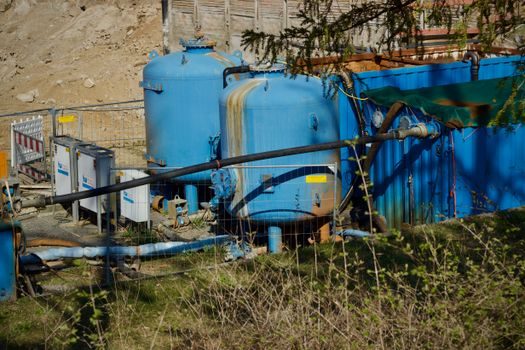
Wetted material compatibility decides the process connection more than any other variable: stainless 316L for general chemicals, PVDF or PTFE for strong acids and halogens, Hastelloy or titanium for chloride-bearing hot service, and 3-A / EHEDG-acceptable surface finishes for pharmaceutical and food hygienic lines [S1].
Process pressure is the next gate: a float with a magnetic float and a sealed reed chain survives only the mechanical rating of the float chamber — typically up to 10–16 bar for commodity stainless builds — while a guided capacitance probe mounted on a sanitary Tri-Clamp or ANSI flange rides the pressure class of the connection itself. A 3-step pre-filter (material → temperature → pressure) eliminates roughly half the candidate part numbers before any electrical specification is even opened [S1].
Step 4 — Output, Wiring and Switch Topology
Electrical output choice has tightened since 2024: most 2026 datasheets default to a PNP/NPN triac DC output for direct PLC input, with a NAMUR (IEC 60947-5-6) two-wire option for intrinsic-safety loops and a 4-pin relay (DPDT) option for direct pump coil switching up to ~5 A [S1]. A vibrating fork with a 4-20 mA + HART overlay now exists on premium OEM catalogs, useful where the same loop needs a continuous trend plus a trip; the trade-off is cost and a tighter density window than the binary fork.
For a control room that already runs Foundation Fieldbus or PROFIBUS PA, the level switch is wired as a discrete DI point, not as a bus device, and HART does not run natively on those digital fieldbuses; HART is FSK superimposed on a 4-20 mA analog loop, while FF/PA carry the digital message in the physical layer itself. Engineers who want bus integration therefore specify a bus-coupled automatic level transmitter for the continuous channel and keep the switch on a discrete input.
Step 5 — Hazardous Area, Hygienic and Approvals

For a Zone 1 or Zone 0 European site, an ATEX category 1 (Ex ia) level switch with a separate galvanic isolator is the common configuration; for North American projects, the same instrument is typically dual-certified to IECEx and CSA/UL Class I Div 1, and WIKA 2026 datasheets list both codes on the same model code [S1]. Hygienic 3-A, EHEDG, and FDA-compliant wetted finishes apply to pharma, dairy, and brewing; an industrial fork switch with a 1.5 µm Ra polished 316L fork and a Tri-Clamp ferrule is the typical build.
Marine and offshore specs layer in NACE MR0175 / ISO 15156 for sour-service H₂S environments, which the OEM is expected to call out in the certificate of conformity rather than in the marketing line. Always request the certificate, not the brochure claim — the difference between a sour-service-rated and a non-sour-service build is the heat-treatment lot and the hardness ceiling, and the wrong call here is a YMYL failure waiting to happen.
Step 6 — Comparison Matrix: 6 Technologies Across 4 Decision Criteria
The four decision criteria that actually separate the six technologies are: (1) minimum liquid conductivity, (2) tolerance to coating and foam, (3) clean hygienic acceptability, and (4) cost per point. Float switches sit on the conductivity-friendly, low-cost, hygienic-friendly corner but fail on coating and viscous service. Conductive probes are cheap and intrinsically safe, but fail on hydrocarbons and need tank wall as reference. Capacitance and RF admittance probes cover coating/foam service and high temperature but require calibration and a reference electrode. Vibrating fork switches are the most widely specified mid-range build: density-graded, hygienic, and indifferent to conductivity, but they cost 3–5× a float and stall on heavy foam. Optical switches win on small point detection and leak pans but lose on coating. Ultrasonic is normally continuous-level, but the limit-switch form is niche and rarely first choice [S1].
The cost-per-point axis generally tracks the complexity of the sensing principle: float < conductive < optical < vibrating fork < capacitance < RF admittance. The exception is hygienic / pharma certified builds, where a polished 3-A float can be priced comparably to an entry-level fork because of the surface-finish cost, not the sensing cost.
Step 7 — Installation, Commissioning and Lifecycle Failure Modes
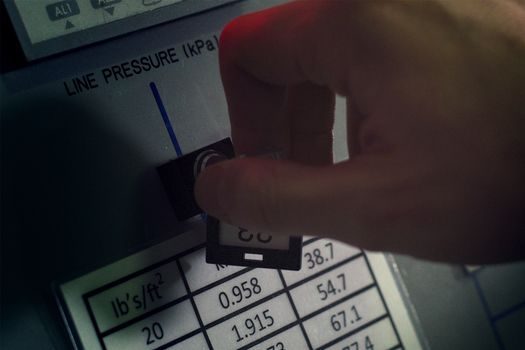
Mechanical installation often breaks the spec: a float switch hung at an angle in a turbulent sump will chatter and the relay life is consumed in weeks; the correct installation is a vertical stilling chamber or a top-mounted cage with a baffle [S1]. For a vibrating fork, the side-mount orientation matters — horizontal mounting on a liquid service is the OEM default, while vertical top-mount requires the OEM to confirm the fork geometry is not air-bound. A capacitance probe inserted in a plastic tank needs a ground reference ring; without it the reading drifts with tank geometry, and the engineer spends the next commissioning day chasing phantom trips.
Lifecycle failure modes to ask the vendor about: reed-chain fatigue on float switches above 10⁶ cycles, piezo-crystal drift on vibrating forks after thermal cycling, coating-induced false trip on capacitance probes, and prism fouling on optical switches in unfiltered service. Spare-parts policy on wetted seals and electronics modules is the next step, and a 5-year vs 10-year MTBF claim should be requested with the operating-duty profile, not as a stand-alone marketing number. The next review node is the 2026 Q3 update to the IEC 60079 series for explosive atmospheres — until that published revision is on paper, the current ATEX 2014/34/EU + IECEx 02 scheme is the binding regulatory path, and the spec should be locked against it.