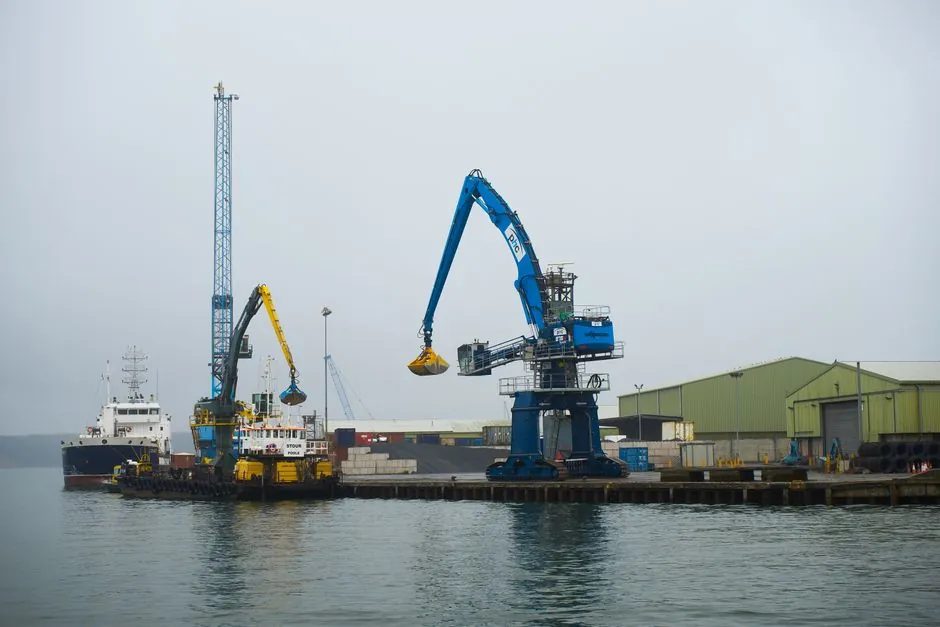
Light-duty stacker cranes are classified in the up-to-1-ton band, medium-duty in the 1-5 ton band, and heavy-duty above 5 tons, per the Maximize Market Research segmentation published 2026-04 [S8]; the heavy-duty class is the largest revenue segment of the global stacker crane market, while the light-duty class is the fastest-growing [S3].
For process engineers specifying warehouse automation, the load-capacity band determines mast structure, drive sizing, rail type, control architecture and the WMS/WCS interface class, so the light/heavy choice cascades into every downstream procurement decision.
Load Capacity Bands and What They Actually Cover
Light-duty stacker cranes (≤1,000 kg) typically handle small pallets, totes and cartons, and are common in retail backrooms, e-commerce fulfilment, pharma picking and miniload box storage [S7][S8]. The single-mast MT-1 to MT-3 range from Mecalux, for example, is rated at 1,500 kg maximum permitted load in single-deep configuration, dropping to 1,000 kg in double-deep, which keeps these machines inside the light-to-medium class [S2].
Heavy-duty stacker cranes (>5,000 kg) are the workhorses of metals, automotive, paper reel and palletized-bulk operations; the EOT Crane Kit reference line lists stacker crane capacities from 0.5 tons up to 550 tons, with spans up to 40 m, illustrating how far the heavy-duty envelope extends beyond a typical AS/RS aisle [S6]. The 1,500 kg threshold is also the point above which 4-way pallet shuttles (commonly 1,000-1,200 kg) become uncompetitive, which is why heavy pallet flows default back to rail-bound cranes [S1].
For a side-by-side reference, a comparison of three common duty classes against typical spec parameters:
Light-duty (≤1 t): lift height 5-12 m, travel speed up to 220 m/min (MT-1), single-mast common, miniload and single-pallet aisle use [S2][S8]. Medium-duty (1-5 t): lift height 8-24 m, twin-mast common, double-/triple-deep racking, mixed SKU and palletised case flow [S2][S7]. Heavy-duty (>5 t): lift height up to 45 m (MT-5 in single-deep), spans up to 40 m in industrial stacker configurations, metals/coil/automotive body handling, often with FEM/ISO duty rating upgrades [S2][S6][S8].
Selection Criteria Beyond Tonnage
Maximum load is only one of four decision variables; lift height, aisle width and throughput per hour drive the real capex delta. Mecalux specifies that taller cranes carry lighter pallets, capping the ideal pallet weight at 1,000-1,500 kg once the mast passes the 24-33 m range, which is a direct height-to-load trade-off [S2].
Aisle width separates walk-behind electric stackers (1.5-2.5 m) from counterbalance forklifts (3.0-4.5 m), and switching from forklift-width to stacker-compatible narrow aisles can raise usable racking capacity by 30-40% on a 1,000 m² footprint [S4]. This is why e-commerce sites with deep SKU counts but light unit loads cluster around light-duty, narrow-aisle stacker cranes rather than heavy units.
For a like-for-like duty comparison, the stacker crane class maps onto electric stacker classifications for floor-level units, with the same duty-cycle and FEM grouping principles applied across both. When the load profile crosses 2,000 kg or the lift height crosses 6 m, the specifier should re-evaluate drive sizing and the VFD duty rating on the hoist/travel motors, because continuous high-cycle heavy-duty operation has a different thermal demand on the drive than intermittent light-duty use [S4].
Who Light-Duty Is For, and Who It Is Not For
Light-duty stacker cranes suit facilities with unit loads up to roughly 1,000 kg, high SKU counts, narrow aisles (1.6-2.5 m), and ambient or cold-storage operation between -30 °C and +40 °C, the standard AS/RS operating window [S2][S4]. E-commerce fulfilment, retail distribution, pharmaceutical picking, and spare-parts warehousing are the canonical fits [S3][S4][S7].
Light-duty cranes are the wrong choice where pallet weights exceed 1,500 kg routinely, where the rack height must clear 30 m and stay loaded, where lifts occur in explosive or heavy-metallurgy atmospheres requiring spark-resistant reeving, or where aisle length forces a single crane to move more than 80-100 pallets/hr without redundancy [S1][S2][S6]. For these flows the heavy-duty class (or a four-way shuttle hybrid for non-pallet loads) becomes the baseline.
Use Cases Drawn From Current Industry Data
Automotive plants and metals service centres are the steady base load for heavy-duty stacker cranes, where coil, ingot and engine-block weights sit well above 5 t per pick and the duty cycle runs three-shift [S3][S6]. Hayat Kimya (consumer goods) and similar high-throughput FMCG operators use automated stacker cranes at racking heights over 131 ft (about 40 m) to maximise cubic density, which is the upper edge of single-mast heavy-class installations [S9].
E-commerce and third-party logistics (3PL) fulfilment is the growth engine for light-duty units, with Asia-Pacific cited as the fastest-growing regional market through 2035 at a 6.85% CAGR on an $8.26 billion 2025 base [S3]. US specification examples such as ACECO's stacker crane line at 4,000 lbs (about 1,814 kg) and heavy-duty welded mast with 360° rotation sit at the light-to-medium crossover, illustrating how a single product platform can be mis-categorised if the load class is not defined against the segmentation standard [S5][S8].
Standards, Safety and Sourcing Constraints
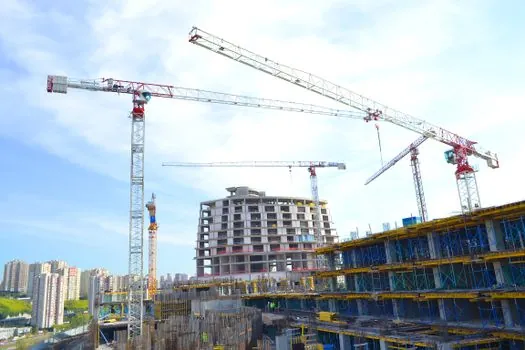
Heavy-duty industrial stacker cranes with capacities up to 550 t are typically designed to FEM/ISO duty classifications and carry CE, ISO and CNEX certification marks; the EOT Crane Kit reference documents this certification set explicitly [S6]. The same AS/RS segment also conforms to EN ISO 3691-4 driverless industrial truck safety for the AGV/automated variants, which applies to both light- and heavy-duty classes in automated operation [S3].
For cold-storage or hazardous-area deployments, confirm that the operating temperature window is at least -30 °C to +40 °C and that the WCS interfaces cleanly with the WMS, since most modern stacker cranes depend on a warehouse control system executing WMS instructions to coordinate aisle movement [S2]. When retrofitting an existing aisle, also check the bottom-rail and upper-guide-rail geometry against the mast section, because the rail system both stabilises the mast and absorbs lateral forces during fork insertion [S2].
Limitations and Failure Modes to Plan For
Light-duty stacker cranes are aisle-locked: a single crane failure halts that aisle, and adding capacity means a new aisle, not adding a second crane to the same rails [S1]. In contrast, four-way pallet shuttles decouple horizontal and vertical transport, so a single shuttle failure does not block the aisle, but they cap out near 1,200 kg and cannot replace a heavy-duty crane on raw tonnage [S1].
Heavy-duty cranes introduce different failure modes: the higher mast (30-45 m) raises the wind and seismic load on the rack structure, the larger VFD drive demands more thermal headroom (see VFD duty rating for sizing guidance), and the heavier bottom-rail forces more aggressive floor-flatness tolerances, typically tighter than FS30 over the full run [S2][S6]. A real-world decision on these trade-offs echoes the load-vs-precision argument familiar from ball vs roller linear guides, where higher capacity buys you stiffness at the cost of speed, friction and price.
Sourcing Signals Worth Tracking
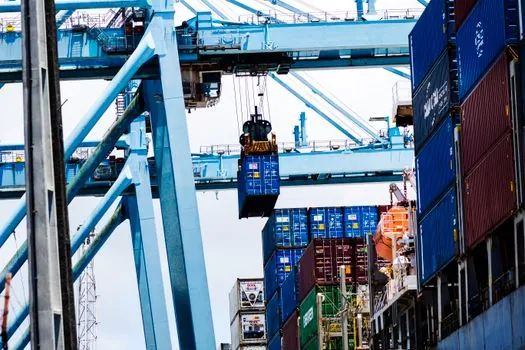
Track the MRFR stacker crane market report refresh and any new heavy-duty sub-segmentation above 10 t, as well as AGV/stacker crane hybrid launches, since Asia-Pacific and e-commerce are the named high-growth vectors for the light-duty class [S3]. Watch for the next ASME B30 / FEM duty-classification update affecting heavy-duty reeving and brake redundancy, and for WMS/WCS vendors shipping native miniload interfaces that may change the light-duty commissioning cost curve.