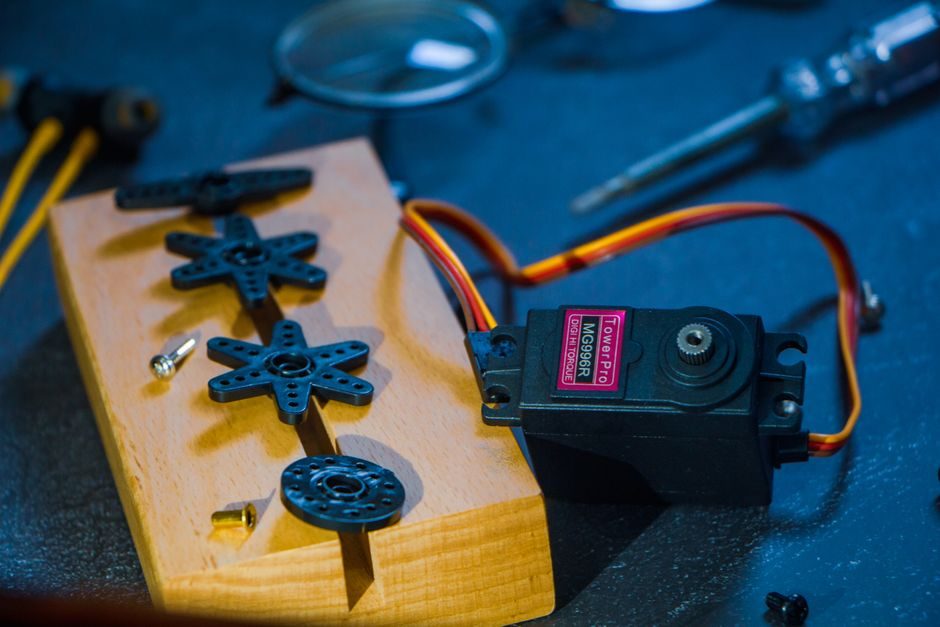
Specifying a linear actuator in 2026 starts with five hard numbers: stroke (mm), dynamic load (N), duty cycle (% or cycles/hr), required positional accuracy (mm or µm) and IP rating — get those wrong and the cheapest unit on the quote sheet becomes the most expensive field failure.
Six functional classes cover roughly 95% of industrial build sheets — electric rod, ball-screw, lead-screw, belt-driven, pneumatic and piezo — and each occupies a distinct load/speed/precision envelope rather than competing head-to-head [S1]. For a deeper look at the electromechanical building block these drives bolt into, see the linear actuator reference page.
Six Functional Classes and Their Load-Speed-Precision Envelopes
Electric rod actuators (12V/24V DC) typically deliver 150–2,000 N of push force over 50–600 mm strokes at 5–30 mm/s, and dominate adjustable furniture, medical beds and low-duty automation [S1][S2]. DewertOkin's MEGAMAT 5 family is a representative medical-grade electric linear actuator with multi-stage telescoping housings and Hall-sensor position feedback [S2]. These units are optimised for human-load envelopes (≤ 250 N continuous) and fail economically above 4,000 N.
Ball-screw actuators carry 1,000–50,000 N at 0.05 mm lead, achieving 5–25 µm repeatability and 1,000+ mm strokes; lead-screw variants drop to 0.1 mm pitch and 5–50 µm repeatability at one-third the cost but cap around 5,000 N [S1]. Belt-driven actuators run 5–10 m/s over 1–6 m strokes at 100–500 N — the pick-and-place workhorse. Pneumatic cylinders still win on raw force-per-dollar up to 50,000 N in dirty environments. Piezo actuators sit in a separate envelope: sub-nanometre resolution, 10–200 µm stroke, sub-millisecond response [S1].
Selection Criteria: Stroke, Load, Duty, IP, Feedback
Stroke is non-negotiable — a 200 mm application with a 150 mm actuator stalls or ratchets the internal limit. For screw-driven types, critical-speed and Euler-buckling limits of the extended rod cap the practical stroke-to-length ratio at roughly 1:30 for lead screws and 1:60 for ball screws — go beyond and the column whips. [S1]
Duty cycle separates toy actuators from industrial ones: most consumer-grade 12V DC rods are rated S2-15 min (15 minutes on, 15 minutes off); industrial 24V brushless DC units are rated S3 25% (5 min on / 15 min off) or S1 continuous with thermal cut-out [S2]. Feedback options ladder from on/off limit switches through Hall-sensor pulse output to absolute SSI/BiSS encoders and external linear encoders for closed-loop positioning under 5 µm. IP ratings follow IEC 60529 — IP54 is the indoor floor, IP65 is the washdown floor, IP67/IP69K is required for food, beverage and outdoor mobile equipment.
Electric Rod vs Ball-Screw vs Lead-Screw vs Belt: Decision Comparison
The four electric classes overlap most in the 100–2,000 N / 100–1,000 mm / 0.1–1 mm accuracy band, and the right pick hinges on three criteria: continuous force, repeatability and total cost over the actuator's life. [S2]
On a 500 N / 300 mm / ±0.05 mm task, an electric rod actuator typically lands at US$45–120 in 1-off pricing with 0.5 mm repeatability, a lead-screw unit at US$180–400 with 0.05 mm repeatability and 5× the life (10 million vs 2 million cycles), and a ball-screw unit at US$350–900 with 0.01 mm repeatability and 50 million cycles. Belt-driven units drop to US$300–700 but cap at ±0.1 mm and need tension re-tensioning at 1,000-hour intervals. The general rule: if repeatability ≥ 0.05 mm is required, screw-driven; if speed ≥ 1 m/s is required, belt-driven; if force ≥ 5,000 N is required, ball-screw or hydraulic.
For higher-force industrial builds where the actuator must slide along a structural frame, the linear guide or crossed-roller guide carrying the moving carriage becomes the second spec decision, and the actuator's thrust load must stay inside that bearing's dynamic load rating.
Pneumatic vs Electric: Where Each Still Wins
Pneumatic actuators deliver the lowest cost per newton of thrust (US$0.05–0.20 per N for ISO 6432/15552 cylinders) and survive 100 g shock loads that destroy electric drives; they remain the default for valve actuation, clamping, stamping and any environment with explosive dust or vapour where certification to ATEX 2014/34/EU or IECEx is mandatory [S1].
The crossover is roughly 500 N·m/s of mechanical work: below that, electric is cheaper to run; above, pneumatic's installed cost advantage holds. For cost-band context on the pneumatic side, see the pneumatic actuator price guide 2026.
Application-Specific Spec Floors

Medical and rehab (hospital beds, patient lifts, imaging tables): 24V DC, IPX4 minimum, 6,000 N static load, EN 60601-1 compliance, ≤ 55 dB(A), Hall-sensor feedback, 10,000+ cycle rated bearings [S2]. The DewertOkin MEGAMAT 5 and similar medical-grade units from German suppliers define this envelope and typically ship with 5,000–10,000 N push force over 100–400 mm strokes.
Industrial automation (conveyor diverters, indexing tables, CNC axes): brushless DC servo with absolute encoder, IP65, 50% duty cycle, 0.01 mm repeatability, fieldbus — typically PROFINET, EtherCAT or IO-Link. For 3-axis machine tool retrofits, the ball screw selection reference governs the screw spec inside the actuator. Solar tracking, agricultural machinery and mobile equipment: 12/24V DC, IP66/67, −20 °C to +70 °C operating range, EMI filtering to EN 61000-6-2/4, and 2,000-hour salt-spray on the shaft per ISO 9227.
Standards, Compliance and Sourcing Geography
European builds default to CE + EN 1570 (lifting tables), EN ISO 13849-1 (safety-related control systems, PL d minimum) and ATEX 2014/34/EU for hazardous-area builds; North American builds layer UL 508A (industrial panels), NFPA 79 (industrial machinery electrical) and CSA C22.2 No. 14. Medical and rehab equipment falls under IEC 60601-1 with regional variants (UL 60601-1 in the US, MDD/MDR in the EU). [S3]
Supplier geography is bifurcated: German and Austrian suppliers (DewertOkin, Linak-equivalent brands, Thomson, Bosch Rexroth) hold the medical and high-precision tiers; the Chinese cluster around Yuyao (Zhejiang) — including Yuyao Sanxing Mechanical & Electrical Technology — and the broader Guangdong/Jiangsu belt dominate the 12V/24V DC rod and lead-screw tier with 30–50% landed-cost advantages on 1-off and low-MOQ orders [S3]. The ball screw supplier map for the Shandong cluster shows the same cost gradient on the screw sub-component. Prototype-stage sourcing still runs through Alibaba, MedicalExpo and Thomasnet; volume production over 1,000 units migrates to direct-OEM contracts with private-label housings.
Verification Tests Before Acceptance
On servo-driven units, request the encoder resolution, positioning loop bandwidth (typically 50–200 Hz) and STO (safe torque off) response time. [S4]
Embedded-class units, including the Arm Mbed Battery_Linear_Actuator library, simplify prototype integration by exposing a battery-monitored PWM command interface, useful for solar or battery-driven mobile builds where mains power is unavailable [S4].