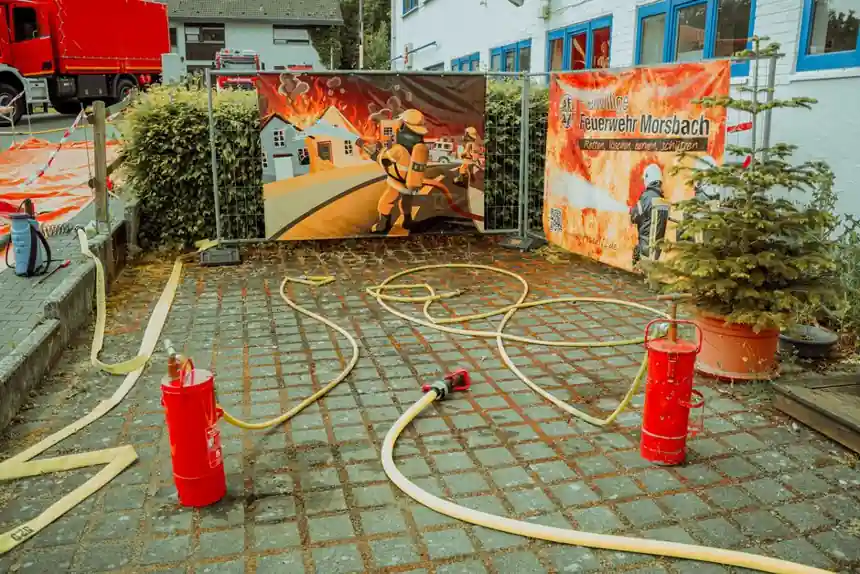
A fire extinguisher stored outdoors must remain within its manufacturer’s operating range, and a documented storage range of -40°F to 120°F applies to Kidde units [S3].
The cabinet protects against weather and corrosion but does not extend the extinguisher’s pressure, valve, hose or agent performance outside its listed limits [S3][S6].
Distinguish Extinguisher Operating and Storage Limits
Kidde directs storage of its fire extinguishers from -40°F to 120°F. Fire extinguishers should be stored between -40°F and 120°F, because storage at -40°F can result in serious damage to the equipment [S7].
Agent-specific limits can be narrower. Many water-based models have a manufacturer minimum operating rating of +5°C, while some powder models are rated for lower temperatures [S2]. Published dry-chemical operating ranges include -65°F to 125°F, compared with -40°F to 120°F for CO2 extinguishers [S5].
The engineering distinction is simple: the cabinet’s environmental protection, the extinguisher’s operating range and the agent’s freezing behavior are separate design constraints. A cabinet may block rain and wind, but it cannot guarantee that a cylinder remains within its certified temperature envelope [S2][S4][S6].
Compare the Main Outdoor Extinguisher Options
Dry chemical extinguishers offer the broadest published cold-weather operating range, -65°F to 125°F, but the selected agent and model still determine actual suitability [S5]. CO2 extinguishers use a narrower -40°F to 120°F operating range [S5].
For an outdoor cabinet at a cold-climate site, compare agents by lower-limit temperature, fire class, cylinder material and physical discharge performance. A broad range on one model does not transfer to another model in the same agent family [S1][S2][S5].
Match the Fire Risk Before the Temperature
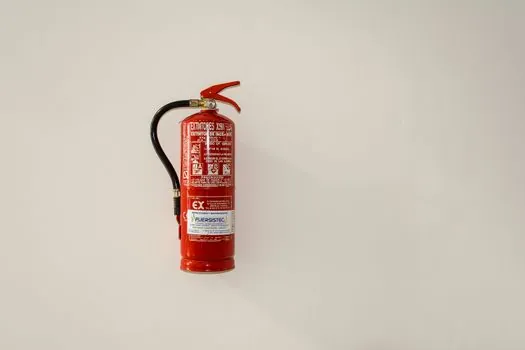
Five primary extinguisher types address ordinary combustibles, flammable liquids, electrical equipment, flammable metals and cooking oils, with multipurpose units commonly labeled B-C or A-B-C [S1]. The cabinet location must be selected around the expected fire class rather than treating one unit as a universal answer.
The NFPA recommends having a minimum 2-A:10-B:C rated fire extinguisher on every level of a home [S3]. Water extinguishers must not be used on electrical or metal fires, and water without anti-freeze should be stored above 30°F to avoid freezing [S5].
Selection should also account for handling. For heavy industrial units, the cabinet design must preserve withdrawal clearance and support the extinguisher without blocking access.
Design the Outdoor Cabinet for the Full Temperature Band
Outdoor and recessed cabinet models are available for visibility and code compliance [S8]. The enclosure should prevent direct precipitation, snow accumulation and wind-driven rain from reaching the extinguisher while maintaining service access to the pin, handle, hose and inspection gauge.
CO2 extinguishers have an operating temperature range of -40°F to 120°F [S5]. Prolonged freezing can reduce internal pressure in dry-chemical extinguishers, adding a second mechanism by which extreme cold can impair equipment [S6].
To help prevent damage, mount extinguishers on brackets or place them on a countertop for easy access [S3].
Control the Failure Modes Before Installation
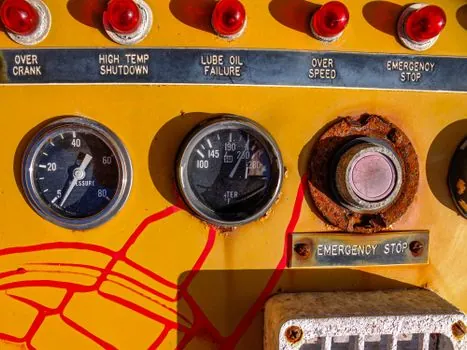
Freezing can damage the valve or hose below -40°F, reduce internal pressure in dry-chemical units and compromise water-based agents that lack adequate freeze protection [S3][S5][S6]. Heat above 120°F can shorten discharge duration, while CO2 requires particular attention because its published upper operating limit is 120°F [S3][S5].
Outdoor cabinets also face corrosion, which can affect hinges, fasteners, latches and the enclosure itself. The outdoor fire extinguisher cabinet should therefore be assessed as a maintained asset, with the extinguisher, bracket, gasket, latch and viewing features inspected together rather than treating cabinet integrity as independent of the stored cylinder [S6].
Monthly visual inspection, gauge checks and dated inspection marking are used in industrial extinguisher maintenance programs, with periodic hydrostatic testing required for pressurized units as unfired pressure vessels [S5]. For cabinet installations, add checks for water entry, ice formation, corrosion, blocked access and loss of door security to the extinguisher’s service record.
Verify Certification and Sourcing Requirements
The cabinet does not convert an uncertified or mismatched extinguisher into an approved outdoor installation, and the unit’s own model label must define its agent and operating range.
Supplier documentation should identify the extinguisher manufacturer and model, extinguishing agent, fire-class rating, operating and storage temperature limits, cylinder material, service date and applicable listing. These fields close the gap between a broad statement such as “outdoor-rated” and an installation that can be maintained against a defined environmental envelope.
Outdoor cabinets should preserve equivalent access while also considering snow burial, vegetation growth, vehicle impact and freezing of the door hardware.
Specify a Verification Checklist
Before a cabinet is ordered, record the site’s design minimum and maximum ambient temperatures in °F, identify the extinguisher agent and model, and compare both values with the manufacturer’s published range [S2][S3][S5]. Do not substitute the cabinet’s advertised weather rating for the extinguisher’s operating limit.
Many water-based models have a minimum operating rating of +5°C, while some powder models are rated for lower temperatures [S2]. A dry-chemical model with a published -65°F lower limit, or a specifically rated lower-temperature powder unit, offers a more defensible basis for selection [S2][S5].
The closing control is straightforward: record the exact operating range on the cabinet documentation, inspect the cabinet at defined frequencies, and replace or relocate the unit before the site crosses its certified temperature limit [S3][S5]. A temperature logger at the cabinet location provides the clearest evidence when site conditions vary by season or solar exposure.