Lithium battery quality programs in 2026 stack three layers — a QMS base of ISO 9001, an automotive-tier IATF 16949 overlay for EV and traction cells, and a per-cell test fixture set covering helium leak, burst and pressure-cycle verification [S2].
The suppliers setting the spec map include factory engineering consultancies such as TRU Group (active since the early 2000s on Li-ion cell and pack plants), Tier-1 Chinese structural-component and test-fixture vendors such as Shenzhen LeBeiCoo (ISO 9001 + IATF 16949, 2 invention patents and 35 utility models), and OEM pack makers such as Joypo (LiFePO4 24V–51.2V, claimed 4,000-cycle golf-cart cell) [S1][S2][S3]. A side channel is custom cell makers such as Yuxinen Energy, which emphasises "rigorous testing" and "high-performance lithium battery production equipment" as their stated QA hook [S4].
QMS Base Layer: ISO 9001 and IATF 16949 Are Now Table Stakes
ISO 9001 plus IATF 16949 is the explicit QMS pair for any Chinese Tier-1 structural-component vendor targeting new-energy-vehicle battery packs: LeBeiCoo discloses both certificates and adds 2 invention patents and 35 utility-model patents on top, a portfolio mix that lets them ship blade-battery cans, top cover assemblies, Cu-Al composite terminals and matching test fixtures from one site [S2].
For a buyer, the practical read is that IATF 16949 on top of ISO 9001 means a documented production part approval process (PPAP), advanced product quality planning (APQP), and a failure-mode library that follows each cell lot — not just a certificate on a wall. IATF 16949 in practice mandates process-capability evidence (Cpk/Ppk on critical characteristics) and a customer-specific corrective-action loop, which is why EV OEMs rarely accept an ISO 9001-only cell shop for traction packs. The same shop also has to be the source of the test fixtures, because the fixture and the cell share the same design intent and tolerance stack.
Cell-Level Test Fixtures: Helium Leak, Burst, Pressure-Cycle
The most concrete spec signal in the current sourcing map is the test-fixture set every cell or cover shop has to run: a Prismatic Aluminum Case Pressure & Burst Breathing Machine, a Prismatic Aluminum Case Pressure Resistance Machine, a Cylindrical Aluminum Case Pressure & Burst Machine, a Cover Breathing & Burst Testing Machine, a Battery Cover Helium Leak Testing Machine, and a Cover Plate Metal Debris Striking Testing Machine — LeBeiCoo publishes all six as catalog SKUs [S2].
Two engineering points follow. First, helium leak detection is the only credible leak test for sealed Li-ion cells because the leak rate threshold (commonly expressed in mbar·L/s or cm³/min at standard leak-rate reference) is below what pressure-decay methods can resolve; air decayed over 30 s on a 1 L internal volume can hide a real leak path that helium mass-spectrometry catches in seconds. Second, burst + pressure-cycle on every prismatic can is what catches the cell swelling failure mode before it leaves the cell shop — a 4,000-cycle LiFePO4 traction cell cannot survive 3 years of mobile-robot duty if the can is already micro-leaking at the laser-weld seam on day one [S2][S3].
Cycle-Life Bands by Chemistry: 4,000 Cycles Is the LiFePO4 Marketing Floor
Lithium-iron-phosphate (LFP / LiFePO4) cell vendors in 2026 commonly publish a 4,000-cycle spec at 80 % depth-of-discharge (DoD) for traction packs — Joypo lists a "51.2V 125Ah Club Car Golf Cart LiFePO4 Battery 4000 Times Cycle Life" SKU as a top product, with a sibling 36V 100Ah marine trolling motor pack rated for "long cycle life" on the same chemistry [S3].
The chemistry comparison is sharp: NMC (nickel-manganese-cobalt) traction cells trade cycle life for higher specific energy, while LFP cells trade specific energy for cycle count and thermal stability. For mobile robots (AGV/AMR) the 24V 200Ah LFP pack is widely offered with an IP65 enclosure rating, a useful spec marker because the IP rating doubles as a quality marker — IP65 means dust-tight and protected against water jets, and a vendor that publishes the rating is usually one that has run the test. Marine and RV packs (12V 100Ah–400Ah deep-cycle replacement) sit on the same LFP platform and inherit the same cycle band [S3].
Plant-Level Engineering: From Cell Prototyping to Giga-Factory Feasibility
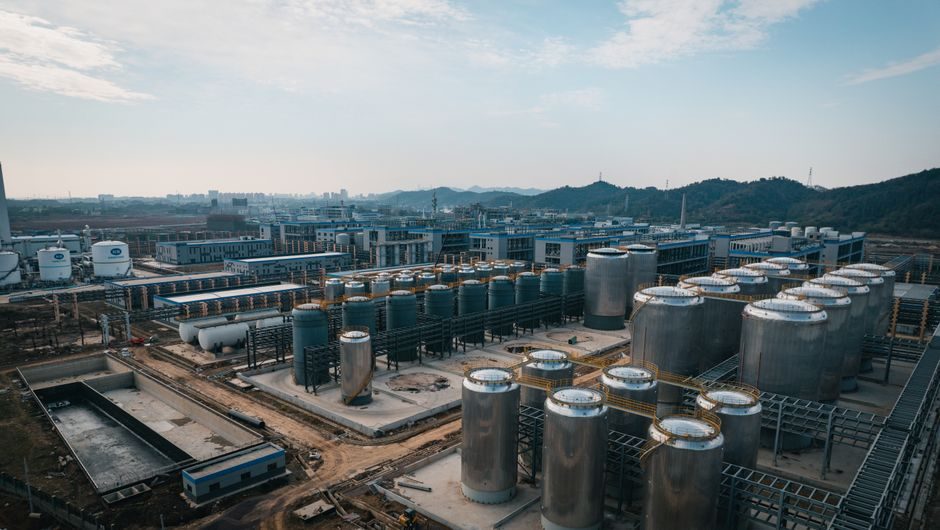
At the plant level, lithium battery quality is no longer a line item — it is a front-end engineering package (FEEP) deliverable. TRU Group (engaged in 2021 on a multi-billion-dollar Indonesian nickel-based EV cell, cathode-precursor and graphite-anode plant, with ESS cells evaluated in parallel) describes its service as the FEEP itself: detailed equipment specification before any supplier is selected, then independent verification of supplier performance claims [S1].
For a buyer reading the same engineering documents, the FEEP-anchored model means quality is defined in writing before the first cell is taped. Independent verification is the second key clause: vendors routinely over-state the throughput of a formation-and-aging cabinet or the Cpk of a laser-welding station, so an owner's-team that re-runs the test at a pilot cell catches the gap before it costs US$100 M of capex. For an Indonesian-style integrated nickel-cathode + graphite-anode + cell plant, that independence is the only thing that prevents a chemistry drift between precursor and finished cell — see also the equipment spec map in Lithium Cell Manufacturing Equipment: Process Stations, Spec Bands and Sourcing Map.
Pack-Builder vs Cell-Maker Split: Where the Quality Risk Sits

Two business models carry different quality risk. A pack builder that sources cells (Joypo model: 24V 20Ah wheelchair, 24V 60Ah solar street-light, 24V 110Ah AGV stacker, 24V 200Ah AGV/AMR mobile robot, 12V 100–400Ah deep-cycle RV, 51.2V 125Ah golf-cart, 36V 100Ah marine) inherits the cell-maker's quality and adds a BMS, an enclosure and a wiring harness — its job is to catch cell drift with incoming inspection and to publish pack-level cycle data [S3].
A cell maker (Yuxinen model: "customised lithium batteries", "rigorous testing", "high-performance lithium battery production equipment") is on the hook for electrode coating weight, electrolyte fill volume, formation protocol and aging data — and that is the layer where the IATF 16949 audit actually bites, because cell-level characteristics feed the PPAP [S4]. For a specifier, the rule of thumb: if the unit you are buying is a pack, demand the cell maker's QMS certificate as well as the pack maker's; if the unit you are buying is a cell or a structural component (can, lid, terminal), the IATF 16949 scope statement on the certificate must literally include the part number family you are sourcing.
Supply-Chain Trackable Signals to Watch
Trackable signals: (1) new IATF 16949 surveillance audit dates published by Tier-1 Chinese cell structural-component vendors in H2 2026 — LeBeiCoo's last visible reference is the 2026-04-29 InterBattery Seoul show release [S2]; (2) cycle-life claim movement on LiFePO4 traction SKUs above the current 4,000-cycle floor, which would imply new electrolyte additive or compression-bonded electrode tech landing in the catalog [S3]; (3) independent FEEP deliverables for Asian integrated cell plants of the multi-billion-dollar class, the kind TRU Group has been scoping since 2021 [S1]. Quality risk in 2026 is not the absence of standards but the gap between the QMS certificate on the wall and the test fixture in the cell shop — and the only way to close that gap is to ask for the fixture list, the cycle-life curve, and the IATF scope statement before signing the PO.
For component-level specifications, see additive manufacturing material, air quality monitor, and power quality analyzer.