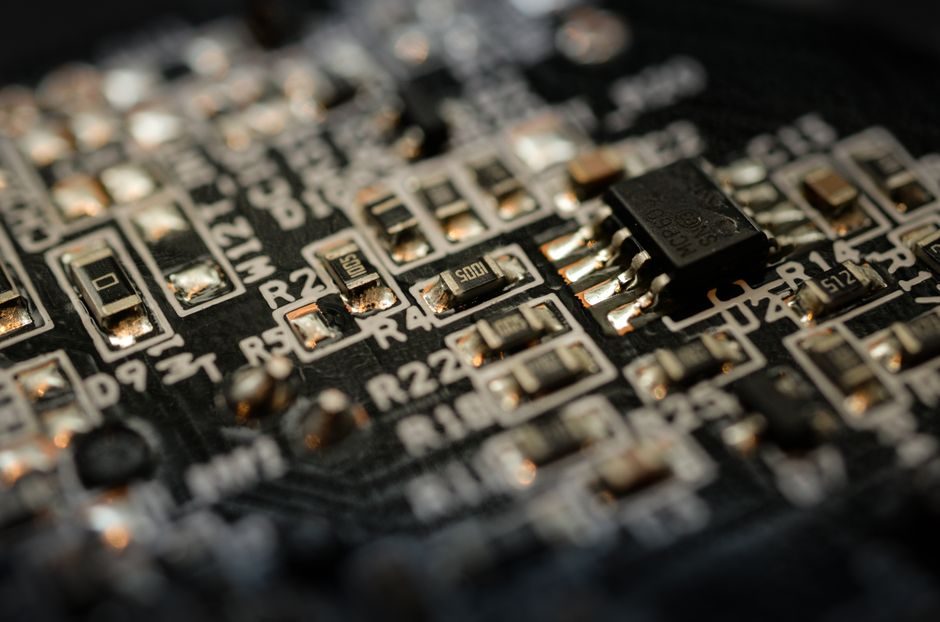
An OEM (Original Equipment Manufacturer) builds a PLC CPU, industrial controller, or networking module exactly to the brand-owner's drawings and BOM, while an ODM (Original Design Manufacturer) ships a factory-engineered reference design that the buyer rebrands [S2]. The two models diverge on IP ownership, NRE cost, MOQ, and lead time — and in 2026 most China-based CPU outsourcing sits in ODM/EMS plants in Tianjin and Guangdong [S1][S5].
For industrial buyers, the practical split is this: choose OEM when the silicon, firmware, or safety certification (UL, ATEX, IEC 61508) is yours; choose ODM when you need a working reference platform and a 4–8 week sample-to-ship path [S2][S4].
Defining OEM and ODM on the Factory Floor
OEM means the customer supplies the schematic, firmware image, and test plan, and the factory runs a contracted build [S2]. On Made-in-China's "CPU monitoring" search, Tianjin Omini Technology lists PLC CPUs (CJ1W-OD202, CQM1-PA203, SIMATIC S7-1200 6ES7214-1AG40-0XB0, S7-200 CPU 226 6ES7216-2BD23-0XB8) priced at US$100–1000/piece with a 1-piece MOQ, model-coded to the buyer's brand [S1]. That model-code, fixed-supplier, fixed-BOM pattern is the OEM signature.
ODM means the factory owns the reference design, including PCB stack-up, BOM, and firmware baseline, and the buyer applies its own label and packaging [S2]. Shenzhen Kings IoT Co., Ltd. is filed on Made-in-China as "OEM/ODM/EMS" for 4G/5G CPE, Wi-Fi router, IoT gateway, and 5G router, with a sample service declared and R&D capacity tagged ODM [S5]. Buyers on that page are buying a re-skinnable reference, not commissioning a clean-sheet design.
Selection Criteria: When Each Model Pays Off
Decision criteria line up four ways. IP control: OEM keeps the schematic and firmware inside the buyer's NDA; ODM cedes the reference to a category the factory may resell [S2]. NRE and tooling: OEM usually charges a one-time NRE of US$5,000–50,000 for fixture, test program, and certification hook-up; ODM rolls that into the unit price and amortises it across orders [S2]. MOQ and unit price: OEM MOQ often starts at 500–1,000 units to recover changeover cost; ODM accepts 100–300 units because the line is already in production, with US$100–1,000/piece on the Tianjin listings [S1]. Time-to-sample: OEM engineering samples run 6–12 weeks; ODM samples can ship in 2–4 weeks off a stock reference [S2][S5].
On 2026 sourcing pages, suppliers explicitly advertise the ODM envelope: sample service marked "Sample Available", R&D capacity marked "OEM/ODM Service", and main markets spanning North America, South America, Eastern Europe, Southeast Asia, Africa, Oceania, Mid East, Eastern Asia, and Western Europe [S1]. That is the cross-region re-label play the ODM model is built for.
Who Each Model Is For — And Who It Is Not
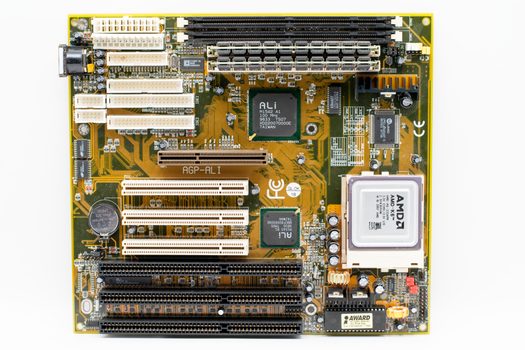
OEM fits brand owners that need exclusive firmware, patented hardware features, or safety-critical certification that no off-the-shelf design can carry [S2]. It is the wrong model for early-stage startups with no ECAD team and no certification roadmap, because every design change after tooling is paid for twice.
ODM fits buyers that need a working product behind their label inside one quarter, and that can live with a reference design shared across multiple resellers [S2][S5]. It is the wrong model for buyers that require a private, audited supply chain or that sell into regulated zones where a shared design becomes a competitive leak. The CPU-monitoring sourcing pool on Made-in-China openly lists the same SKU families (LC115, LS186C, RON275, RCN8380, LC211) across vendors, which is the structural sign of an ODM/EMS cluster, not an OEM-exclusive line [S1].
2026 Spec Bands and the China Manufacturing Cluster
The two CPU outsourcing clusters visible on Made-in-China are Tianjin (control and monitoring, model-coded to Omron, Siemens, Mitsubishi lines at US$100–1,000/piece, 1-piece MOQ) and Guangdong (networking, IoT, 5G CPE routers declared as OEM/ODM/EMS) [S1][S5]. Both clusters publish R&D capacity tags "OEM" and "ODM" alongside ISO 9001-style supplier audits, and both run Trade Assurance-backed B2B storefronts [S1][S5].
Factory ownership is overwhelmingly a "Limited Company" structure, with main markets filed for every major region (North America through Western Europe), which is why an ODM SKU on a Guangdong line routinely reaches a Brazilian or Polish rebrander inside a single quarter [S1]. For a side-by-side on a related industrial category, see the industrial coating suppliers cluster map (2025-08), which uses the same OEM/ODM split to read a different China hub.
Limitations, Failure Modes, and Standards to Watch
ODM's main failure mode is design drift: when two rebranders request "the same" reference, the factory quietly diverges the BOM, the pressure sensor front-end, or the flow meter interface to keep them cost-apart, and the buyer's datasheet goes stale [S2]. OEM's main failure mode is change-order latency: a firmware patch on a private build can take 8–12 weeks to validate against a safety standard such as UL 508 or IEC 61131-2 because the test program was written for the original commit [S2].
For 2026 outsourcing, the audit stack to require is documented in the CPU manufacturing quality standards walkthrough (2025-08) — ISO 9001 at the factory level, JEDEC for component traceability on the silicon side, and OEM-specific audit reports on the buyer's side. Buyers running ODM should still demand the ISO 9001 certificate and a signed declaration that the firmware baseline is a single git tag, not a moving branch.
Sourcing Channels and Contract Structure
Alibaba.com's 2026 US Supplier plan is priced at US$1,999/year for Basic, US$3,999/year for Standard, and US$7,499/year for Professional, with Trade Assurance covering 160M+ orders and processing $500M+ daily in secured trades — that is the storefront layer on which most ODM/EMS deals clear [S2]. B&C Lighting's published process — design, prototyping, certification, production, and after-sales — is the contract template many cross-category OEM/ODM shops follow, even on non-lighting SKUs such as CPU modules and IoT gateways [S4].
The practical contract terms to pin in 2026 are MOQ (with a written ramp clause), tooling ownership (buyer-owned on OEM, often shared on ODM), firmware escrow, and an exit clause that lets the buyer pull the BOM and gerber files if the factory changes ownership — a real risk in a cluster dominated by "Limited Company" entities [S1][S4]. For a different read on the same OEM/ODM logic applied to a non-electronics category, the FRP composite supplier map (2025-08) lays out the same cluster geometry.
Trackable next signal: watch the Made-in-China "R&D Capacity" filter for a shift from "OEM/ODM" to "Own Brand + ODM" — that pattern, visible now in a few Guangdong networking suppliers, is the leading indicator of ODM factories climbing the value chain into private-label brands [S5]. A second signal is the spread of US$100–1,000/piece PLC-CPU SKUs (CJ1W, CQM1, S7-200, S7-1200 families) beyond Tianjin into second-tier industrial cities, which would dilute the current two-cluster OEM map [S1].