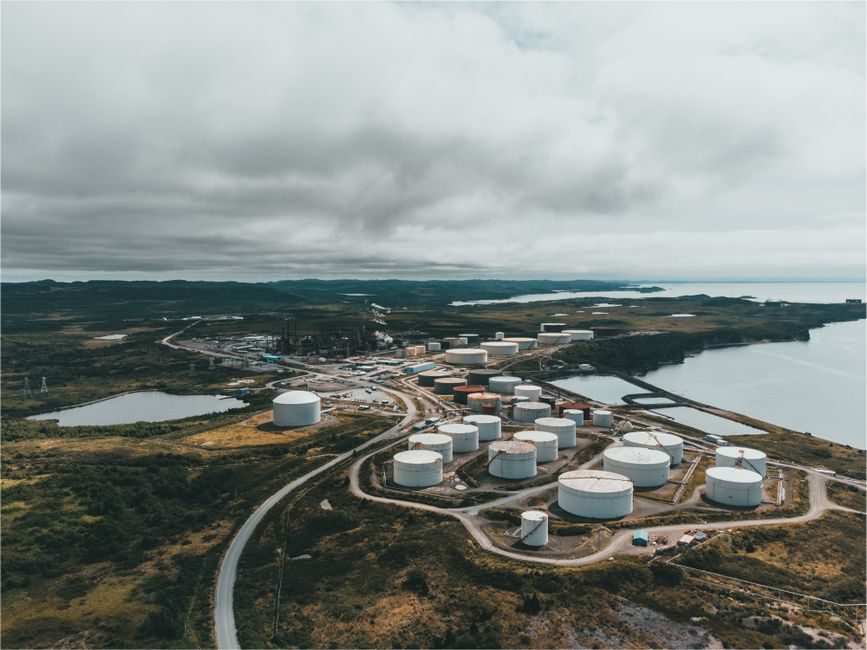
Chinese battery-grade lithium hydroxide (CAS 1310-65-2, HLiO, MW 23.948) added fresh single-train capacity in 2024-2026, with the Meishan Albemarle project alone certified at 50 kt/yr — enough cathode-active precursor for roughly 15 million electric vehicles over the asset's lifetime [S10].
The market is split into two price tracks in 2026: a Chinese domestic battery-grade print and an LME-linked international battery-grade quote, both tracked daily by industry data services [S9]. Buyers who treat these as one market routinely mis-size landed cost.
Chemistry baseline every spec must reference
Lithium hydroxide is the inorganic base LiOH (anhydrous) and LiOH·H2O (monohydrate), CAS 1310-65-2, molecular weight 23.948 g/mol, EINECS 215-183-4, with a melting point of 450-462 °C and a bulk density of 1.46 g/cm³ per the ChemicalBook datasheet [S3][S8]. Aqueous solubility reaches 113 g/L at 20 °C, which is the figure that drives the recrystallisation step used to upgrade technical-grade to battery-grade LiOH·H2O [S8].
Thermodynamically, NIST-JANAF lists gas-phase ΔfH° = -55.999 kcal/mol and S°(gas, 1 bar) = 50.351 cal/mol·K (Chase, 1998, last reviewed 1971) [S1]. Those numbers are the anchor for any plant-level energy balance on a Li2SO4 + Ca(OH)2 → 2 LiOH + CaSO4 causticisation line or a Li2CO3 + Ca(OH)2 metathesis route. The same standard reference (NIST-JANAF Monograph 9, 1998) gives Shomate coefficients A=11.67450, B=1.791651, C=-0.363947, D=0.025393, E=-0.100783 for the 2500-6000 K gas-phase Cp range, which is what process engineers use to size the after-cooler on a lithium brine calciner [S1].
Capacity track: where the 2026 tonnes are coming from
CBCIE publishes a monthly Chinese lithium hydroxide production-capacity series with YoY% and MoM% breakouts; the April 2026 print is the most recent confirmed data point on that series and tracks overall nameplate against operating rates [S4]. Single-project reference points are large: the Meishan Albemarle hydroxide line, built by China Chemical Engineering Seventh Construction, was recognised by ENR as the 2024 Global Best Project in the Power/Industrial category and is rated at 50 kt/yr — explicitly benchmarked as sufficient feedstock for over 15 million EVs and a claimed >100 Mt CO2 lifecycle avoidance figure [S10].
On the price-volume side, lithium chloride (the upstream intermediate that LiOH plants often co-produce from spodumene leach) has been trading in a "stalemate" pattern through 2026 — small-lot, immediate-demand orders dominate and traders are not stockpiling, per CBCIE's weekly lithium chloride review [S5]. That behaviour matters: when upstream LiCl spot volumes are thin, LiOH converters see input-cost volatility before they see finished-goods price moves.
Two price tracks, two specs: how to read 2026 quotes
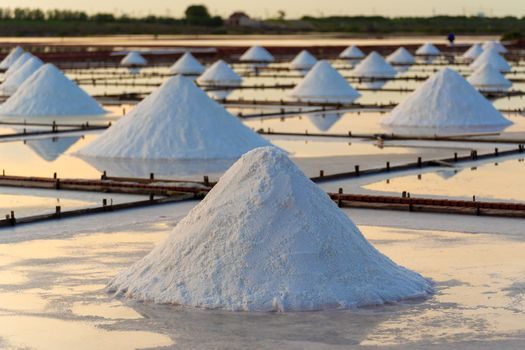
There is no single 2026 "lithium hydroxide price." CBCIE runs two parallel daily summaries: a China Battery Grade Lithium Hydroxide print and an International Battery Grade Lithium Hydroxide print, plus a separate LME Lithium Hydroxide line for exchange-cleared tonnes [S9].
The LME lithium hydroxide contract is the only exchange-grade reference and is the benchmark most non-Chinese cathode makers anchor offtake to; the China domestic print is the reference Chinese converters use for spot and short-term framework deals [S9]. When a seller's "battery-grade" quote is not pinned to one of these two series, treat the premium or discount as commercial margin, not market signal.
Grades, impurity gates, and form-factor options
Three commercial grades dominate 2026 buying: technical-grade LiOH·H2O (industrial CO2 scrubbing, grease, dye), battery-grade LiOH·H2O (NCM/NCA cathode precursor, typically ≥99.5% assay), and low-magnetic / semiconductor-clean variants for specialty applications. The Tokyo Chemical Industry APAC listing (L0225) keeps lithium hydroxide as a stocked reagent SKU alongside the industrial bulk grades, which is a useful sanity check on assay consistency at smaller pack sizes [S2].
For battery-grade sourcing, write the spec against the Chinese converter's standard COA and the LME-assayable basis, not the generic 1310-65-2 entry. The ChemNet supplier index for 1310-65-2 lists 18433 (anhydrous) and the monohydrate form separately, so the PO must explicitly call out anhydrous vs monohydrate — confusion between the two is a recurring source of assay drift on receipt [S8].
Adjacent-chain signals: link this to carbonate, drives, and load cells
Lithium hydroxide does not move in isolation from lithium carbonate. The same converters run parallel hydroxide and carbonate lines off the same spodumene leach, so when battery-grade carbonate pricing bands shift, hydroxide spreads typically follow within a quarter. Cathode-active precursor lines that spec LiOH·H2O are increasingly being commissioned alongside robotic warehousing, where warehouse robotics cell calibration is driven by the same load cell module accuracy gates that big-bag LiOH filling stations use. [S1]
On the upstream equipment side, hydroxide plant agitators and calciner drives are a meaningful slice of capex, and the servo drive selection map is increasingly cross-referenced by LiOH EPCs sizing reactor-feed and crystalliser torque loops. None of this changes the chemistry, but it does change the lead-time stack a buyer should plan around.
Failure modes and what to reject on incoming COA
The most common 2026 receiving failures on technical-grade lots are excess Na (from incomplete causticisation), excess SO4 (residual Li2SO4), and CO2 uptake during transit (LiOH + CO2 → Li2CO3, which is why drums are sealed and purged) [S3]. On battery-grade, the gating impurities are Fe, Cu, and Na at single-digit ppm, because each ppm above spec carries downstream into the NCM/NCA precursor and degrades cell cycling.
Reject any lot where the LiOH assay, moisture, and impurity panel are not reported on a single COA from the same sampling event — split COAs are the most common documentation fraud vector in 2026 spot buying.
Standards and traceability anchors
There is no single ISO standard that defines "battery-grade LiOH·H2O" — the spec is set buyer-by-buyer against the cathode maker's impurity ceilings, with the LME assayable-grade definition as the closest market-wide reference [S9]. For transport, LiOH·H2O is classified under UN proper shipping name and packing group requirements (corrosive, solid, alkaline), and the MSDS on file must reflect 1310-65-2 as the primary identifier [S3].
For thermodynamic modelling, the NIST-JANAF Shomate coefficients and the ΔfH° = -55.999 kcal/mol value are the auditable inputs; plant energy balances that do not reference back to NIST SRD 69 should be treated as rough order-of-magnitude only [S1]. Buyers running six-sigma process control on a LiOH line should pin incoming material specs to CAS 1310-65-2 plus the converter's COA panel, not to a generic "battery-grade" label.
Trackable signals for the next quarter: the May 2026 CBCIE Chinese capacity print (YoY% vs April 2026) and the daily delta between the China domestic and LME battery-grade prints — a widening spread typically precedes a converter price reset, while a narrowing spread signals that international offtake is matching domestic growth [S4][S9]. Both are public, both update on a known cadence, and both are the cleanest leading indicators for a 2026 hydroxide procurement decision.
Spec-level background on the components involved: pressure transmitter, flow meter, and industrial valve.